Trying to conceive with low testosterone



If a health professional has told you that you have low testosterone levels, you may be concerned about your fertility. But, how does low testosterone impact fertility? And what can you do to promote the best chances of conception?
If a health professional has told you that you have low testosterone levels, you may be concerned about your fertility. But, how does low testosterone impact fertility? And what can you do to promote the best chances of conception?
Let’s start with the basics and discuss why you need testosterone, testosterone’s role in fertility, and how to know if your testosterone levels are low.
Key takeaways
- Low testosterone is not guaranteed to affect fertility. Many people with low testosterone have normal sperm production.
- Testosterone levels and overall fertility can be improved with lifestyle changes and medical treatment.
- Testosterone replacement therapy can treat low T, but it’s extremely detrimental to fertility — if you’re trying to conceive, you shouldn’t be taking TRT on its own.
What is testosterone?
Testosterone is a hormone made in the testicles. To be clear, people with ovaries produce testosterone, too — just in smaller amounts. In this article, we will focus on testosterone levels in cis men.
- Sperm production
- The development of male sexual characteristics in puberty
- Sex drive
- Red blood cell production
- Muscle size and strength
- Bone density
- Fat distribution
Testosterone is responsible for several body functions, including:
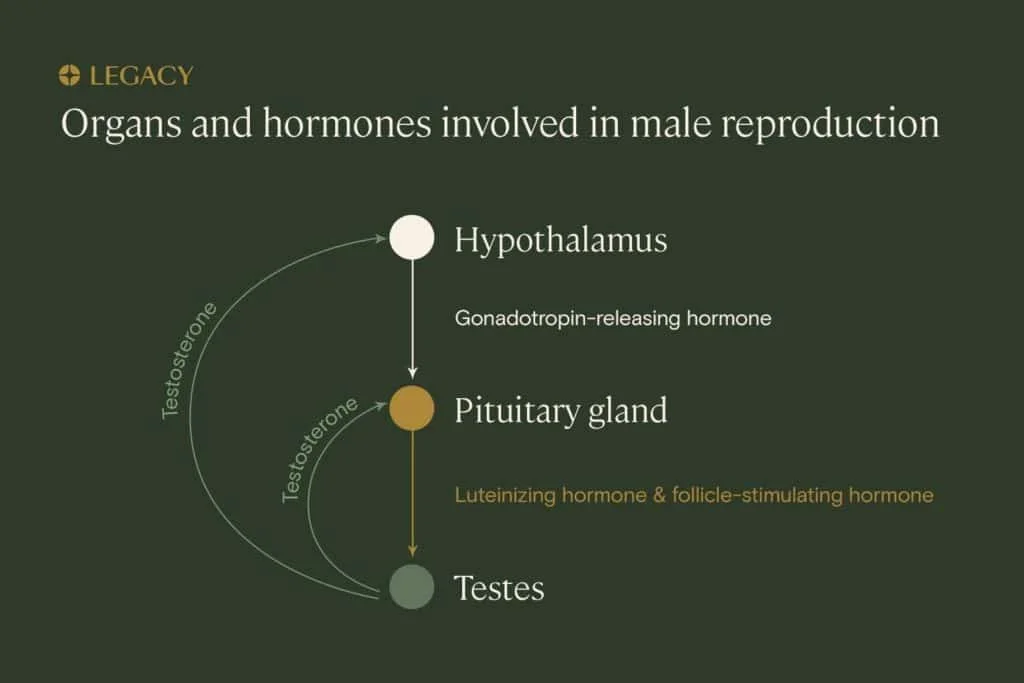
A feedback loop between the brain, pituitary gland, and testes is what controls the production of testosterone. Essentially, an area of the brain called the hypothalamus tells the pituitary gland to release hormones that stimulate testosterone production. Testosterone then feeds back to the hypothalamus and pituitary. If testosterone levels rise too high, the hypothalamus sends signals to the pituitary to reduce production.
However, sometimes your body might not produce enough testosterone, or production is affected due to an illness or medication. This can cause low testosterone, also known as hypogonadism.
What is low testosterone (hypogonadism)?
Low testosterone is also known as low T or male hypogonadism. The American Urology Association identifies low blood testosterone levels as less than 300 nanograms per deciliter (ng/dL).
Usually, your health care provider can diagnose low testosterone through a series of blood tests and monitoring signs and symptoms. You will likely need more than one blood test to establish your testosterone levels – and these must be taken early morning before 10 am.
Stephanie Keller, fertility specialist nurse at Legacy, explains that low testosterone can be caused by:
- Dysfunctions or tumors of the pituitary gland
- Injury or trauma to the testicles
- Testosterone replacement therapy
- Anabolic steroid use
- Autoimmune disease
- Genetic disorders such as Klinefelter syndrome or Noonan syndrome
- Testicular cancer
- Chemotherapy or radiation therapy to the testicles
- Unknown reasons
Researchers estimate that the low testosterone affects anywhere from 10–40% of men worldwide — and 4–5 million American men. Low testosterone can happen at any age, but there is an abrupt rise in men aged 45–50 years. Testosterone is known to decrease with age, a condition sometimes called andropause or “male menopause.”
The most common symptoms of low testosterone
- Low mood
- Irritability
- Fatigue
- Reduced bone mass (and an increased risk of osteoporosis)
- Decreased muscle mass and strength
- Reduced sperm production
- Hair loss
- Sexual dysfunction
- Reduced libido
Low testosterone levels may impact fertility for men looking to start or continue to build their families.
Preserve the option to be a dad after TRT.
Does low testosterone cause infertility?
Testosterone is just one of the hormones that affect male fertility. Only a small amount of testosterone is actually required for sperm production. Some people have low testosterone but no fertility problems.
“It’s not guaranteed that you will face infertility if you have low testosterone levels,” Keller says. “As much as we know about science, we can’t always explain nature.”
Everyone is different. There are many men with low testosterone levels that still produce healthy sperm, just as some people have entirely normal semen analysis results, no apparent problems, but still have difficulty conceiving. (This is known as unexplained infertility.)
However, Keller explains that “you do need testosterone for sperm production, so low testosterone can affect the amount of sperm produced.”
“The best thing to do if you are concerned about low testosterone levels, or having problems conceiving, is to find out where your sperm parameters lie and address it from there,” Keller states. The best way to do that? A semen analysis.
Treatment options for those with low testosterone who are trying to conceive
Your health care provider can treat low testosterone levels in several different ways. The treatment depends on the root cause of the problem, as well as your family planning goals. For some people, changes in lifestyle or treating an underlying condition might be the best way to increase testosterone levels.
Supplemental testosterone and fertility
It is possible to be prescribed testosterone replacement therapy to increase your testosterone levels and combat any symptoms of low T.
However, Keller advises that taking supplemental testosterone is actually counterproductive to fertility. That’s because there are two different types of testosterone; endogenous testosterone (naturally made in the body) and exogenous testosterone (the supplement form).
Adding extra testosterone to your system interferes with that feedback loop we mentioned earlier. “Once you start putting exogenous testosterone into the body, then your testicles stop producing testosterone,” said Keller.
Natural testosterone made in the body stimulates sperm production. However, if you take a testosterone replacement, it tells your pituitary gland that enough testosterone is already in the bloodstream.
The pituitary gland follows this message, shuts down the production of luteinizing hormone, and the testicles stop producing testosterone. This leads to testosterone concentration dropping in the testicles. The pituitary also stops producing follicle-stimulating hormone, the primary hormone that prompts sperm production. Therefore, sperm production is reduced.
So, testosterone replacement therapy alone is not a good option for you if you want to start a family.
With this in mind, Keller explains that there are a couple of treatment options for low testosterone if you want to preserve fertility:
- Testosterone alongside human chorionic gonadotropin (hCG): If you’re taking a testosterone supplement, your healthcare provider might also prescribe hCG injections. hCG mimics luteinizing hormone, pushing the testes to continue to make endogenous testosterone.
- Clomid (clomiphene citrate): This estrogen-blocking medication comes in a pill form. It stimulates the pituitary gland to make more luteinizing hormone. In turn, this then makes the testes produce more testosterone, which can lead to increased sperm production.
Testosterone replacement therapy and other hormone therapies should always be prescribed by a medical professional. “Never self-treat,” stresses Keller. “It’s vital to speak to a fertility specialist. If you take testosterone and don’t need it, it can do harm.”
Lifestyle changes for men with low testosterone
Keller advises that if you have concerns about low testosterone, fertility, or your sperm health, the best next steps are:
- Get a semen analysis test. Understanding your semen parameters is the first step to managing any issues with fertility.
- Speak with a fertility specialist to better understand your semen analysis results and the cause of low testosterone or any fertility problems.
- Work with your healthcare provider to develop an individualized treatment plan based on your results, reason for low testosterone, family plans, and overall health.
There are also lifestyle changes that can help improve your sperm parameters and maximize your chances of conception, even with low testosterone. According to Keller, these include:
- Eating a healthy, balanced, and nutritious diet
- Maintaining a healthy weight
- Avoiding recreational drugs
- Limiting alcohol intake
- Quitting smoking
- Being aware that opiates — even if prescribed — can affect sperm health
- Avoiding regular exposure to extreme temps (such as hot yoga or hot tubs) and other activities that might increase your scrotal temperature, such as:
Frequently asked questions
Does low testosterone cause infertility, and does low testosterone mean a low sperm count?
Low testosterone and fertility can be a complex issue, and as mentioned, not everyone with low testosterone has infertility. However, low testosterone can reduce sperm production, causing a low sperm count and making it harder to get pregnant.
My husband takes testosterone. Can I still get pregnant?
Testosterone injections can cause the testicles to stop producing testosterone and other important fertility hormones, causing issues with sperm production. Getting pregnant while your partner’s on testosterone can be very difficult. Read the section on supplemental testosterone and fertility above for more details. If your partner is on testosterone and you are having difficulties conceiving, speak to a fertility specialist for support.
Can low testosterone cause miscarriage?
A 2019 study found that low testosterone levels in the male partner might were associated wit an increased risk of miscarriage. Researchers found that testosterone levels were 15% lower in the sample of men whose partners had recurrent pregnancy loss.
Therefore, if you have experienced pregnancy loss, it is always worth speaking to a fertility specialist to see if testing or treatment is required for low testosterone levels.
Find what's right for you

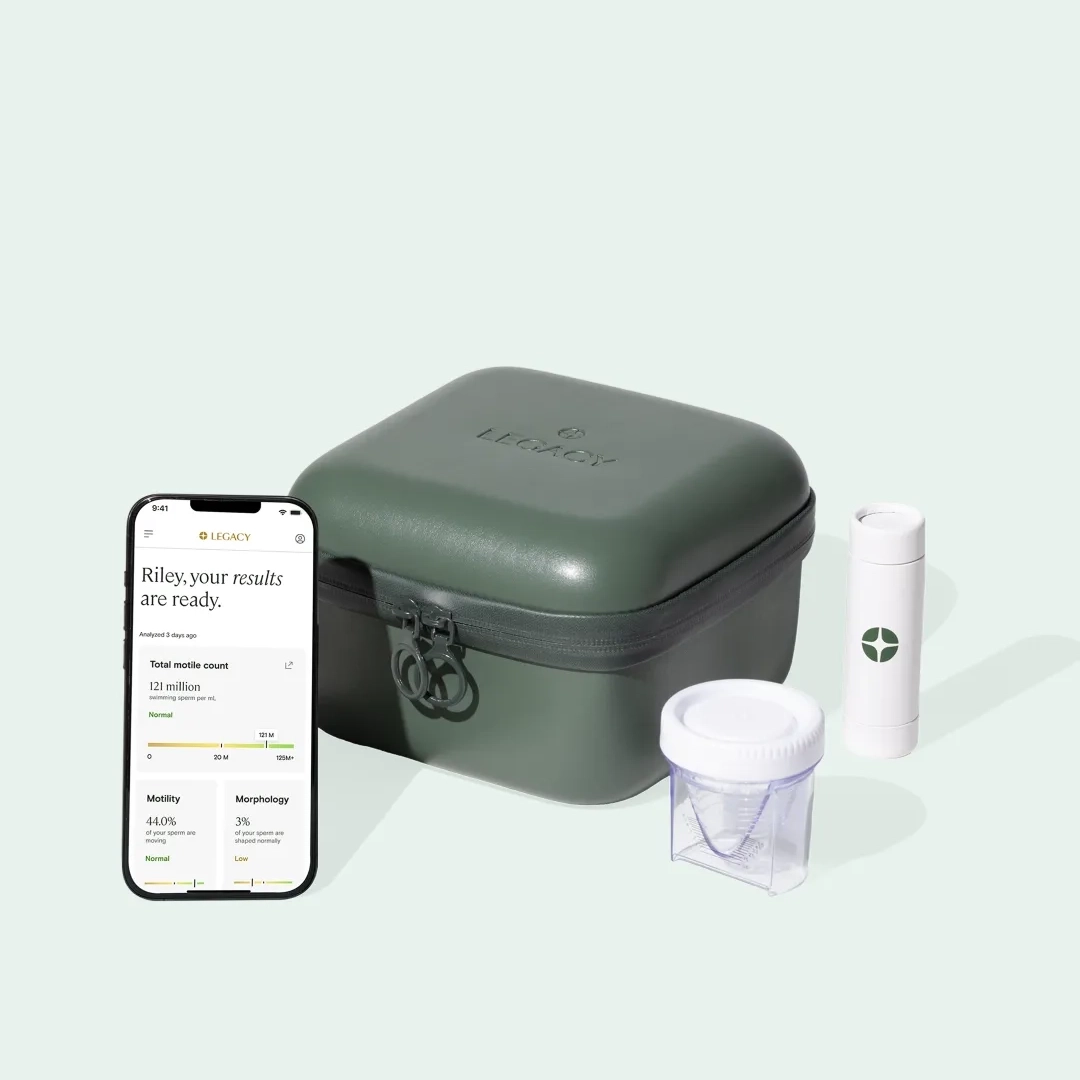
Standard Semen Analysis
$295
Key features

Semen volume
Sperm concentration & count
Motility
Morphology