Does masturbation affect male fertility?


Advice on masturbation and fertility. Does frequent masturbation affect male fertility? How often should you masturbate when trying to conceive?
When it comes to masturbation, it’s completely normal to wonder — what is normal? Will ejaculating too often boost your fertility, or hinder it? Is there a certain number of times you should masturbate per day, week, or month to maintain optimum fertility? Does masturbation affect sperm count?
This is especially relevant if you are in the process of trying to get your partner pregnant (known as trying to conceive or TTC). Here, we’ll break down the facts about whether masturbation affects male fertility.
Key takeaways
- Sperm is being produced by the testicles constantly, and as it waits in storage, quality declines. There’s no evidence that “semen retention” or avoiding ejaculation is beneficial for fertility.
- If you’re trying to conceive, you may want to avoid masturbation during the fertile window, when you’re having sex every 1–2 days — or for 2–5 days before a semen analysis, sperm freezing, or IVF procedure. Otherwise, there’s no reason to avoid masturbation.
- Masturbation has many mental and physical health benefits and is overall part of a healthy sex life.
Understanding sperm production
To understand how frequent ejaculation affects fertility, let’s get back to basics and talk a little about how you make sperm. Sperm production (spermatogenesis) begins during puberty and continues throughout your life.
The testes produce around 50–100 million viable sperm every day. At first, the sperm cells are immature and unable to swim. They go through a series of divisions as they mature — which create genetic variation — and eventually become able to move on their own. It takes about 74 days for a newly formed sperm to become fully mature.
This production cycle means that the sperm you ejaculate today began developing about two-and-a-half months ago. Lifestyle changes aimed at improving your fertility may take several weeks to show up in a semen analysis — your current sperm quality reflects your health and habits from the past three months, not just the last few days.
Read more about how lifestyle changes can improve sperm health in our sperm improvement guide.
The body stores mature sperm in the “cauda epididymis,” a structure within the epididymis, the tube at the back of the testicles. When you ejaculate, sperm moves via muscle contractions to the vas deferens. The vas deferens connect to the seminal vesicles, which produce seminal fluid (semen). The sperm mixes into the semen, then moves to the urethra for ejaculation. When you orgasm, this leads to ejaculation, releasing the sperm and seminal fluid.
If you don’t ejaculate, sperm sits in “storage” for a while — more on that below — then is eventually reabsorbed by the testes.
So if sperm takes nearly three months to mature once produced, does masturbation affect male fertility?
Is semen retention good for fertility?
If you’re looking to improve fertility or increase low testosterone, you may have come across information about “semen retention” (intentionally avoiding ejaculation). Some people claim avoiding ejaculation and “retaining semen” improves energy levels, fertility, sexual pleasure, and emotional health.
The concept has been around for a long time. But there’s no scientific evidence to back up the claims. In fact, abstaining from ejaculation for more than a few days is actually detrimental to your sperm quality. Here’s what science has found:
Semen volume (how much semen you ejaculate) and sperm concentration (how many sperm are in your semen) do increase after 1–2 days of abstinence.1 But sperm quality, or the health of your sperm, declines after two days of abstinence and worsens over a more extended period, and the genetic health of sperm suffers from longer abstinence windows.
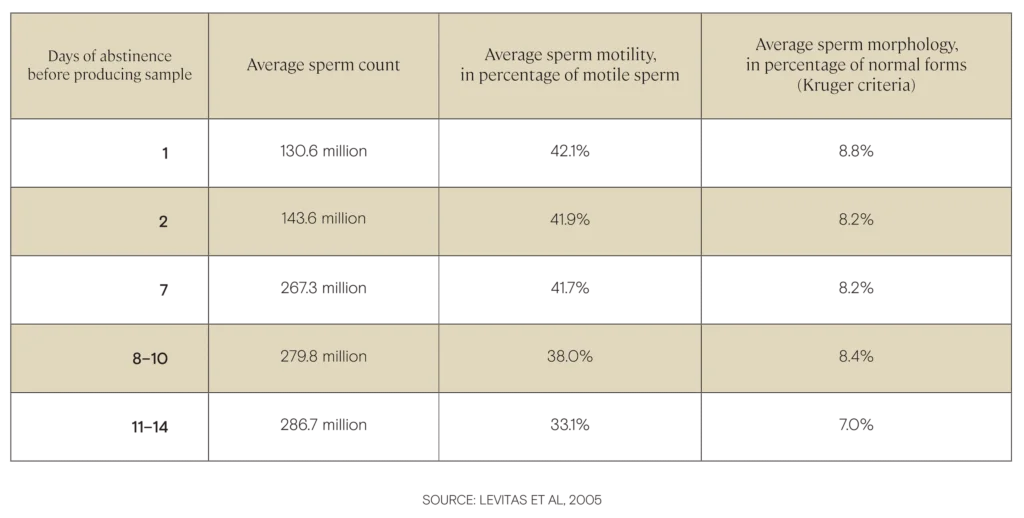
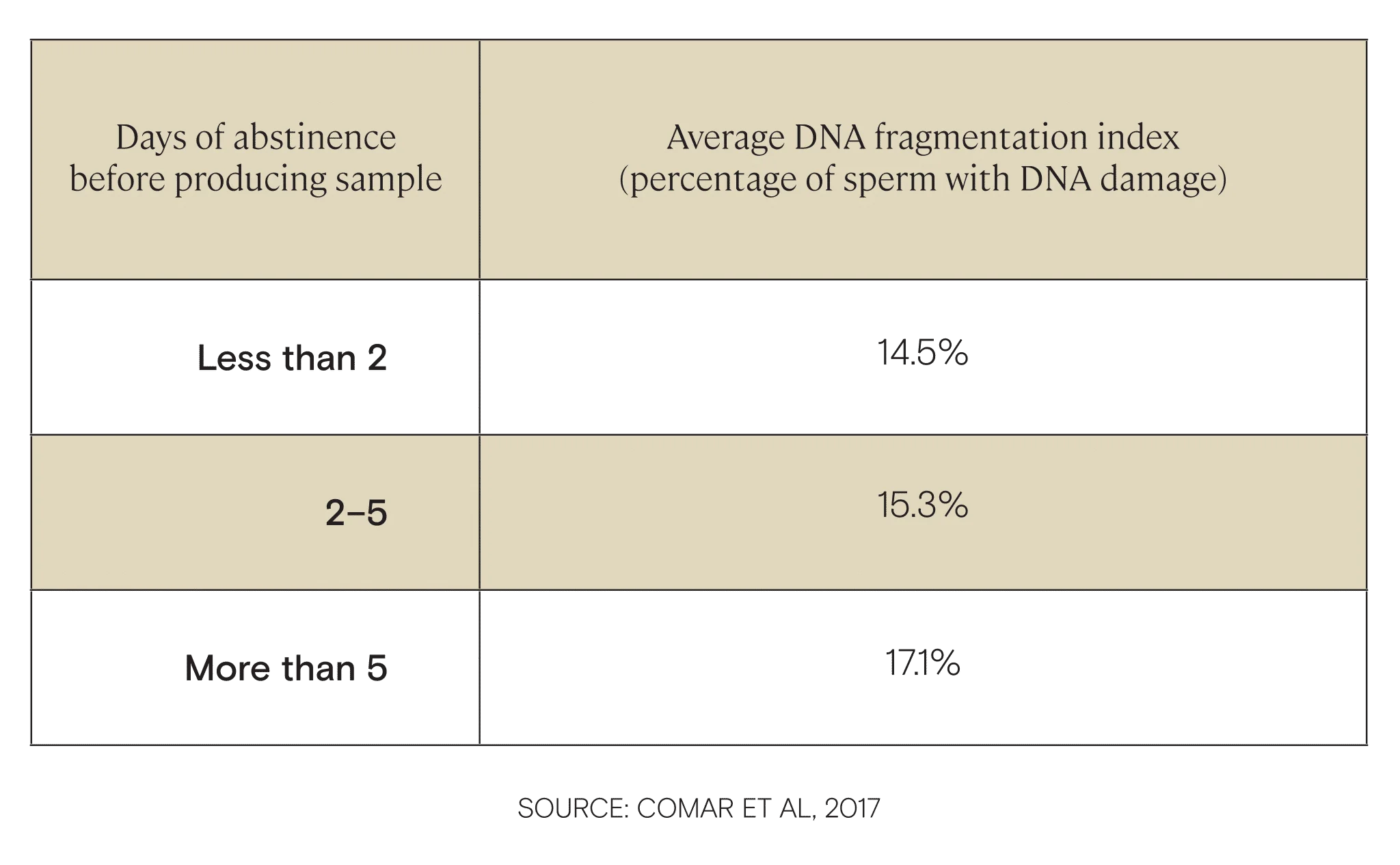
While sperm sits “in storage” inside the body, it’s subject to oxidative stress, which causes sperm to degrade. Sperm motility (how many sperm are swimming) drops, and DNA fragmentation — the degree of damage to the DNA carried by sperm — increases. This oxidative stress is considered a significant cause of infertility.2
We recommend that you abstain from ejaculation and sex for 2–5 days before collection for in vitro fertilization (IVF), semen analysis (testing), or sperm freezing.
Is it okay to masturbate while I’m trying to conceive?
It really is a personal choice how often you choose to masturbate when you are TTC.
How often should you have sex if you’re trying to conceive? It’s less about how much, and more about when. You should pinpoint your partner’s fertile window, the 3–5 day period before ovulation when pregnancy is most likely. Experts recommend having sex every 1–2 days during this window, especially on the day just before ovulation.
Taking into consideration the information above, it doesn’t make sense to “save up” semen for long periods of time before trying for pregnancy. So masturbating before or after the fertile window shouldn’t affect your chances.
Ejaculating multiple times per day may reduce sperm count.3 So during the fertile window, when you’re having sex frequently, you might want to temporarily avoid masturbation.
Try not to pressure yourself about masturbation frequency. Sex is an anxiety-inducing subject for many people, and trying to conceive can compound insecurities and self-criticism. Unfortunately, stress and anxiety can negatively impact your fertility. Communicating with your partner about needs and expectations while TTC is important for maintaining good mental health and a strong relationship during your fertility journey.
You're ready to start a family. But are your sperm?
Does masturbation cause infertility in men?
No, masturbation does not cause infertility in men (or anyone). The actual causes of male infertility vary and can include:
- Hormonal imbalances
- Varicocele, or a swelling of veins in the testicles
- Infections, including some sexually transmitted infections (STIs)
- Defects in the tubes that carry sperm
- Environmental factors, such as exposure to toxins
- Certain medications, such as TRT (testosterone replacement therapy)
- Lifestyle choices, including alcohol and drug use4
However, how often you masturbate isn’t one of them. If you’re concerned about your fertility, before varying your masturbation frequency to address the situation, consider taking an at-home sperm test or consulting with your healthcare provider or a fertility specialist such as a urologist or reproductive endocrinologist. That can give you actionable information about your sperm health.
Your sperm count may be slightly lower if you ejaculate more than once every 1–2 days. So if you’re trying to conceive, doing IVF, doing a semen analysis, or freezing your sperm, you should abstain from masturbating for 2–5 days prior. Between fertility treatments and during times when you’re not TTC, masturbation won’t do any harm. In fact, it can have several health benefits.
The benefits of masturbation and ejaculation
If you have a healthy relationship with masturbation, it has real benefits. For instance, masturbation may:
- Improve your mental health by reducing stress. Orgasms stimulate the brain to release endorphins, the “feel-good chemicals” that can improve your mood.
- Help you sleep better. Ejaculation stimulates the release of chemicals such as oxytocin, vasopressin, and prolactin. These induce relaxing feelings and help you sleep.
- Give your immune system a boost. Some studies suggest that masturbation and orgasm may strengthen immunity.5
- Make sex better. Masturbation increases the blood flow to the genitals. This keeps your sexual organs functioning properly. It also helps you get used to the sensations of sex and become more comfortable with your own body. This can help if you are experiencing concerns with body image, premature ejaculation, erectile dysfunction, or other anxieties around sex.
- Lower the risk of prostate cancer. In 2016, a study published in the journal European Urology6 journal found that men were 20% less likely to develop prostate cancer if they ejaculated more than 20 times per month (21 times was the magic number).
- Lower the risk of heart problems. Research by the American Journal of Cardiology suggests that a lack of sex (once a month or less) can increase your risk of cardiovascular disease.7
Bottom line: Apart from a short-term impact on sperm counts, masturbation won’t affect your fertility — and there’s no evidence that avoiding ejaculation has any medical benefits. Relax and have fun!
References
- Levitas, et al. “Relationship between the duration of sexual abstinence and semen quality: analysis of 9,489 semen samples,” 2005.
- Alahmar, et al. “Role of Oxidative Stress in Male Infertility: An Updated Review,” 2019.
- Mayorga-Torres, et al. “Can a Short Term of Repeated Ejaculations Affect Seminal Parameters?” 2016.
- Mayo Clinic. “Male infertility,” 2022.
- Haake et al, “Effects of Sexual Arousal on Lymphocyte Subset Circulation and Cytokine Production in Man,” 2004.
- Rider et al. “Ejaculation Frequency and Risk of Prostate Cancer: Updated Results with an Additional Decade of Follow-up,” 2017.
- Hall et al. “Sexual Activity, Erectile Dysfunction, and Incident Cardiovascular Events,” 2010.
Find what's right for you

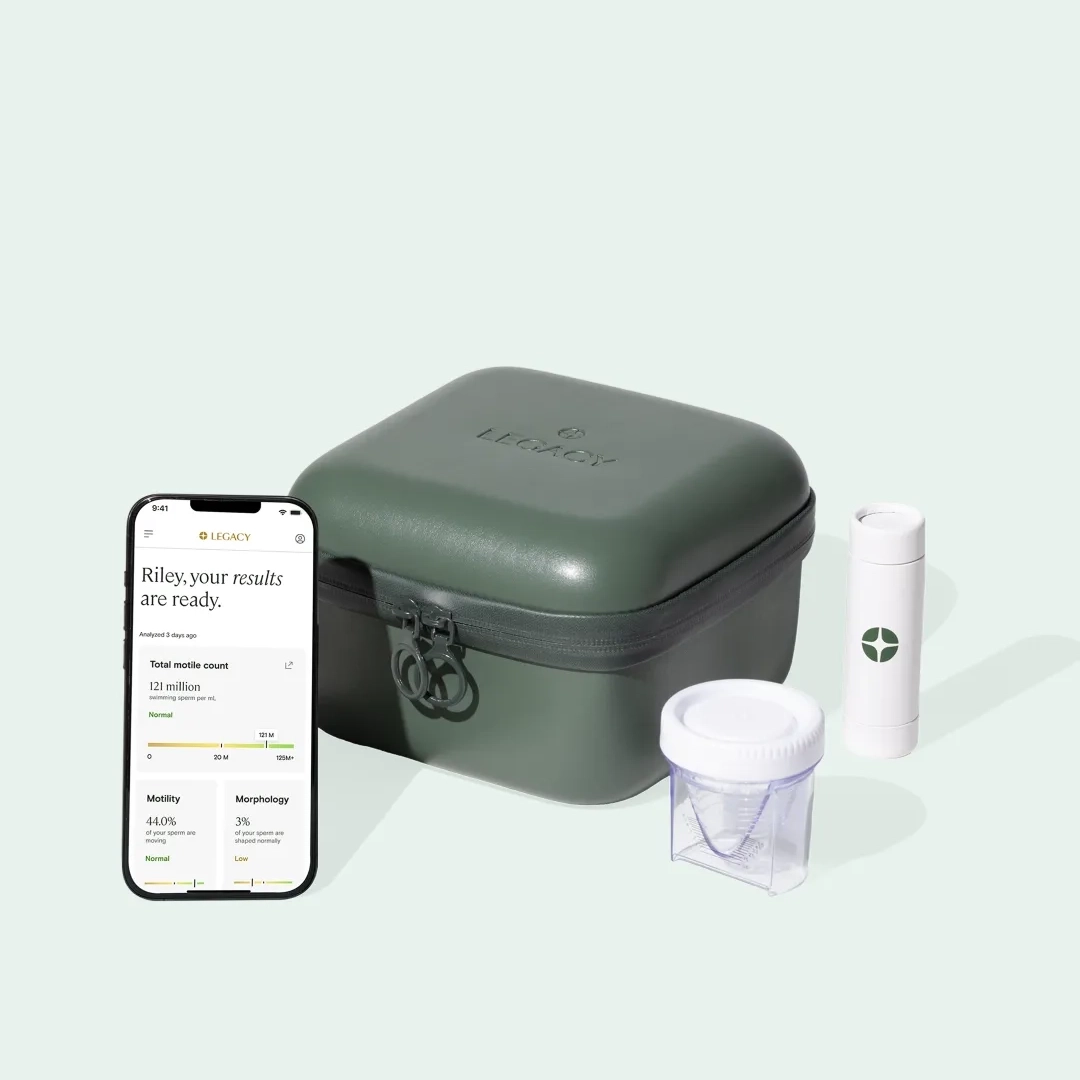
Standard Semen Analysis
$295
Key features

Semen volume
Sperm concentration & count
Motility
Morphology