Clear or watery semen: What does it mean?



Watery or clear semen could be a sign of low sperm counts, or could occur because of lifestyle choices or poor nutrition.
If you’re producing clear or watery semen, you might be wondering if it’s normal or something to be concerned about, particularly if you’re trying to conceive. The most important thing to know is that semen consistency can vary, and a change in its appearance may be due to something as innocuous as ejaculating more than usual. But persistent changes in semen color or thickness may indicate an underlying issue — including low sperm count, infections, or lifestyle factors that could be improved.
Let’s take a look at what watery or clear semen means, the possible causes, when to seek medical advice, and treatment options.
Key takeaways
- Clear or watery semen may be caused by a low sperm count, infections, frequent or retrograde ejaculation, or lifestyle factors.
- Clear or watery semen may be temporary and resolve on its own. If you notice an ongoing change in your semen consistency or color, it’s a good idea to consult your healthcare provider.
- A semen analysis can assess your overall fertility and help identify any potential underlying health conditions.
- If necessary, treatment for clear or watery semen may involve antibiotics, hormone therapy, surgical intervention, or lifestyle changes.
Clear or watery semen: what is it?
Semen is typically a thick, whitish liquid. It contains:
- Sperm, produced by the testicles
- Fluids supplied by
- The prostate, which secretes a milky liquid that amounts to about 30% of semen
- The seminal vesicles, which produce seminal fluid that contains nutrients and enzymes to nourish sperm and comprises the majority of semen
- The bulbourethral glands, two pea-shaped structures near the base of the penis whose secretions lubricate the urethra and help neutralize acidity
Watery semen may appear thin, less cloudy and have a lower volume. Sometimes clear or watery semen is temporary and will resolve by itself. But persistent changes in your semen consistency shouldn’t be ignored. This may signify a low sperm count or other issues with your sexual health.
Common causes of clear or watery semen
Clear or watery semen may have temporary or chronic causes, including:
Frequent ejaculation
Ejaculating often can result in the production of watery semen. According to a 2016 study published in the journal Translational Andrology and Urology, study subjects who followed a specific daily ejaculation schedule for a period of two weeks (following 3 to 5 days of abstinence) showed a drop in semen volume between days one and three, and days 7 and 14.2
Low sperm count (oligospermia)
A low sperm count, also known as oligospermia, may result in thinner semen. A low sperm count can have many causes, including hormonal imbalances (such as a low testosterone level), testicular problems, and lifestyle factors.
According to the World Health Organization, a low sperm count is defined as less than 15 million sperm per mL of semen or less than 39 million sperm per ejaculation.3
Infection
An infection of the prostate (prostatitis), epididymis (epididymitis), or urinary tract (UTI) can result in thin semen.
Retrograde ejaculation
Some men experience a condition known as retrograde ejaculation, in which a faulty bladder sphincter allows semen to pass into the bladder instead of through the urethra and out of the body. This can result in the production of semen that looks thin or watery.
Varicocele
Varicocele, or swelling of the veins in the scrotum, may lead to low sperm count and watery semen in some men.4 Read more about varicocele and male fertility.
Nutritional deficiencies
Deficiencies in zinc,5 folate,6 and vitamin C7 can affect sperm quality and semen appearance. Learn about 6 superfoods for male fertility.
Lifestyle factors
Obesity, a sedentary lifestyle, and the use of tobacco, alcohol, and drugs have all been linked to reduced sperm production and quality.8
You're ready to start a family. But are your sperm?
Discolored semen: What to watch for
Changes in semen color — such as yellow, green, pink, or brown — may indicate other medical conditions.
- Yellow semen could be a sign of a greater-than-normal count of white blood cells — a condition known as pyospermia — or excess urine.
- Pink or brown semen may signal bleeding in the urethra, prostate, or seminal vesicles, potentially caused by infections such as prostatitis or epididymitis.9 High blood pressure sometimes causes reddish semen, a condition called hematospermia.10
- Greenish semen is a possible sign of infection, which may be sexually transmitted (STI).
When to see a doctor
As with any health concern, it’s best to consult a healthcare provider when symptoms manifest instead of trying to diagnose yourself. You should also seek medical advice if you experience watery or discolored semen accompanied by:
- Painful or difficult urination
- Chills
- Discomfort or pain in the scrotum or testicles
- Fever
- Nausea
- Unusual discharge
To determine the cause(s) of discolored or watery semen, your healthcare provider will likely ask you about your medical history, lifestyle habits, and symptoms. A physical examination may also be performed.
Semen analysis: what to expect
A comprehensive semen analysis is the best tool to assess your overall reproductive health. Whether a semen analysis is conducted at a healthcare provider’s office or with an at-home testing kit, it involves collecting a semen sample through masturbation. The sample is then evaluated for the key metrics of sperm health:
- Semen volume (how much semen you produce)
- Sperm count and concentration (how many sperm you have)
- Sperm motility (movement)
- Sperm morphology (how many of your sperm are the proper shape, size, and structure)
Treatments for watery semen
Depending on the underlying cause, treatments for watery semen may include:
- Antibiotics to treat a bacterial infection
- Hormone therapy to address hormonal imbalance
- Procedures to address varicocele, including
- percutaneous embolization, a minimally invasive procedure in which an object is inserted into the enlarged vein in order to enhance or restore blood flow from the associated testicle11
- laparoscopic surgery, where a surgeon places a camera through the abdominal area to pinpoint the problem for repair, blockage, or removal.
- Lifestyle changes, including diet, exercise, moderating alcohol use, and avoiding tobacco or drugs
An at-home semen analysis can give you a complete picture of your fertility. Wondering if sperm testing or freezing are right for you? Get a personalized recommendation here.
References
- Sunder et al. “Semen Analysis,” 2025.
- Welliver et al. “Analysis of semen parameters during 2 weeks of daily ejaculation: a first in humans study,” 2016.
- World Health Organization. “WHO laboratory manual for the examination and processing of human semen, 6th ed.,” 2021.
- Leslie et al. “Varicocele,” 2025.
- Allouche-Fitoussi et al. “The Role of Zinc in Male Fertility,” 2020.
- Hoek et al. “Paternal Folate Status and Sperm Quality, Pregnancy Outcomes, and Epigenetics: A Systematic Review and Meta‐Analysis,” 2020.
- Lewis et al. “The impact of sperm DNA damage in assisted conception and beyond: recent advances in diagnosis and treatment,” 2013.
- Balawender et al. “The impact of selected modifiable lifestyle factors on male fertility in the modern world,” 2020.
- Cleveland Clinic. “Blood in Semen (Hematospermia),” 2024.
- Fuse et al. “Hematospermia: etiology, diagnosis, and treatment,” 2011.
- Beecroft. “Percutaneous varicocele embolization,” 2007.
Find what's right for you

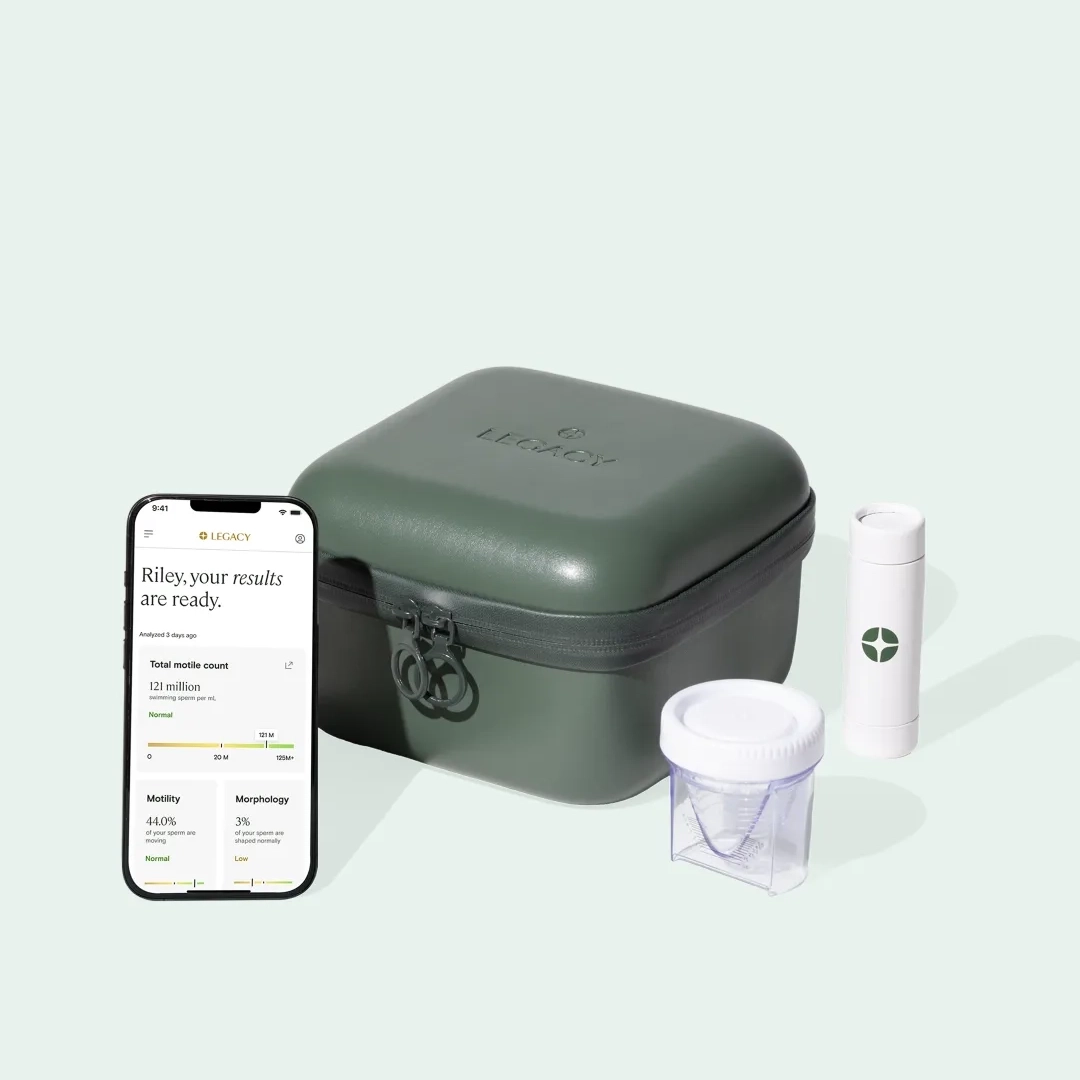
Standard Semen Analysis
$295
Key features

Semen volume
Sperm concentration & count
Motility
Morphology