Painful erection or sex


If you’re struggling with painful erections or painful sex, find out what’s causing it and explore tips for trying to conceive.
An estimated 1–5% of people with penises experience pain during intercourse. And while experiencing painful erections or painful sex is generally not normal, it does not always indicate male-factor infertility. Because there are a variety of contributors to painful sex,, finding the root cause will help you figure out the best way to address the issue.
This article will explore the causes of painful erection and painful sex, how they impact your fertility, and tips on trying to conceive with erectile pain.
Key takeaways
- Experiencing pain during sex isn’t normal, but it’s not always an indicator of infertility.
- Causes of erectile pain or painful sex include Peyronie’s disease, priapism, penile fracture, sleep-related painful erection, a disorder called penile lichen sclerosus, tight or damaged foreskin, blockages, infections, or allergies.
- Painful erections or painful sex may affect your ability to have a child by impeding the process of sex while trying to conceive. Some infections and blockages can also cause infertility if left untreated.
- Medication or surgery can help resolve painful erections and painful sex. If you still need more support, assisted reproductive technology with the help of sperm freezing can be another option.
What causes erectile pain?
There are a number of different conditions or issues that could cause penile pain or pain when you get an erection. If you are experiencing painful sex, see your doctor so they can give you a full evaluation.
Painful erections due to Peyronie’s disease
“It hurts when I get hard.” If you’ve ever uttered these words to your physician, chances are they would have mentioned Peyronie’s disease as the primary culprit. This disorder, in which scar tissue forms under the skin of the penis and causes it to curve, is one of the most common causes of painful erections. Around 20–70% of people with Peyronie’s disease experience penile pain.
Peyronie’s disease is often caused by penile trauma, though there are a number of risk factors that may increase the likelihood of developing the disease. This includes genetics, connective tissue disorders, diseases of the prostate, and advanced age.
But Peyronie’s disease is not the only contributor to painful erections. Other causes include:
Priapism and painful erections
Priapism is a prolonged erection that is not caused by sexual stimulation. Priapism can be ischemic, meaning that blood becomes trapped in the penis, cutting off oxygen to the penile tissue. This is considered a medical emergency. One type of ischemic priapism is called “stuttering,” or recurrent, priapism, which is commonly associated with sickle cell disease.
The other type of priapism is non-ischemic, which means that while blood isn’t flowing properly, the penile tissues still receive some blood flow and oxygen. This can be caused by penile trauma.
Potential causes for priapism include:
- Prescription drugs: Drugs used to treat erectile dysfunction, enlarged prostate, depression, anxiety, ADHD, hormonal disorders, and blood clotting
- Blood disorders: Sickle cell anemia, leukemia, hemochromatosis, and other blood disorders
- Infections: Infections or inflammation in the urethra or urinary tract
- Trauma: Injuries to the penis, pelvis, or perineum
- Substance use: Alcohol, marijuana, cocaine, and other recreational drugs
- Bites or stings: Spider bites, scorpion stings, and snake bites
Penile fracture
The penis does not have bones. A fracture in this case refers to a rupture in the outer lining of the penis (tunica albuginea). Left untreated, a penile fracture may result in erectile dysfunction and difficulty with urinating, along with pain during erection.
Penile fracture can occur from trauma to an erect penis. This can be caused by vigorous sex or masturbation. Thankfully, this condition is rare.
Sleep-related painful erection
Sleep-related painful erection is a rare condition in which patients experience frequent erections during rapid eye movement (REM) sleep, causing deep penile pain and interrupted sleep. Erections are typically normal when they are awake. Potential causes for these painful erections include issues with the nervous system or the hypothalamus part of the brain.
Penile lichen sclerosus
Penile lichen sclerosus is a rare condition that causes the tissues of the foreskin and glans to harden over time. It predominantly affects those with uncircumcised penises and is thought to be caused by urine being frequently trapped underneath the foreskin. Painful erections are exacerbated by symptoms of itchiness and swelling.
What are other causes of pain during sex?
Dyspareunia in men refers to genital or pelvic pain that occurs during sex for three months or longer. In addition to the causes listed above for painful erection, other reasons you may experience pain during sex include:
- Phimosis: Damaged or tight foreskin that does not fully retract
- Blockages: Includes ejaculatory duct obstruction and urethral stricture
- Inflammatory infections: Such as prostatitis and cystitis
- Sexually transmitted infections (STIs): Common STIs like genital herpes or gonorrhea, as well as yeast infections and epididymo-orchitis
- Allergies: Includes allergies to vaginal fluids, condoms, and spermicides
In some cases, pain only occurs during ejaculation. This is called dysorgasmia. Studies show 12–14% of men develop dysorgasmia after treatment for prostate cancer, and 74% of men with chronic prostatitis experience dysorgasmia occasionally or every time they ejaculate.
How can painful erection or sex affect the process of trying to conceive?
There are a few ways painful erections and painful sex can interfere with conceiving a child. If you often experience pain during sex, you may have difficulty getting or maintaining erection or the anticipation of pain may cause you to avoid sex altogether. In the case of Peyronie’s disease, the curve of your penis may even be painful for your sexual partner, which can make sex even more challenging or lead to relationship issues. STIs like gonorrhea can also cause infertility if left untreated.
Is painful sex related to infertility?
Though erectile pain or pain during sex does not necessarily mean you are infertile, it can make it more difficult to conceive. In some cases, pain can also be an indicator of a bigger problem, like cancer (leukemia, prostate cancer). If this is the case, cancer treatments like radiation and chemotherapy may negatively impact fertility.
If the reason for your painful erection is ischemic priapism, penile tissue can become permanently damaged, leading to erectile dysfunction or infertility.
Pain during sex can also be associated with infertility if the primary cause is prostatitis, or inflammation of the prostate gland. However, doctors consider this to be a “correctable” cause if treated with antibiotics. Up to 12% of male infertility cases are caused by untreated male genital tract infections, which include prostatitis, epididymitis (inflammation of the epididymis), and orchitis (inflammation of the testes).
Having trouble getting pregnant? The answer may be one test away.

Tips for trying to conceive with painful erection or sex
Identifying and treating the underlying cause of your penile pain is an important first step to making the fertility journey easier (and more enjoyable). These treatments may include:
- Medication: Pain associated with STIs, inflammatory conditions, or other infections may be treated with antibiotics, corticosteroids, or other oral or topical medications.
- Surgery: If your pain is caused by a blockage, curvature, or fracture, surgical intervention may be needed. In the case of Peyronie’s disease, surgery is seen as a last resort after other treatments, like penis traction therapy or medication, have failed. Surgery may also be recommended for phimosis if topical steroid creams do not ease pain.
If your sperm is healthy and viable, you can also consider conceiving a child with the help of assisted reproductive technology (ART) like intrauterine insemination (IUI). This technique allows sperm to be inserted directly into your partner’s uterus around the time of ovulation. You can freeze sperm in advance with Legacy’s at-home sperm freezing kit if you’re worried about producing a sample on the day of the procedure.
If painful erections or painful ejaculation prevent you from being able to produce a sample manually or during intercourse, testicular sperm extraction (TESE) or testicular sperm aspiration (TESA) may be options for you. Using these techniques, doctors are able to surgically remove sperm from the testicles to be cryopreserved or used immediately with intracytoplasmic sperm injection (ICSI) and in vitro fertilization (IVF).
To ensure your sperm is healthy, consider checking your fertility with Legacy’s at-home sperm testing kit, the most scientifically advanced at-home sperm test.
Learn more about sperm testing and sperm freezing with Legacy.
Find what's right for you

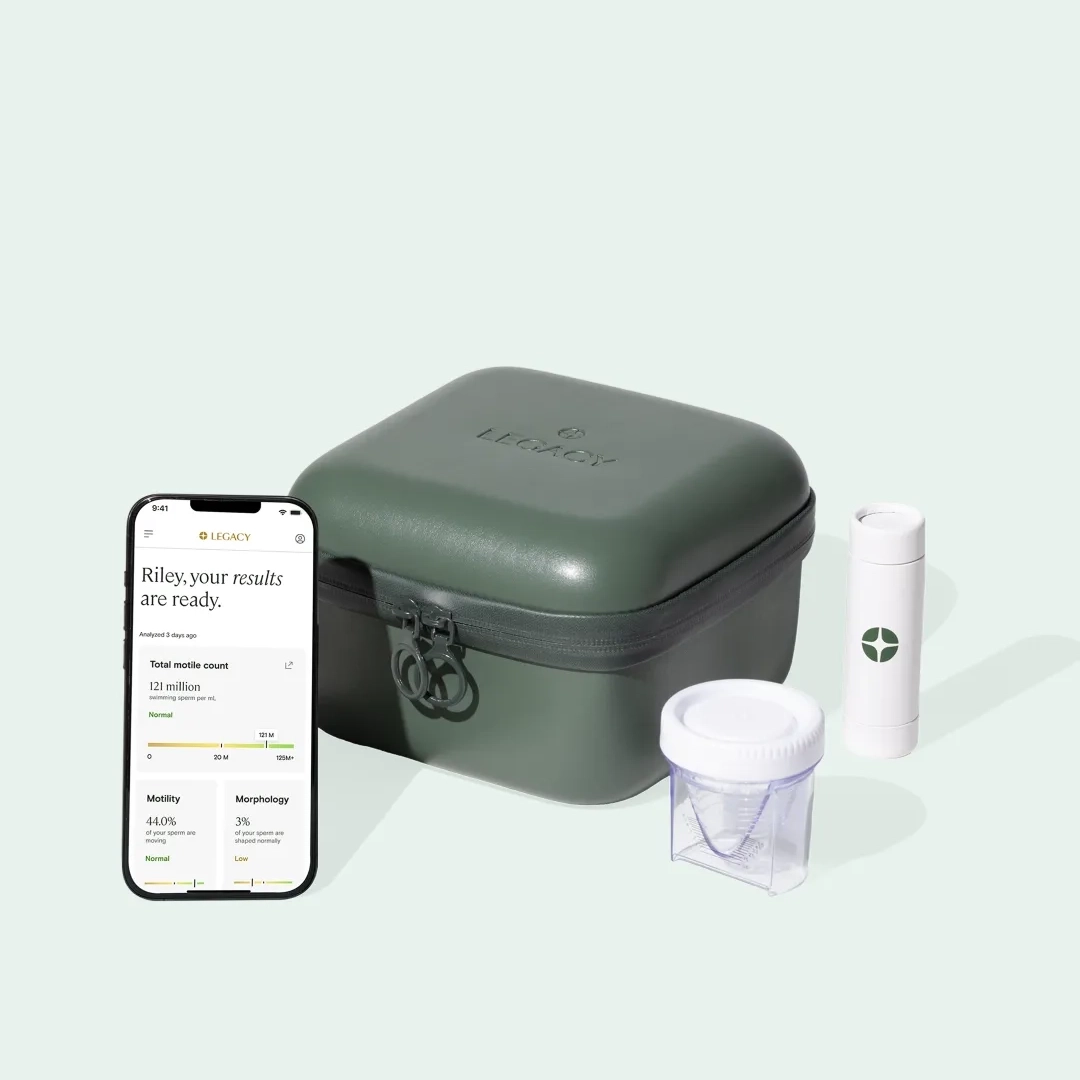
Standard Semen Analysis
$295
Key features

Semen volume
Sperm concentration & count
Motility
Morphology