What is a male “fertility cleanse,” and does it really work?


Do male fertility cleanses really work?
We are often bombarded with messages through social media and the internet advertising the next best “cleanse” or “detox” that promises to cure all ailments. A recent development is the trend of “fertility cleanses.” But are the claims these companies make based on any scientific evidence, or are they merely peddling snake oil and taking advantage of people going through difficult times on their fertility journey? Does a five-day fertility detox actually benefit those trying to conceive? What about a juice cleanse for fertility? Let’s explore what is being referred to as a male “fertility cleanse” and examine whether there is any research to support the beneficial claims.
Key takeaways
- A new trend for couples trying to conceive is to carry out a “fertility cleanse” or detox.
- There is no supporting scientific evidence for the claims associated with these cleanses.
- Cleanses can be detrimental to your health.
- Our body has an in-built detoxification system, but this can be supported by making long-term, safe lifestyle changes to support fertility.
What is a “fertility cleanse”?
Every January, we see a multitude of new diets and supplements claiming to help you cleanse your body and “detox,” with the idea that this will cure many ailments. There is now a growing trend for couples to carry out a “fertility cleanse” to solve any issues they encounter on their mission to become parents. So what actually is a “fertility cleanse”?
A quick Google search will supply a vast array of detox kits, teas, and cleansing plans that you can buy to supposedly help fertility. The ingredients in these kits and teas vary, with some containing well-researched ingredients known to support fertility and others based on little more than old wives’ tales. So knowing which to choose is the first difficulty when considering whether or not to do a fertility detox.
The concept came about in a similar fashion to cleansing for overall health — in response to consumers wanting to find a quick, affordable, and convenient solution to their ailments. It’s not uncommon for people to go through cleanses and detoxes around January in the hopes they will kickstart a road back to healthy eating and exercise after the indulgences of the holiday period. Part of the allure is the claim that detoxes can reset your metabolism and, therefore, they are popular with those desiring weight loss.
Toxins are produced naturally by our body during normal metabolism and include urea, lactic acid, and other waste products. The only other way we get toxins in our body is by consuming them or absorbing them from our environment through our skin or lungs.
When it comes to fertility cleansing, the idea is to remove toxins from your body that may have interfered with your ability to conceive. An example given is that if you regularly consume hormone-laden products, such as dairy, you may be at higher risk of building up toxins in your body that can disrupt your normal fertility.
Most cleanses involve short-term dieting, often alongside fasting. They can include shakes, supplements, enemas, or consuming a very restricted range of foods, such as a juice cleanse. These are very different from a medicinal detox used by doctors to help someone eliminate drugs, poisons, or alcohol from their body.
A fertility cleanse involves making radical changes to your diet, drinking lots of water, and eating high-fiber foods alongside a supplement routine that ensures optimal nutritional value. Usually, these “cleanses” only last for 15–30 days, although there is very little evidence supporting fertility cleanses, and all the claims made appear to be based on changes to overall diet and lifestyle, which is known to improve fertility in both men and women.
Do cleanses and detoxes really work?
Unfortunately, as tempting as it is to think that a short burst of good intention will fix all issues, mostly, cleanses do not really work as they cannot speed up or improve how well your organs function. They have been widely criticized by the scientific community due to the lack of supporting evidence for the claims they tout. The truth is, our body naturally flushes out toxins on a daily basis without any help! Our kidneys and liver play key roles in our in-built detoxification system and are responsible for processing and eliminating toxins from our body.
According to the National Center for Complementary and Integrative Health (NCCIH), there is little evidence that detoxes do anything to affect toxins. They are popular for many reasons — the most apparent being that intense calorie restriction combined with eliminating processed foods from your diet will usually result in some weight loss and a feeling that your health has improved. However, these changes are usually unsustainable long term, so as soon as normal food intake returns, the weight goes back on.
Not only do detoxes and cleansing products not provide long-term health benefits, they may also do more harm than good, according to the NCCIH, as some companies have been found to be selling products containing harmful and illegal substances. Detoxes are extremely dangerous for young children, the elderly, and breastfeeding or pregnant women. They are also not recommended for people
- taking multiple medications
- who have an underlying health condition
- with diabetes
- who have a weakened immune system
- with an eating disorder
Potential negative side effects of fertility cleanses
Detox and cleansing products do not fall under the regulation of the Food and Drug Administration (FDA); therefore, the dosages, ingredients, and their safety have not been established. Even some homemade juices could have negative consequences if taken in large doses because of the interaction between the nutrients and the chemicals in medication.
There are numerous other potential negative side effects that could occur as a result of detox and cleansing diets, including:
- injury to the colon or bowel from enemas or colonic irrigation
- overdosing on minerals and vitamins
- kidney issues due to the increased levels of oxalates in foods such as spinach and beets — often linked with juice cleanses
- electrolyte imbalance due to the increased consumption of water, juices, or teas, combined with fasting
- increased risk of bacterial illnesses, such as salmonella, when the cleanse includes drinking unpasteurized products
- severe and dangerous dehydration, normally associated with the use of laxatives or diuretics in some cleanses
As far as fertility is concerned, there is a real risk that carrying out a cleanse could severely impact your sperm health. It is easy to end up restricting your intake of essential nutrients when you begin a cleansing fast or calorie-restricted diet. It has been well documented that certain nutrients are essential for sperm production and sperm health, and so any extreme changes to your diet should be monitored by a health professional or a fertility specialist if you are currently working with one.
You're ready to start a family. But are your sperm?
What can I do to reduce the impact of toxins on my sperm?
Given all the above information, do we need to be concerned about toxins at all when it comes to fertility? In short, yes. Unfortunately, toxins have been linked to issues with sperm quality and development, but instead of resorting to an extreme short-term detox, it is advisable to make some long-lasting lifestyle changes. These will benefit your kidney and liver function, promoting natural detoxification, and by limiting your exposure, you can lighten the load on these important internal organs.
Some toxins are endocrine disruptors, which may negatively impact your fertility in various ways. They can interfere with the hormonal system required for fertility by blocking hormones from doing their usual jobs, and others can affect how hormones are made, stored, or broken down. These endocrine-disrupting chemicals (EDCs) have been linked with impaired female and male fertility, cancer, and obesity issues. This article by Legacy goes into more detail about these EDCs and their impact on fertility.
For example, toxins from tobacco smoking can potentially affect sperm production and function as well as negatively impacting all semen health parameters. By quitting smoking, you can minimize your exposure to these harmful toxins and improve your fertility. For more information about how smoking can affect your fertility and to find out how beneficial it is to quit now, click here.
Other ways to improve your fertility
If you want to improve your fertility, instead of resorting to the unscientific approach of an extreme fertility cleanse, why not consider making smaller yet sustainable, long-lasting changes to your lifestyle and diet? Here are some suggestions for lifestyle changes that have been tested and are supported by the scientific community as useful ways to improve your chances of falling pregnant:
- Healthy diet. The latest research suggests a Mediterranean diet that includes lots of fruit, vegetables, nuts, and seeds, with minimally processed foods and red meat, could be the key to supporting fertility, including sperm health.
- Supplements, including antioxidants. Some ingredients not commonly found in our diet have been researched and found to be highly beneficial to sperm health and overall fertility. These include ashwagandha, maca root powder, and fenugreek. These are most easily incorporated into your diet through supplementation, but it is imperative you choose a reputable provider to ensure high-quality ingredients. Legacy has its own supplements that contain many beneficial ingredients shown to support male-factor fertility.
- Exercise. Moderate exercise has been linked with improved sperm health.
- Quitting smoking. There is much evidence showing the correlation between smoking and reduced sperm function and semen quality.
- Reducing alcohol. Excessive alcohol consumption can lower testosterone levels.
- Managing stress and getting good sleep. Both of these can positively impact testosterone production and improve libido.
- Temperature. Excessive heat can lead to reduced sperm motility and result in sperm death. Therefore, when trying to conceive, you should try and limit laptop use on laps, hot saunas, tight underwear, and hot tubs.
- Limiting caffeine. In large amounts, caffeine can damage sperm.
For more information on these lifestyle changes and their possible impact, click here.
Find what's right for you

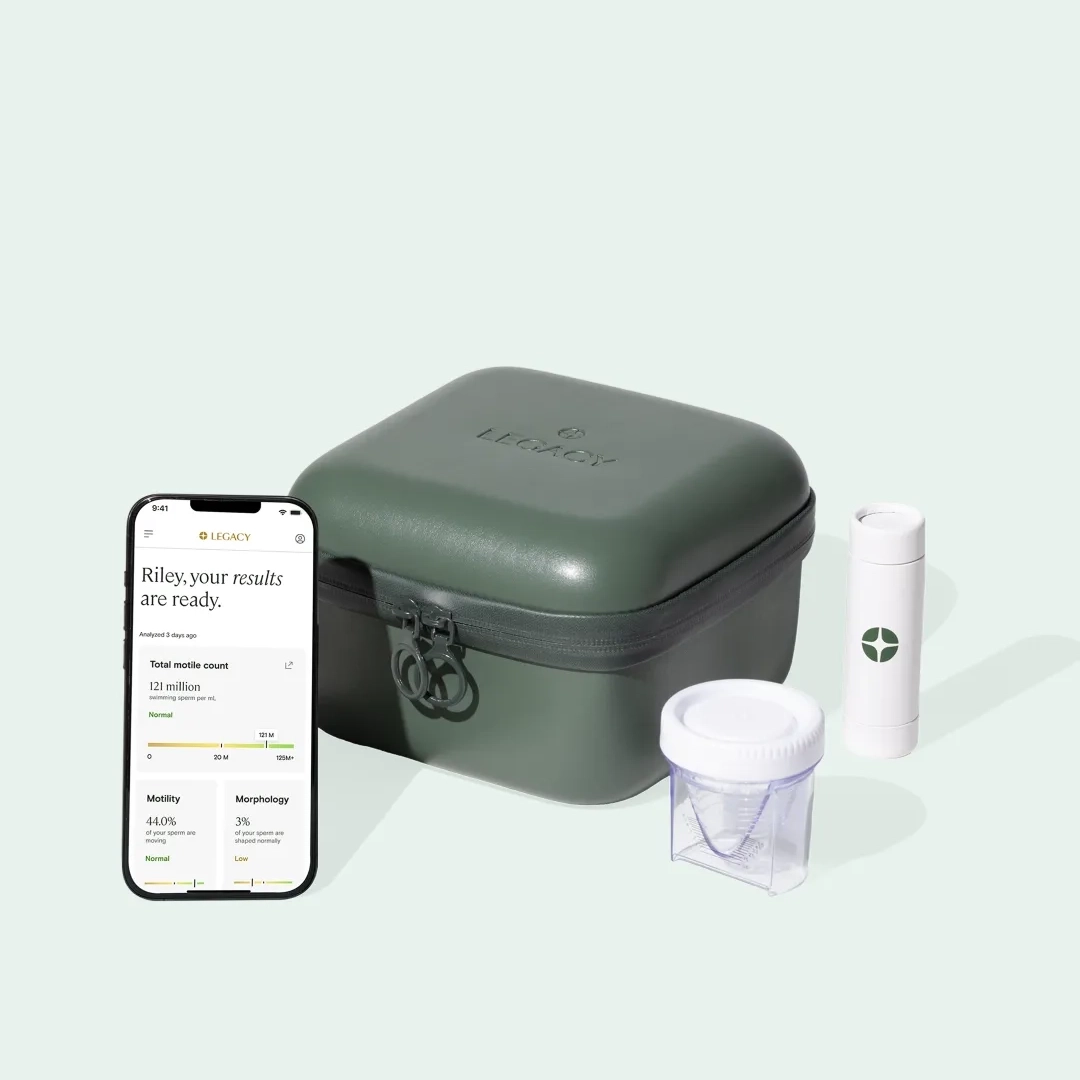
Standard Semen Analysis
$295
Key features

Semen volume
Sperm concentration & count
Motility
Morphology