Antibiotics and sperm quality


Some common antibiotics may affect sperm or even contribute to infertility. We’ll take a look at antibiotics’ uses and their effect on sperm.
If you’ve ever needed medicine for strep throat or another infection, you may have wondered whether antibiotics affect your fertility. But is there a connection between antibiotics and sperm quality? Let’s take a look at antibiotics, how they work, and the potential impact of antibiotic medications on sperm.
Key takeaways
- Antibiotics can have a positive or negative impact on sperm, depending on why they’re prescribed. Some antibiotics negatively impact sperm function, motility, or DNA, while others may improve fertility by treating infections that impair sperm health.
- Higher doses of antibiotics are associated with greater impacts on fertility in animal studies.
- The effects of antibiotics on sperm are generally temporary, as sperm regenerates about every 72 days.
What are antibiotics?
Antibiotics are medications that counter bacterial infections by killing bacteria or making it difficult for them to reproduce. Many antibiotics come in pill or ingestible liquid form, but they can also be ointments, eye drops, or injectable. Different types of antibiotics are more effective at treating specific types of infections. A few common antibiotics include:
- Ciprofloxacin (brand names: Cipro, Ciloxan)
- Doxycycline (brand names: Oracea, Monodox)
- Amoxicillin (brand names: Amoxil, Moxatag)
- Metronidazole (brand names: Metrogel, Flagyl)
Why do people use antibiotics?
You may need an antibiotic if you have a bacterial infection that your body can’t eliminate on its own. Your doctor may prescribe an antibiotic if you have:
- Strep throat
- A urinary tract infection (UTI)
- E. coli
- Whooping cough
Other common bacterial infections, like sinus or ear infections, may clear up on their own but can require antibiotics if they persist.
If your doctor prescribes an antibiotic, it’s important to follow instructions and take the entire course of medication. That helps prevent bacteria from developing antibiotic resistance, in which bacteria cause infections that can’t be effectively treated.1
Antibiotics don’t work on viruses, so they won’t help if you have a cold, a sore throat, or the flu. Your doctor may give you an antiviral instead.
Read more about medications and male fertility.
Do antibiotics affect sperm quality and male fertility?
According to a 2024 review of research, some common antibiotics may affect sperm health or contribute to infertility.2 These medications may reduce semen volume, alter sexual function, or change hormone levels.
Animal studies on antibiotics and sperm quality
Several animal studies suggest that antibiotics can impact male fertility. These effects include:
- Sperm DNA damage. One study from 2012 found the common antibiotic ciprofloxacin was associated with DNA damage in sperm cells and lower fertilization rates in mice.3
- Hormonal disruption. Antibiotics may function as endocrine disruptors, interfering with hormone production.4 A mouse study on ciprofloxacin indicated that it lowered serum testosterone levels and disrupted fertility functions, even at low doses.5 A 2013 study in mice indicated that exposure to tetracycline and doxycycline during puberty was associated with changes in the testes that negatively affected sperm quality.6
- Motility changes. A 2011 study of rat sperm found that ceftazidime and the combination of amoxicillin and clavulanic acid lowered sperm motility.7 The impact was dose dependent, with the highest dose of amoxicillin and clavulanic acid decreasing sperm motility by about 85% and the lowest dose reducing sperm motility by about 49%.
Human studies on antibiotics and sperm quality
A few human studies on antibiotics and fertility have been done, but overall research is limited.
One research review that focused on male patients with inflammatory bowel disease found that more than half — a much higher percentage than in the general population — had some level of infertility, possibly because of their medications.8 The review suggested that ciprofloxacin or metronidazole could negatively affect male fertility.
A research review from 2015 came to a similar conclusion and recommended that men receive counseling about the possible effects of different medications on their fertility.9
One 2022 study found that both low and high dosages of ciprofloxacin increased sperm DNA fragmentation. Researchers recommended the medication should “be avoided when it is necessary to preserve sperm quality for reproductive purposes.”10
Having trouble getting pregnant? The answer may be one test away.

When antibiotics may improve fertility
Infections such as STIs are known to affect sperm health and fertility. Therefore, antibiotics may actually improve semen parameters in some cases.
Read more about how STIs affect male fertility.
Treating infections like epididymitis and prostatitis
Up to 60% of patients with epididymitis, or inflammation at the back of the testicle, may have decreased sperm development.11 Antibiotics may return semen parameters to normal.
In a study of 122 men with genitourinary tract infections and reduced fertility, different groups received either an antibiotic (ofloxacin or doxycycline) or no treatment.12
The study found that men with prostatitis (an inflamed prostate gland) and prostatovesiculitis (an inflamed prostate and seminal vesicles, the glands that produce semen) who were given antibiotics had better sperm parameters and a significantly higher pregnancy rate than the group that didn’t receive treatment. (On the other hand, there was little change in men who had prostate-vesiculo-epididymitis, despite antibiotic treatment.)
Reducing white blood cells in semen
A review of research from 2021 supports using antibiotics to improve ejaculate quality in men with pyospermia (AKA leukocytospermia), a condition in which a high number of white blood cells in the semen negatively affect sperm.13
Pyospermia can be a sign of infection. White blood cells release substances called reactive oxygen species (ROS) to destroy organisms that cause infections. But ROS can also affect sperm by destroying the sperm membrane, impairing motility, and damaging DNA. According to the review of pyospermia patients, antibiotics significantly improved sperm concentration, appearance, and motility in these men.
Read more about sperm DNA fragmentation.
What to do if you’re trying to conceive or thinking about testing or freezing sperm
Both taking antibiotics and having an infection can impact fertility. The good news is that the sperm life cycle is about 72 days — so the impacts of an infection, once treated, or a round of antibiotics should be resolved within a few months.
If you’re trying to conceive, undergoing fertility treatments, or doing sperm testing or sperm freezing, you may want to wait until a few months after your infection has resolved or you’ve completed your course of antibiotics. Taking this extra time, if you can, will help ensure maximum effectiveness of your fertility treatment or your frozen sperm.
Get started with sperm testing or sperm freezing.
References
- Centers for Disease Control & Prevention. “Antibiotic Use and Antimicrobial Resistance Facts,” 2024.
- Hou et al. “The research progress on the impact of antibiotics on the male reproductive system,” 2024.
- Zobeiri et al. “The effect of ciprofloxacin on sperm DNA damage, fertility potential and early embryonic development in NMRI mice,” 2012.
- Hou et al. “Testosterone disruptor effect and gut microbiome perturbation in mice: Early life exposure to doxycycline,” 2018.
- Zobeiri et al. “Long-Term Effect of Ciprofloxacin on Testicular Tissue: Evidence for Biochemical and Histochemical Changes,” 2013.
- Elzeinová et al. “Adverse effect of tetracycline and doxycycline on testicular tissue and sperm parameters in CD1 outbred mice,” 2012.
- Antonhi et al. “Pharmacological agents that affect sperm motility,” 2011.
- Sands et al. “Review article: the safety of therapeutic drugs in male inflammatory bowel disease patients wishing to conceive,” 2015.
- Samplaski et al. “Adverse effects of common medications on male fertility,” 2015.
- Timermans et al. “Antibiotic toxicity on human spermatozoa assessed using the sperm DNA fragmentation dynamic assay,” 2022.
- Keck et al. “Seminal tract infections: impact on male fertility and treatment options,” 1998.
- Jayasena et al. “Diagnosing male infertility,” 2018.
- Velez et al. “Pyospermia: background and controversies,” 2021.
Find what's right for you

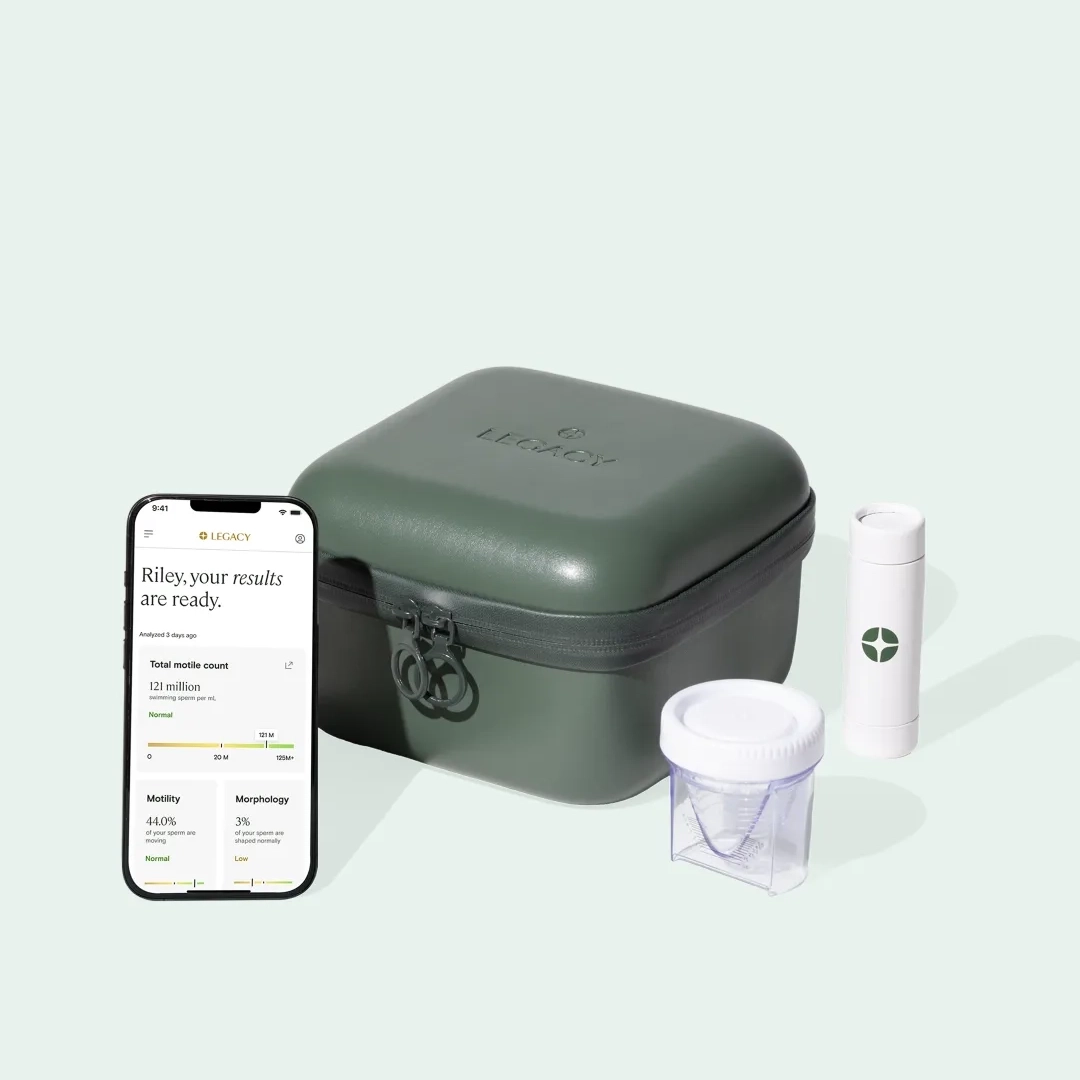
Standard Semen Analysis
$295
Key features

Semen volume
Sperm concentration & count
Motility
Morphology