Vitamin D and male fertility



Vitamin D for male fertility: what is it, and what are the benefits? Should you take vitamin D if you’re trying to conceive?
Research suggests vitamin D, the “sunshine vitamin,” may play a vital role in fertility. But in recent years there has been growing concern that most people’s vitamin D levels are too low. Should we supplement with vitamin D when trying to conceive? Let’s explore the current evidence base to learn about vitamin D’s benefits for male fertility.
Key takeaways
- Vitamin D plays an important role in health, and has been linked to changes in sperm count, sperm quality, and testosterone levels, all of which can impact male fertility.
- Sun exposure, certain foods, and supplements can ensure you have the correct vitamin D levels to maximize your fertility.
- If you choose to supplement with vitamin D for your fertility, make sure you are taking the correct dosage so you don’t experience unintended side effects.
What is vitamin D?
Vitamin D is a steroid hormone made when your skin has been exposed to the sun — hence its nickname, the “sunshine vitamin.” It is produced endogenously (within our bodies) from cholesterol when ultraviolet rays of sunlight touch our skin.
Vitamin D, sometimes referred to as calciferol, is a fat-soluble vitamin and can be found naturally in some (although very few) foods. It’s also added to some foods for extra nutritional benefit, and can be taken in supplement form.
Vitamin D promotes calcium absorption in the gut and enables normal bone mineralization, the process of producing hard, strong bones. Vitamin D is required for bone remodeling and bone growth, and insufficient levels can lead to thin, brittle, or misshapen bones. Vitamin D insufficiency in childhood can lead to rickets, a deformity of the leg bones.
Vitamin D also plays a role in many other integral bodily functions, including reducing inflammation, cell growth, metabolizing sugar, and fertility.
Why do people take vitamin D supplements?
Some people are at higher risk of developing vitamin D deficiency, including those who work in an office, shift workers, and those living in cooler climates. This is due to their significantly lower exposure to natural daylight than those who work outside and live in sunnier climes.
People are advised to supplement with vitamin D for several reasons related to optimal health. Those with vitamin D deficiency may suffer from tiredness, aches and pains, severe bone or muscle pain/weakness, and an increased risk of a stress fracture.
Vitamin D supplementation can prevent rickets in children and osteomalacia (bone softening) in adults. It is often combined with calcium to help protect older adults from developing osteoporosis, or brittle, weak bones.
It is estimated that around 41.6% of the US population is deficient in vitamin D. Deficiency is especially prevalent among darker-skinned people, because darker skin tones require greater amounts of sun exposure to produce enough vitamin D. The melanin pigment, which is higher in darker skin tones, can provide more protection against skin damage but also may prevent vitamin D production.
People who struggle to absorb nutrients from their food may also be at risk of vitamin D deficiency and are advised to supplement. This is especially true for people suffering from inflammatory bowel disease (IBD), as it blocks your intestine’s ability to process fat, and as vitamin D is a fat-soluble vitamin, the absorption of it is often challenging.
You're ready to start a family. But are your sperm?

How is vitamin D linked to male fertility?
Research suggests that vitamin D levels play a vital role in reproductive health. Vitamin D has been linked with sexual function, testosterone levels, and overall fertility. Let’s take a closer look at the research linking vitamin D with male fertility measures.
Vitamin D, sperm count, and sperm quality
A 2022 study looked at the relationship between levels of vitamin D in the blood and several sperm parameters in men with unexplained fertility issues. Researchers found a significant association between low vitamin D levels and high levels of sperm DNA fragmentation, or damage to the genetic material within sperm.
They also found that sperm count, motility (how many sperm are moving or “swimming”), and morphology (how many sperm are the proper shape and structure) were correlated with levels of serum vitamin D. Vitamin D levels were lower in infertile men, compared to the control group of fertile men.
In 2011, a study found a link between vitamin D levels and sperm motility, suggesting this vitamin plays an important role in human sperm function.
Another study looked at levels of vitamin D in infertile couples using assisted reproductive technology (ART). They found that males with higher vitamin D levels had better sperm morphology and increased sperm count, though there were no effects on ART outcomes.
However, the evidence is conflicting. Another study showed that low vitamin D levels did not impact semen quality in young, healthy men — and that in fact, higher vitamin D levels were associated with poorer semen quality. This calls for more research into this nuanced relationship.
Some studies suggest that the optimal serum concentration of vitamin D — the level of vitamin D in the blood — for male reproductive health is between 82 and 102 nmol/L.
Can taking vitamin D supplements improve sperm quality?
Maybe. Vitamin D supplementation has been associated with increased sperm motility and improved pregnancy rates among those with male-factor infertility.
Researchers in Denmark conducted a triple-blind, randomized controlled trial (RCT) to investigate whether vitamin D supplementation could improve semen quality and hormonal balances for infertile men. Participants were included in the study if they met the following criteria:
- Part of a couple diagnosed with infertility due to impaired semen quality
- Had vitamin D levels below 20ng/ml
- No other serious secondary diseases
A total of 307 participants provided two semen samples for analysis and had blood drawn for a baseline assessment. After being randomly assigned to the test or control group, those in the test group received a single dose of 300,000 IU vitamin D3, plus a daily dose of 1,400 IU vitamin D3 along with 500mg of calcium for 150 days. Those in the control group received a placebo pill for the same period of time. The researchers reported the following findings:
- Unsurprisingly, the test group had significantly higher vitamin D levels than the placebo group.
- Sperm count was higher in the test group compared to the placebo group, but this did not reach statistical significance. Overall, high-dose vitamin D supplementation did not appear to improve semen quality in vitamin D-depleted infertile men.
- However, despite an obvious improvement to semen parameters, pregnancy rates were significantly higher in the test group:
- 7.3% of the test group achieved pregnancy without assistance from a physician, compared to 2.4% of the control group.
- In a subgroup of men identified as having oligozoospermia (low sperm count), the chance of a live birth was 35.6% in the test group, compared to 18.3% in the placebo group.
A more recent study from 2021 carried out another RCT to look at the effect of vitamin D supplementation on sperm quality. This second study found that after three months of vitamin D supplementation, sperm motility may be improved in men with asthenozoospermia (poor sperm motility).
Vitamin D and testosterone
The evidence connecting vitamin D and testosterone is mixed and inconclusive.
A 2010 study found an association between lower vitamin D levels and decreased testosterone production in men. A 2012 systematic review and had a similar conclusion, showing that vitamin D is positively associated with semen quality and increased testosterone levels. Again, a 2020 study found that vitamin D deficiency was associated with low testosterone levels in young men.
Another review in 2014 examined the evidence base around the association between hypogonadism (low testosterone) and vitamin D found a U-shaped association. In other words, those with too-high levels of vitamin D and those with vitamin D insufficiency were both more likely to have low testosterone levels.
Can supplementation help? A study in 2017 on vitamin D supplementation in healthy men showed no evidence of an effect on their testosterone levels. But this counteracts the results of a 2011 study, which found that the group taking vitamin D had a significant increase in testosterone levels, compared to the control group.
A study in 2018 that investigated the levels of vitamin D in relation to sexual dysfunction found that lower levels were associated with erectile dysfunction, lowered libido, and reduced orgasmic function. These findings were supported by a meta-analysis in 2020 that concluded that there is an association between vitamin D deficiency and the presence of severe forms of erectile dysfunction.
Other benefits of taking vitamin D
Pregnant people are advised to take vitamin D to support bone health for their growing baby. Taking vitamin D has also been shown to help treat or manage symptoms of:
How to increase vitamin D intake
Vitamin D is found in some food, including:
- Some fish (including tuna and salmon)
- Egg yolks
- Fortified foods, such as dairy milk and cereals
- Mushrooms
- Cod liver oil
However, the level of vitamin D in food is quite low. If you are deficient in vitamin D, it’s best to focus your efforts on sun exposure and supplementation.
Aim to get 10–30 minutes of midday sunlight, several times per week. (People with darker skin may need a little more than this.)
If you’re supplementing, you may follow these guidelines:
- Those age 1–70: at least 600 IU (15mcg) of vitamin D per day
- Infants up to age 1: 400IU (10mcg) of vitamin D per day
- People over 70: 800 IU (20mcg) of vitamin D per day
There are two forms of vitamin D supplement: D2 and D3. A 2017 study found that vitamin D3 is more readily absorbed by our bodies, compared to D2.
Other supplements that may benefit male fertility and hormone health
These include but are not limited to:
- Coenzyme Q10
- Vitamin C
- Vitamin E
- Folate
- Zinc
- Selenium
- L-carnitine
- D-aspartic acid
- Lycopene
An easy way to make sure you’re getting all these nutrients is to take an all-in-one multivitamin. Legacy’s male fertility supplement includes these active ingredients.
Get more information about improving male-factor fertility with supplements.
Find what's right for you

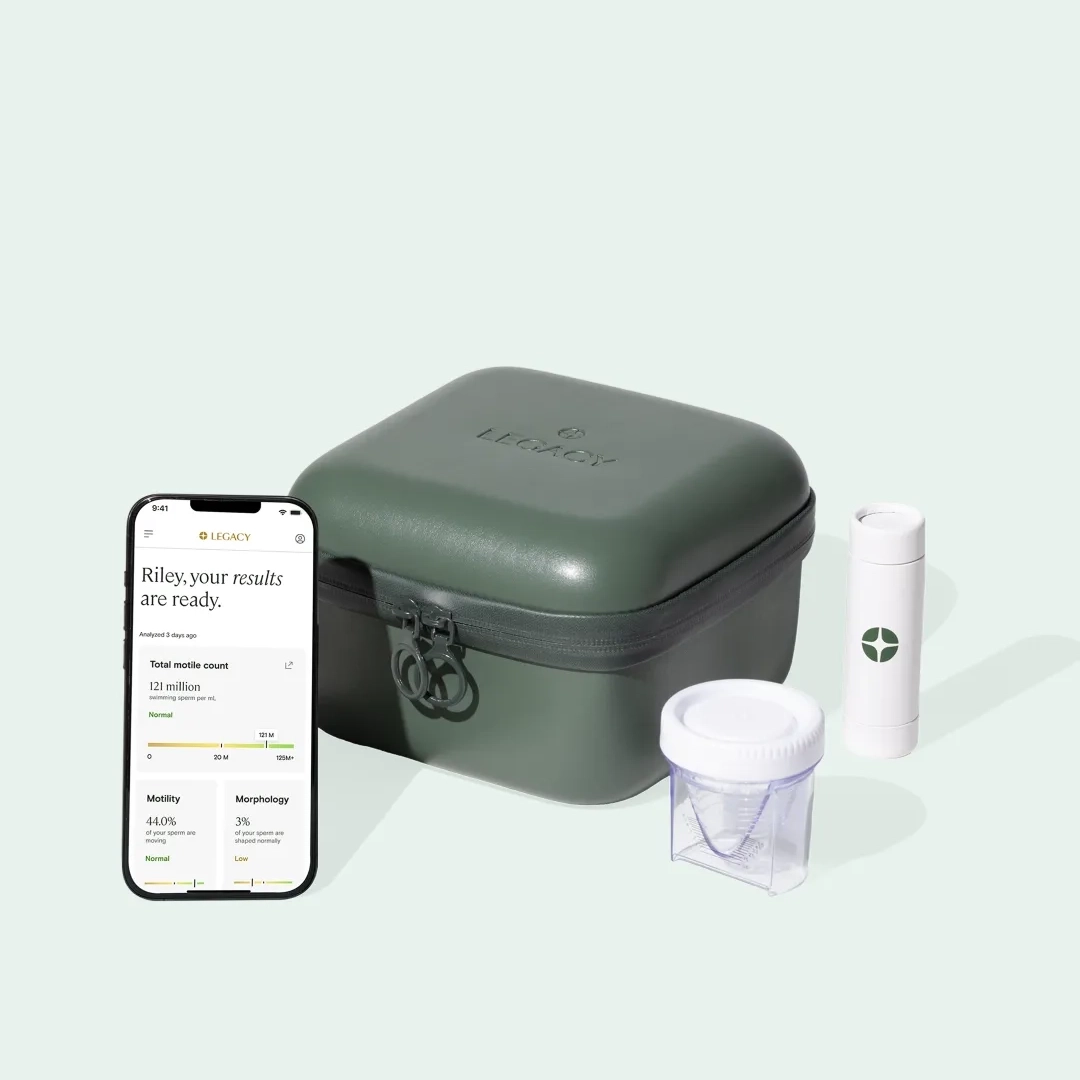
Standard Semen Analysis
$295
Key features

Semen volume
Sperm concentration & count
Motility
Morphology