Does sperm freezing affect sperm quality?



Learn more about the sperm cryopreservation process, whether frozen sperm is better than fresh, and the effects that freezing may have on your sperm quality.
Sperm cryopreservation, or sperm freezing, is a technology used worldwide to preserve future fertility prospects for people who produce sperm. Sperm cryopreservation is a solution for those facing immediate threats to their fertility, such as cancer treatment — fertility preservation prior to treatment gives patients the option to have kids later, even if their treatment affects sperm production.
But sperm freezing is also an increasingly accessible option for those who want to preserve their fertility for other reasons, including the growing number of people waiting until later in life to start a family.
Read on to learn more about the sperm cryopreservation process, whether frozen sperm is better than fresh, and the effects that freezing may have on your sperm quality.
Key takeaways:
- Sperm cryopreservation is used to preserve fertility. Frozen sperm can be stored and later thawed for use in assisted reproductive technologies such as IVF and IUI.
- The freeze and thaw process does marginally reduce sperm quality. However, frozen sperm is as effective as “fresh” sperm when looking at pregnancy and live birth rates.
- You can store frozen sperm for many years without any negative impact on your sample.
How does sperm cryopreservation work?
Sperm cryopreservation, known commonly as sperm freezing, is the process by which spermatozoa (sperm) are frozen at very low temperatures. This temporarily pauses biological activity in the sperm cell, preventing the sperm from aging or being impacted by lifestyle or medical factors.
Once frozen, sperm can be stored and then thawed later for use in intrauterine insemination (IUI) or in vitro fertilization (IVF). Sperm freezing is a highly successful method of preserving fertility and is very safe.
The sperm freezing process
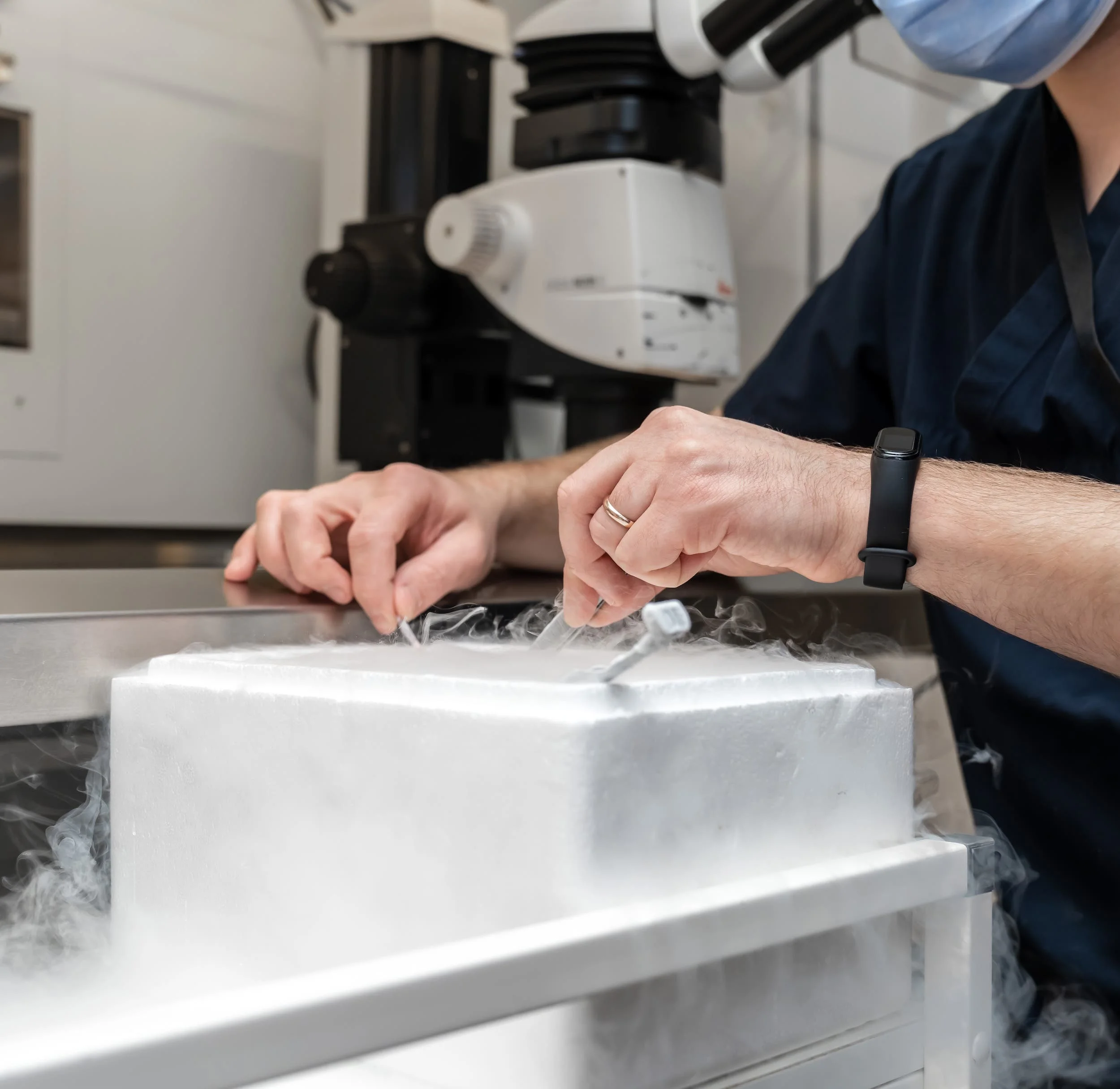
As the first step to freezing your sperm, you’ll produce a fresh semen sample via ejaculation. This sample will be analyzed, processed, and mixed with a cryoprotectant, a fluid that protects the sperm cells during the freezing process.
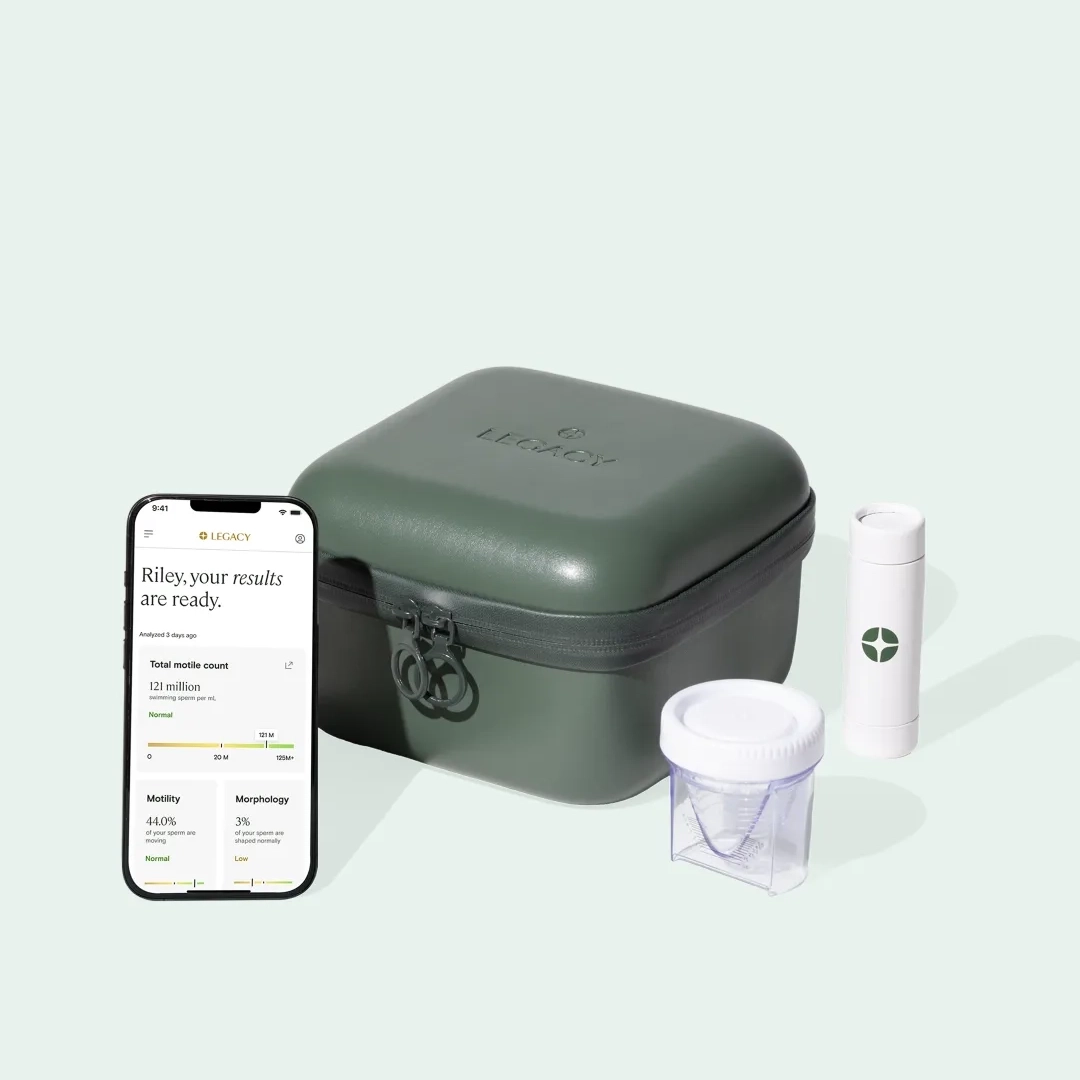
Legacy’s kit allows you to produce your semen sample at home and ship it directly to the lab for testing and freezing. Learn more about sperm freezing with Legacy.
Prior to freezing, the sample is divided among a number of small straw-like containers called vials. This allows for partial thawing of the sample at a later date and, therefore, ensures multiple treatments can be carried out from one sample.
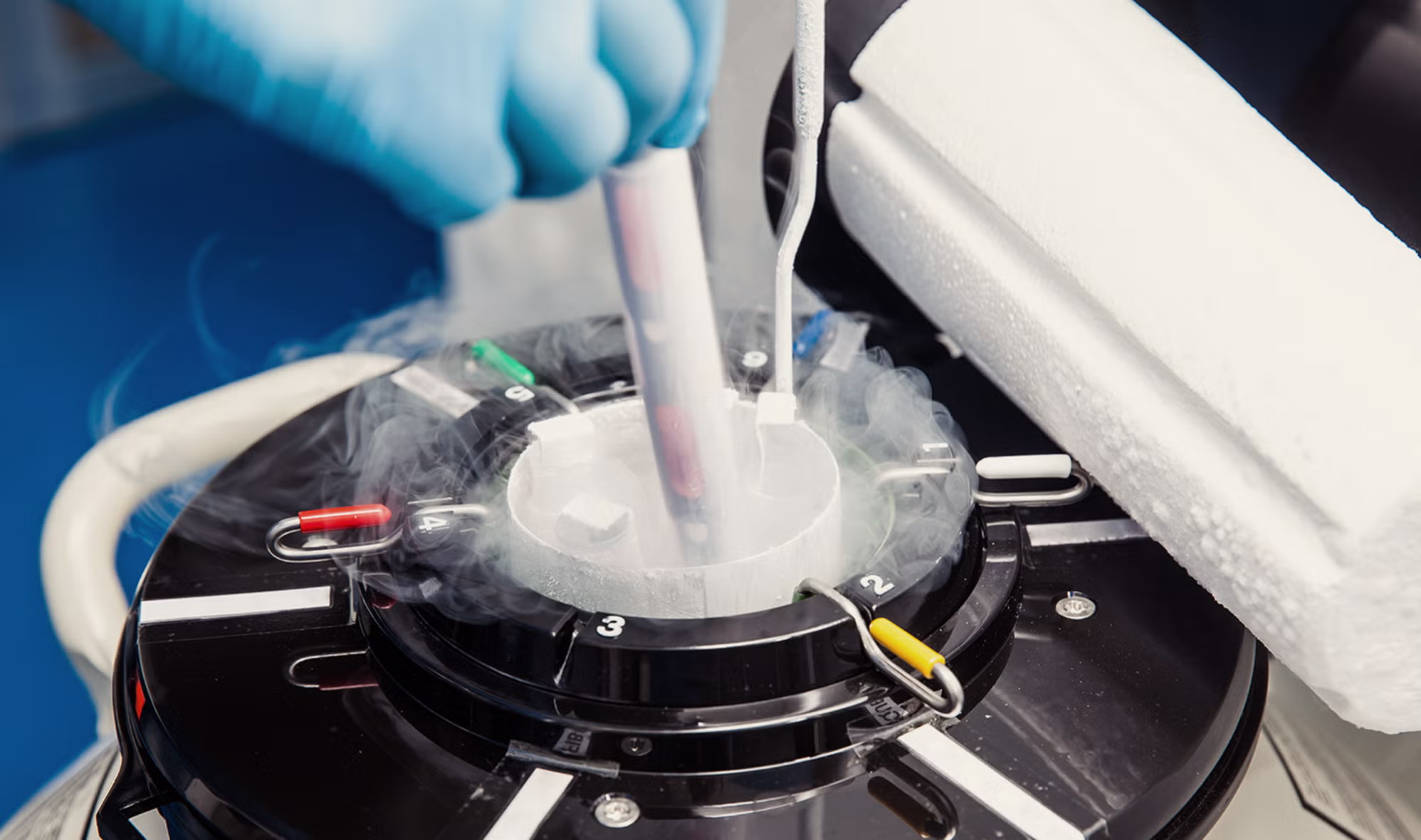
Then, the samples are cooled to a temperature of -196ºC using liquid nitrogen. Frozen sperm is kept stored in liquid nitrogen dewars (containers) to maintain this very low temperature.
Does sperm cryopreservation affect sperm quality?
The first successful live birth using frozen semen came about in 1953. It took a decade of refinement for sperm cryopreservation using liquid nitrogen to become an accepted technology worldwide. Learn more about the history of sperm freezing.
Today, sperm cryopreservation is a reliable and widely used solution for fertility preservation. Let’s look at the research on sperm quality after cryopreservation to understand how effective this technology can be.
What percentage of sperm survive freezing?
A retrospective cross-sectional study of over 100,000 semen samples found that the survival rate of sperm depended on how long they were stored.
- For samples frozen for less than 15 years, about 85% of sperm survive the freeze-thaw process
- For sample frozen for more than 15 years, the survival rate drops to about 74%
There are a great number of sperm — millions, in fact — in most samples. Therefore, a loss of 15–26% is unlikely to affect clinical outcomes. The same study found that there was no difference in pregnancy or live birth rates for samples frozen for over 15 years, even though fewer sperm survived. (More on success rates below.)
Does freezing sperm affect sperm motility or morphology?
Sperm motility refers to the percentage of sperm that are able to move or “swim.” Morphology refers to the percentage of sperm that have the proper size, shape, and structure.
Similar to the impact on sperm viability, freezing and thawing results in a low level of damage to sperm motility and morphology. For example, freezing sperm can change the tail and acrosome structures of the sperm, resulting in reduced sperm motility post-thaw. This can also be affected by altered mitochondrial structure and function, which is compromised during cryopreservation. Mitochondria play a role in providing energy to fuel sperm motility.
Several studies have shown that the greatest predictor of post-thaw motility and viability is sperm health prior to freezing. It is therefore useful to take measures to improve your sperm health, if possible, prior to freezing.
Not ready to start a family right now?
Frozen sperm success rates
Is frozen sperm better than “fresh” when it comes to pregnancy rates — or vice versa? Research demonstrates that, despite a small loss of quality, frozen sperm produces equal pregnancy and live birth rates compared to fresh sperm. This is true regardless of whether you’re using frozen sperm with IUI, IVF, or ICSI.
A large study in 2022 determined that there was also no statistically significant difference in pregnancy rates between fresh and frozen sperm samples used for intrauterine insemination (IUI). Generally, if your total motile sperm count (TMSC) is more than 8 million, IUI is an option for you after sperm freezing.
Similarly, research shows that chances of pregnancy with in vitro fertilization (IVF) are equal whether you use frozen-thawed or with fresh semen. Intracytoplasmic sperm injection (ICSI), an IVF technique in which a single sperm is injected into the egg to facilitate fertilization, is also equally successful whether using fresh or frozen sperm.
In long-term follow-up studies, there has been no evidence to suggest that using frozen sperm results in any increased risk of congenital disabilities or chromosomal abnormalities.
How long can sperm stay frozen?
How long is sperm viable after freezing? The bottom line is that, if sperm are stored properly, they can be frozen indefinitely.
A 2019 study in 2019 published in Fertility and Sterility looked at 119,558 semen specimens at a sperm bank in China. They found that frozen sperm had a slight decrease in viability and motility, largely dependent on the length of time in storage, but this had no impact on the rates of pregnancies, miscarriages, or live births when frozen for up to 15 years.
Sperm frozen for 40 years has been used to create healthy babies. So, once frozen, you’ve got some time.
Why freeze sperm?
You should consider sperm cryopreservation if:
- You might have kids later in life (i.e., after 35). Age affects sperm quality, so older sperm is less optimal and infertility rates are higher with age.
- You have a low sperm count or declining sperm quality, and want to preserve your sperm before the quality deteriorates further.
- You have a health condition and need medical treatment that may affect your fertility, such as chemotherapy for cancer, or testosterone replacement therapy for low T.
- You’re in the process of gender transition and would like to preserve your fertility before undergoing hormone therapy or reconstructive surgery that could reduce your fertility.
- You would like to have a vasectomy but want to make sure you have the option to have children at a later date, if you change your mind or your circumstances change.
- You are facing risk of injury, chemical exposure, or death, such as firefighters or those serving in the military.
- You are serving in the military or have another job that prevents you from being at home for long periods when trying to conceive with your partner.
- You’re planning fertility treatment but may have difficulty producing a sample on the day of your procedure.
- You simply want to ensure that you’ll be able to have biological children no matter what life throws at you.
Learn more about affordable sperm freezing options.
Find what's right for you

Standard Semen Analysis
$295
Key features

Semen volume
Sperm concentration & count
Motility
Morphology