Ashwagandha for male fertility and sperm count — Supplements for male fertility


The science behind ashwagandha for sperm count and male fertility.
There are many ways you can support your fertility when trying for a baby but sometimes the sheer volume of information can be overwhelming. We have examined the latest scientific research to bring you the best advice on which supplements can benefit male fertility and how you can use these alongside a healthy diet and lifestyle to achieve your fertility goals.
In this article, we’ll focus on ashwagandha and ask, what is it? How can ashwagandha improve sperm count? And what’s the best way to benefit from this supplement to improve your chances of conceiving?
Key takeaways
- Ashwagandha is a herb that has been used in traditional Indian healing for centuries.
- There is now a growing evidence base supporting its benefits within the scientific community.
- Research is still in its infancy but shows promising results linking ashwagandha supplementation to improved sperm count, sperm quality, and increased testosterone.
- It has been linked to several benefits through randomized-controlled trials (RCTs), including stress relief, improved cognitive function, insomnia relief, and improved athletic performance.
- Ashwagandha has a low number of reported side effects and can be included in a supplement regime to support male fertility alongside other fertility-supporting ingredients such as maca, omega-3s, and fenugreek.
What is ashwagandha?
Traditionally used in healing for centuries, ashwagandha is a medicinal plant. It is an essential herb in Ayurveda, an alternative medicine system based on Indian principles of natural healing. It has been taken for over 3,000 years to increase energy levels, improve concentration and focus, and also to relieve stress. However, in recent times, this ancient herb has caught the scientific community’s attention as more evidence supports the wide-reaching benefits of taking this herb.
Ashwagandha has a few different names, sometimes referred to as winter cherry, Indian ginseng, or its full botanical name: Withania somnifera. In Sanskrit, it translates as “smell of the horse,” referring to the herb’s pungent aroma and, anecdotally, in reference to its potential ability to increase a person’s strength. As we take a deeper look into the current research, there is growing evidence that the age-old claims associated with this herb’s healing power could be based on truth.
Why do people take ashwagandha?
In 2020, scientists carried out a review of the evidence base surrounding the consumption of ashwagandha. They examined 69 studies investigating the efficacy and safety of taking the herb. The review found it to be a safe treatment in the management of many clinical issues, including chronic stress, insomnia, and rheumatoid arthritis, as well as having some beneficial impacts on fertility in both men and women. It has been identified as a potential treatment for anxiety and other central nervous system disorders and contains important chemical constituents such as flavonoids, saponins, and tannins. These phytochemicals demonstrated pharmacological activities, including anti-stress, anti-aging, anti-cancerous, immunomodulatory, cardioprotective, and neuroprotective. However, it was noted that there is a need for better-designed RCTs with larger participant numbers to fully explore the efficacy of this herb.
You're ready to start a family. But are your sperm?

Can ashwagandha improve male fertility?
Recent research findings link ashwagandha supplementation with improvements in male fertility. Recent systematic reviews found a link between supplementation with ashwagandha and increased fertility due to the antioxidant power of the herb. Here are the main ways it has been shown to help:
Ashwagandha and sperm count
In a triple-blind RCT, researchers compared the effects of ashwagandha to pentoxifylline and a placebo group. The group taking ashwagandha showed a 12.5% mean increase in sperm count, a 21% improvement in progressive motility, and a 21% improvement in sperm morphology. Due to the lack of adverse side effects, ashwagandha was indicated as a better alternative to pentoxifylline for the treatment of male infertility.
Ashwagandha and sperm quality
A study published in the journal of the American Society for Reproductive Medicine found that treatment with ashwagandha effectively reduced oxidative stress and showed improved semen quality markers in fertile men. Oxidative stress can damage the membrane of sperm, affecting motility, morphology, and DNA fragmentation. Another study over a three-month period showed improved semen quality by combating oxidative stress and cell death as well as improving essential metal ion concentrations.
A systematic review of the studies into ashwagandha and its effect on fertility called for more RCTs to be carried out but reported there was promising evidence that using it could lead to improvement in serum hormonal profile, oxidative biomarkers, and antioxidant vitamins in seminal plasma.
Ashwagandha and testosterone
Ashwagandha can significantly increase testosterone levels by possibly increasing the activity of natural endogenous antioxidants. Scientists examined the effects of taking ashwagandha in a 60-day randomized, double-blind, placebo-controlled study in 60 healthy adults. The researchers were particularly interested in ashwagandha’s stress-relieving properties and pharmacological activity. As part of this study, researchers measured testosterone levels and other hormones. No adverse effects were reported, and intake of the herb was associated with greater reductions in morning cortisol, significant decreases in anxiety, and some increased testosterone levels. It was considered that the stress-relieving effects might come about due to changes on the hypothalamus-pituitary-adrenal (HPA) axis. However, more RCTs are called for to investigate this mechanism in more depth.
A study into the effect of taking ashwagandha over eight weeks by overweight, aging men resulted in increased testosterone levels.
A recent RCT study in 2022 found a statistically significant increase in serum testosterone levels compared to the placebo group when men took ashwagandha over eight weeks, which also demonstrated an increase in the subjective perception of sexual well-being.
Other benefits of ashwagandha
Ashwagandha has been linked to a wide variety of benefits.
1. May help improve brain function, including attention and memory
One study concluded that acute supplementation with the herb could improve measures of executive function, sustaining attention, and short-term/working memory. Another found potential benefits to those in aging populations concerning improved cognitive function.
2. May help symptoms associated with neuropsychiatric conditions
Its application in the treatment of neuropsychiatric conditions, such as ADHD and substance-use disorders, is currently being investigated, as well as its use in treating the symptom severity in those with schizophrenia. One study found that taking ashwagandha for 12 weeks significantly reduced depression and anxiety compared to the placebo group.
3. May improve sexual function in women
A study looking at the efficacy and safety of ashwagandha supplementation in women found that it may improve sexual function in healthy females.
4. May improve sleep
Ashwagandha has also been shown to improve sleep in adults, although there is a current lack of data concerning the safety of long-term use. Sleep is an important factor underpinning good fertility, so taking this herb as a short-term sleep aid may also have a positive knock-on effect on male fertility.
5. May aid in stress reduction
This herb is commonly referred to as an adaptogen, which is the name for a substance that helps the body cope with stress. Research has identified it has an effect on cortisol levels and heat shock proteins, which play a role in stress responses. It has also been shown to reduce the activity in the HPA axis, which is a system that regulates your body’s stress response.
6. May improve performance in sports
This has been demonstrated in two ways: by increasing muscle strength over eight weeks and by enhancing maximum oxygen consumption in athletes and healthy adults, both of which can improve athletic performance.
How to take ashwagandha supplements
Current scientific research into the effects of ashwagandha on humans is still in its infancy, but the results have been promising. There are very few reported adverse side effects, and there appear to be many potential benefits. More research into dosage and time frames is required, but it is a simple addition to most diets that is affordable and appears to have a low risk of side effects. It is advisable not to take ashwagandha if you are already pregnant, as it may cause miscarriage if taken in high doses. As it has been shown to increase testosterone levels, it is contraindicated for patients with hormone-sensitive prostate cancer.
Dosing recommendations vary due to the wide range of dosage amounts used in trials. It is always advisable to consult a healthcare professional if you would like help regarding dosage recommendations for ashwagandha. The effects are not immediate, so consider this before taking any supplements — it may take a few months before you notice any changes. Most people take ashwagandha in a single-dose capsule, which is widely available from most health food stores. However, to ensure good quality supplements, it is advisable to obtain your ashwagandha from a reputable seller. Legacy has more information on supplements to help support your fertility.
Other supplements that may benefit male fertility and hormone health
- Maca root powder: Maca is a natural aphrodisiac and can help male fertility by increasing both sperm concentration and motility when taken over 12 weeks.
- Fenugreek is a great addition to your diet as a supplement that effectively helps male fertility. It has been shown to improve free testosterone levels even up to three months after supplementation, which in turn boosts sperm count, morphology, and libido. You can add fenugreek to your cooking or take it more easily in supplement form. It is derived from fenugreek seeds and has been shown to significantly improve hormone regulation and reproductive health.
- Omega-3 fatty acids have shown great success in improving measures of fertility. One study showed nearly a 100% increase in sperm concentration following omega-3 supplementation.
Find what's right for you

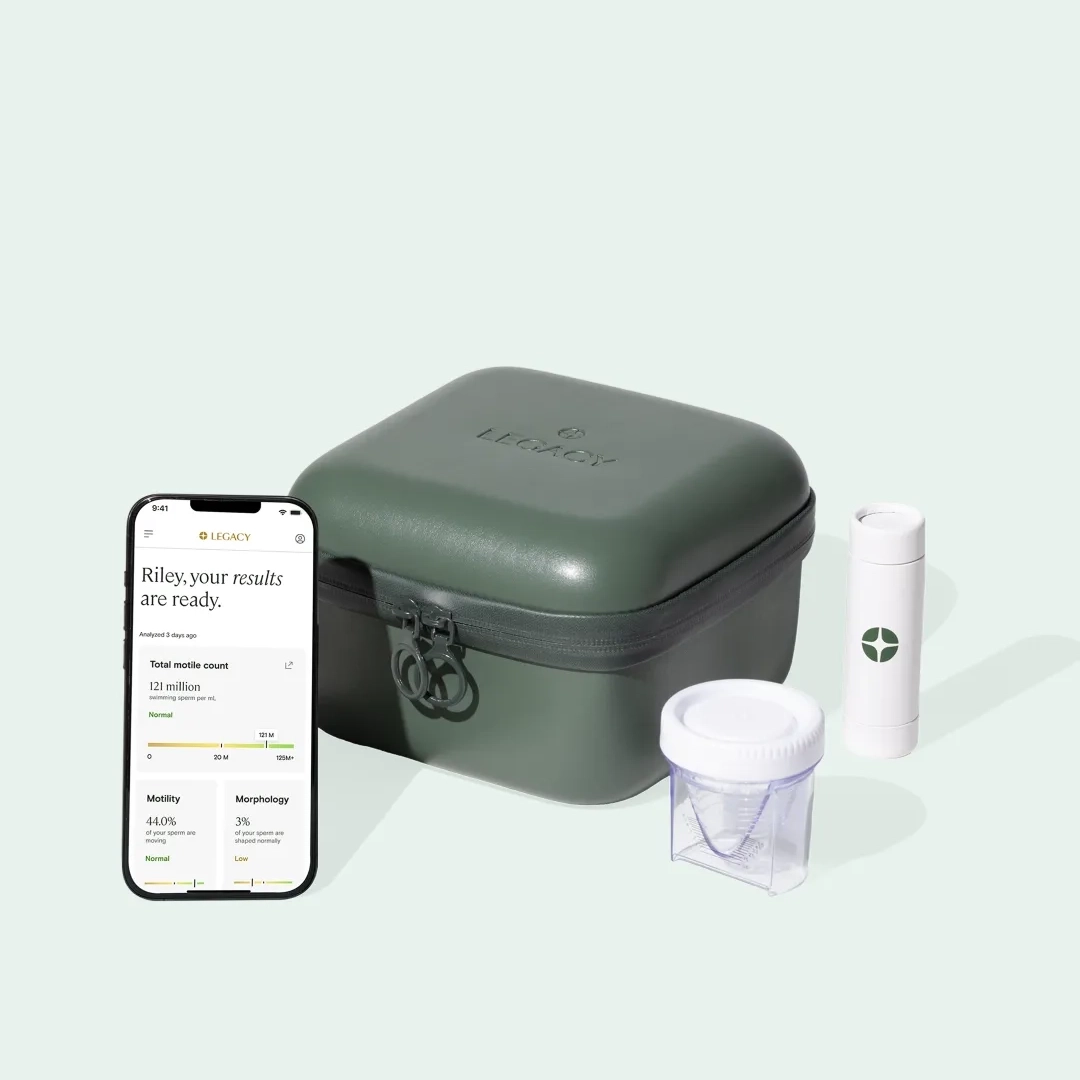
Standard Semen Analysis
$295
Key features

Semen volume
Sperm concentration & count
Motility
Morphology