Vasectomy parties: Why guys are getting “the snip” together



Vasectomy parties or “brosectomy” allows guys to go through the process of vasectomy together. Here’s what you should know, and how to plan one.
Vasectomy is all the rage right now.
On June 24, 2022, the U.S. Supreme Court overturned Roe v. Wade with a new ruling, Dobbs v. Jackson Women’s Health Organization. This marked the end of a person’s constitutional right to an abortion — and the beginning of a lot of people searching for fool-proof, long-term birth control.
One of the methods people are researching? Vasectomy. Since this landmark ruling, there has been a distinct spike in people with sperm who are interested in having a vasectomy.
In an article published in Bloomberg UK, Planned Parenthood stated that web traffic to their article on how to get a vasectomy increased by more than 1500%. Similarly, an article in the Guardian says that the daily web searches asking where to get a vasectomy have swelled by 850%.
And it’s no different here at Legacy. Dr. Ramy Abou Ghayda, urologist and Legacy chief medical officer, said there has been increased interest in vasectomies and questions about freezing and storing sperm prior to vasectomy.
As this curiosity about vasectomies has grown, so has the concept of the “brosectomy” — that’s a group of friends having vasectomies together, also known as a vasectomy party.
Key takeaways
- Some clinics are offering “brosectomy” vasectomy parties, allowing patients to undergo and recover from vasectomy together.
- Brosectomies may reduce anxiety around the procedure, promote male bonding, and even offer a “bulk discount” on the procedure.
- Vasectomy is a low-risk procedure offering highly effective permanent birth control — it’s best to consider freezing your sperm beforehand, just in case.
What is a “brosectomy”?
The core concept of a vasectomy party is that you don’t have to go through the experience of a vasectomy alone. Instead, you and your friend (or friends) book into the same medical clinic to have a vasectomy on the same day. This works because vasectomy is a short, outpatient procedure.
After getting back-to-back surgeries, you head off to a location together to relax — perhaps you stay in the same home or maybe even book a cabin or hotel for the weekend. The key is that you attend the clinic together, and then heal together.
What does a vasectomy involve?
A vasectomy is a form of permanent contraception and male sterilization.
Let’s talk about the anatomy of the procedure for a minute. The vas deferens is a long tube that carries sperm from the testes, through the male reproductive tract, to the ejaculatory duct. There, sperm mixes with other fluids to make semen. There’s a vas deferens on each side of your scrotum, connecting to each testicle. When you ejaculate semen that contains sperm into the female reproductive tract, the sperm can join up with an egg — leading to pregnancy.
During a vasectomy, the vas deferens tubes are cut or sealed to prevent sperm from entering the semen. This means that when you ejaculate, there is no sperm in your semen, therefore preventing pregnancy.
There are two types of vasectomy:
- A conventional vasectomy: During this procedure, a doctor uses a scalpel (surgical knife) to make two small cuts in the skin on each side of your scrotum to reach the vas deferens. A section of each tube is then removed, and the ends are either tied or sealed with heat. You then need a few small dissolvable stitches to close up the cuts.
- A no-scalpel vasectomy is done through a tiny puncture hole rather than a cut. The tubes are then tied or heat-sealed in the same way as a conventional vasectomy. Because no stitches are required, there is less bleeding, and it’s thought to be less painful.
Both procedures are usually done under a local anesthetic and only take around 15 minutes to complete.
Vasectomy is a great permanent birth control option for those are done having kids, because it prevents pregnancy without affecting testosterone levels or sexual function, and rarely causes further complications. Normally, there is only minor swelling or discomfort after the surgery, so most patients can return to work 24–48 hours afterward.
Planning a vasectomy?

Should you get a “brosectomy” with friends?
Although the concept of a vasectomy party might seem strange, there are some benefits, including:
- giving you the courage to go through with the procedure
- easing anxiety when attending with a friend
- bonding with your friends on a new level
- taking your mind off any pain or discomfort
- getting a discount on the price at some medical clinics that offer a brosectomy package
- making a potentially scary procedure fun
If you are nervous about getting a vasectomy and think it may help to go with a friend, there is certainly no downside to doing it together.
Dr. Paul Turek, Legacy advisor and one of the pioneers of the “brosectomy,” says that when men get vasectomies in groups, they “[take] fewer pain pills, [feel] better faster and [return] to work earlier than the average, go-it-alone-out-on-the-plank, tube-tied patient.”
How effective is a vasectomy?
A vasectomy is considered one of the most reliable forms of birth control. It’s more than 99% effective.
The key thing to remember is that it is not effective right away. You still have sperm in the vas deferens for up to three months afterward. Semen analysis is recommended about 12 weeks after a vasectomy, to confirm that it has worked and there are no more sperm in your semen. You must continue to use contraception until your healthcare provider ensures you are sterile.
There is an incredibly rare chance the cut ends of your vas deferens grow back together after a vasectomy, which would mean it hasn’t worked. The failure rate of vasectomy is less than 1%.
Things to consider before a vasectomy
As with any operation, there are things to consider before you go ahead. Here are our top five things you need to know about vasectomy before booking a “brosectomy.”
Vasectomy reversal isn’t reliable
A vasectomy is considered permanent. If you change your mind, vasectomy reversal is an expensive and invasive procedure with no guarantee of success. You need to make sure this is the right decision for you.
Freeze your sperm first
You should consider freezing your sperm before you have a vasectomy. By freezing your sperm, you keep the option open to have children in the future — and sperm freezing is less expensive and more effective than vasectomy reversal. (Plus, it saves you the need to have a vasectomy again in the future!)
Vasectomy are birth control, not total protection
Vasectomies do not protect against sexually transmitted diseases. If you’re having sex with new partners or want to protect yourself against STIs, you should continue to use condoms.
Vasectomy won’t alter your sex life
There’s a common misconception that vasectomy is the human equivalent of “neutering” a dog, in which the testicles are completely removed. We’re here to reassure you this is not the case.
Vasectomy does not have any impact on your sex life, sensation, ability to have sex, or ability to ejaculate. Your testicles stay intact. The only change is that your semen will no longer contain sperm to prevent pregnancy. There are no sexual side effects.
Ideas for planning a vasectomy party
When it comes to planning a vasectomy party, you can either contact a clinic who offers a group vasectomy “experience,” like Dr. Turek’s Brosectomy package, or you can plan your own weekend around your procedures. Here are some tips for planning a successful group vasectomy.
- Consider planning your procedures for Friday, so you have Saturday and Sunday to recover and hang out together.
- Contact the clinic in advance to understand how many vasectomies they can accommodate per day, how long they’ll take, whether you can wait together for the procedures, and any other prep you’ll need to do beforehand.
- If you’re also taking sedatives or opiates during or after the procedure, you shouldn’t drink. These medications aren’t required for vasectomy. In most cases, ibuprofen and ice is adequate to manage the pain, leaving you the option of knocking back a few drinks afterwards.
- Most people are well enough to drive themselves home from a vasectomy, but if you’ll be drinking, taking any sedatives, or taking opiates, you should arrange for transportation between the clinic and wherever you’re staying. Might be a fun excuse to book a limo or party bus — the bonus is that you can wait there until it’s your turn to get the snip.
- Remember that you’ll have to take it easy for 1–2 weeks after your vasectomy, so this isn’t the time to plan a tackle football game or group golf outing. Stick to more lounge-like activities, like board or card games, video games, movies, watching sports, or grilling out.
- Stock your vasectomy party with ice, ice, and more ice. (Both for your drinks and for your scrotum.)
Find what's right for you

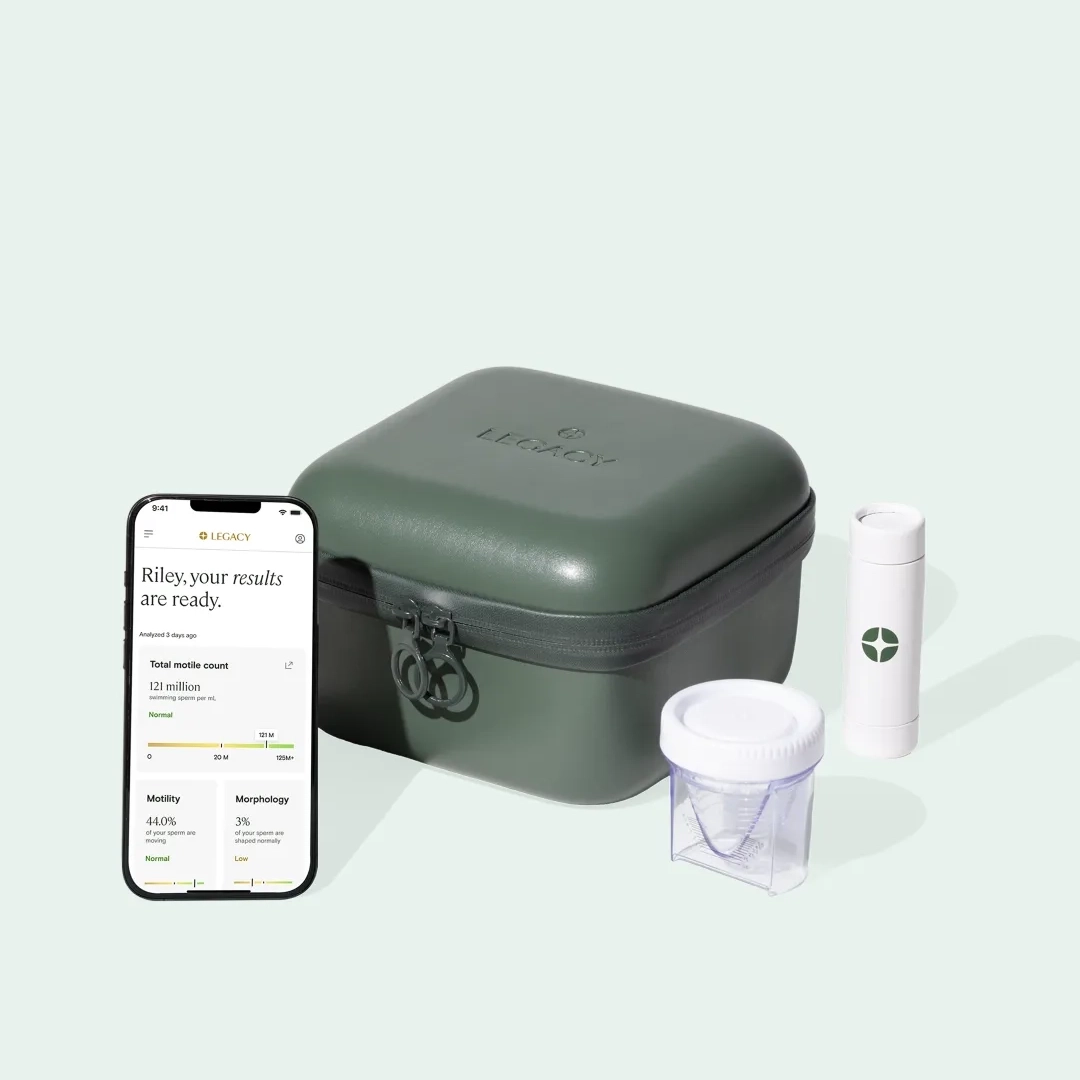
Standard Semen Analysis
$295
Key features

Semen volume
Sperm concentration & count
Motility
Morphology