Ubiquinol vs. ubiquinone: which version of CoQ10 is superior?


If you’ve tried or researched CoQ10 for fertility, you may be wondering: What’s the difference between ubiquinol and ubiquinone CoQ10? Is one better than the other? Why is ubiquinol more expensive — and is it worth it? Read on to understand ubiquinol vs. ubiquinone found in health supplements and what the research says about using CoQ10 for fertility.
If you’ve tried or researched CoQ10 for fertility, you may be wondering: What’s the difference between ubiquinol and ubiquinone CoQ10? Is one better than the other? Why is ubiquinol more expensive — and is it worth it? Read on to understand ubiquinol vs. ubiquinone found in health supplements and what the research says about using CoQ10 for fertility.
Key takeaways
- Ubiquinol and ubiquinone are forms of CoQ10 (coenzyme Q10), an antioxidant that can support fertility and overall health.
- Although some studies suggest ubiquinol may be slightly more bioavailable, most research—including a 2020 study—shows no significant difference in bioavailability between the two forms.
- Ubiquinone is more stable, widely studied, and cost-effective.
- CoQ10 supplementation—especially ubiquinone—has been shown to improve sperm quality, motility, and morphology.
What is CoQ10, and why does it matter for fertility?
Coenzyme Q10 (CoQ10) is a powerful antioxidant that’s produced naturally in the body and helps cells generate energy. CoQ10 is found in organs with high energy demands like the heart, kidneys, and reproductive organs. As we age, CoQ10 levels naturally decline1, which can negatively impact fertility in both men and women.
Antioxidants protect the body’s cells against free radicals and oxidative stress. Free radicals are unstable molecules produced as byproducts of daily life, such as toxin exposure, illness, and unhealthy lifestyle choices. If left unchecked, free radicals can damage cells. This damage is known as “oxidative stress,” which is found in 30–80% of infertility cases.2
Supplementing with CoQ10 may help protect cells from oxidative stress—a major factor in age-related fertility issues. CoQ10 also plays a key role in the function of mitochondria, the “powerhouses” of cells. Because sperm rely heavily on mitochondrial energy for development and mobility, CoQ10 may help enhance their health and performance.
What’s the difference between ubiquinol and ubiquinone?
Ubiquinol is the reduced form of CoQ10, and ubiquinone is the oxidized form. That means ubiquinone has more electrons than ubiquinol. In the body, CoQ10 molecules convert from the oxidized form to the reduced form, back and forth, repeatedly.3
You're ready to start a family. But are your sperm?
Is ubiquinol better than ubiquinone?
Some researchers have hypothesized that ubiquinol is more “bioavailable,” or more easily absorbed and used by the body. In one 2018 study4 of older men, two-week supplementation with ubiquinol resulted in enhanced CoQ10 activity compared to ubiquinone supplementation.
However, a 2020 study5 found no statistically significant difference in bioavailability between ubiquinol and ubiquinone. Even when consumed as ubiquinone, CoQ10 appeared in the blood almost exclusively as ubiquinol, indicating the body is capable of converting the coenzyme into its most effective form.
Another study from 20196 suggested the type of CoQ10 supplement matters more than the form for bioavailability. After testing seven different supplements, researchers found that soft-gel capsules containing either ubiquinone or ubiquinol were most effective.
Bottom line: There is no strong evidence to suggest ubiquinol is superior for fertility.
Benefits of ubiquinone CoQ10
Thousands of clinical trials have been conducted with ubiquinone CoQ10, and very few with ubiquinol. Ubiquinone appears to be more stable when compared to ubiquinol, and is less expensive to manufacture.
The benefits of taking ubiquinone CoQ10 include:
- Same rate of absorption as ubiquinol
- Safety backed by thousands of clinical trials
- May enhance heart function7
- May prevent migraines8
- May support healthy skin9
- May reduce fatigue10
- May have anti-depressant effects11
- May reduce inflammation12
- May improve fertility in men and women13
Does CoQ10 improve sperm quality?
Yes, CoQ10 supplementation—particularly ubiquinone—has been shown to improve various sperm health parameters, including sperm concentration, motility (movement), and morphology (size and shape) when taken as part of a healthy lifestyle. This research includes:
- A 2009 study14 in which patients with reduced sperm motility were treated with 200mg of CoQ10 per day for six months. Patients experienced increased antioxidant levels in semen and improved sperm motility.
- A 2013 study,15 in which men with low sperm count and poor motility/morphology also received 200mg of CoQ10 daily, but for three months. Compared to the placebo group, the supplement group saw significant improvement in sperm morphology.
- A 2020 study16 that pooled data from three clinical trials on CoQ10, in which researchers found that supplementation had a profound effect on sperm motility over a course of 3–6 months.
How to use CoQ10 for male fertility
Because many energy-dependent processes in sperm cells rely on the availability of CoQ10, many male fertility supplements contain ubiquinol or ubiquinone. If you’re looking to improve fertility, CoQ10 supplements work best when combined with healthy lifestyle changes, such as:
- Eating a nutritious diet, rich in fruits and vegetables and low in red meat and processed foods
- Getting regular moderate exercise (30 to 60 minutes a day)
- Getting quality sleep (7 to 9 hours nightly)
- Quitting smoking
- Limiting intake of sugar, alcohol, and cannabis
Check out our Guide to Sperm Improvement for more sperm health tips.
Try semen analysis to measure and track your sperm health
Whether you’re on a fertility journey or you’re just curious about your sperm quality, a semen analysis is an excellent way to understand your sperm health. Sperm production reboots about every three months, so if any sperm-health issues are identified, you can make lifestyle changes and reassess.
References
- Mayo Clinic. “Coenzyme Q10,” 2025.
- Huang et al. “Is male infertility associated with increased oxidative stress in seminal plasma? A-meta analysis,” 2018.
- Mantle et al. “Bioavailability of Coenzyme Q10: An Overview of the Absorption Process and Subsequent Metabolism,” 2020.
- Zhang et al. “Ubiquinol is superior to ubiquinone to enhance Coenzyme Q10 status in older men,” 2018.
- Pravst et al. “Comparative Bioavailability of Different Coenzyme Q10 Formulations in Healthy Elderly Individuals,” 2020.
- Lopez-Lluch et al. “Bioavailability of coenzyme Q10 supplements depends on carrier lipids and solubilization,” 2019.
- Sharma et al. “Coenzyme Q10 and Heart Failure: A State-of-the-Art Review,” 2016.
- Fajkiel-Madajczyk et al. “Evaluating the Role of Coenzyme Q10 in Migraine Therapy-A Narrative Review,” 2025.
- Knott et al. “Topical treatment with coenzyme Q10-containing formulas improves skin’s Q10 level and provides antioxidative effects,” 2015.
- Gokbel et al. “The effects of coenzyme Q10 supplementation on performance during repeated bouts of supramaximal exercise in sedentary men,” 2010.
- Majmasanaye et al. “Discovering the Potential Value of Coenzyme Q10 as an Adjuvant Treatment in Patients With Depression,” 2024.
- Hou et al. “Efficacy and Optimal Dose of Coenzyme Q10 Supplementation on Inflammation-Related Biomarkers: A GRADE-Assessed Systematic Review and Updated Meta-Analysis of Randomized Controlled Trials,” 2023.
- Ben-Meir et al. “Coenzyme Q10 restores oocyte mitochondrial function and fertility during reproductive aging,” 2015.
- Balercia et al. “Coenzyme Q10 treatment in infertile men with idiopathic asthenozoospermia: a placebo-controlled, double-blind randomized trial,” 2009.
- Nadjarzadeh et al. “Effect of Coenzyme Q10 supplementation on antioxidant enzymes activity and oxidative stress of seminal plasma: a double-blind randomised clinical trial,” 2014.
- Vishvkarma et al. “Coenzyme Q10 effect on semen parameters: Profound or meagre?,” 2020.
Find what's right for you

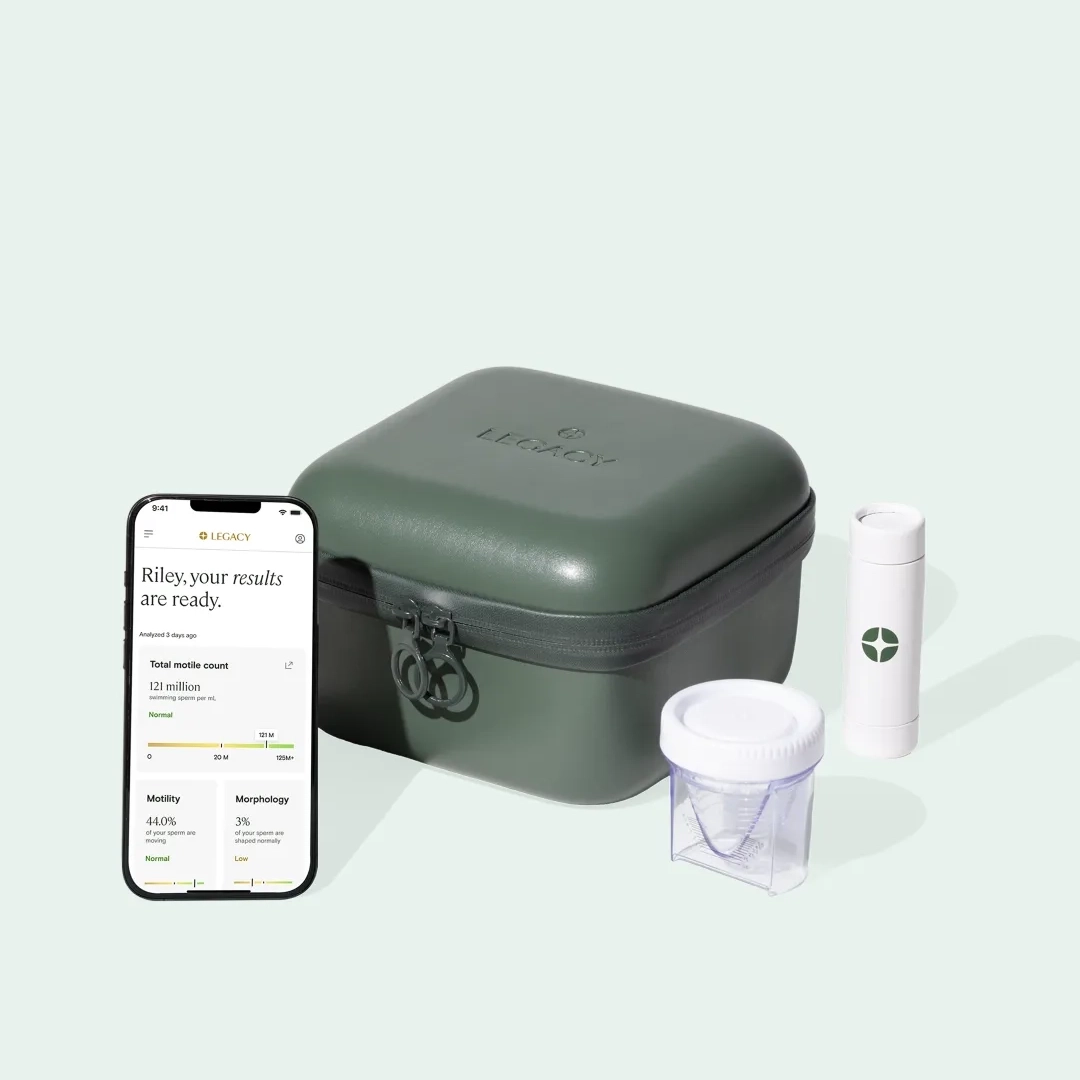
Standard Semen Analysis
$295
Key features

Semen volume
Sperm concentration & count
Motility
Morphology