The United States of sperm



The best and worst states for sperm health, according to Legacy’s proprietary database, the largest dataset of its kind.
In biology class, we’re taught that sperm is an endlessly renewable natural resource, relentlessly produced in the millions, providing redundancy upon redundancy. After puberty, it’s just there, ready when you need it, no worries.
In reality, scientists are worried. Worldwide, the average sperm count has dropped 50% in the last 50 years. Sperm health can no longer be taken for granted. The body’s original auto-renew subscription can be affected by almost every variable of everyday life, from diet and exercise to chemical exposure.
And that can be affected by where you live. Let’s dive into Legacy’s data to see how sperm health might vary across state lines.
How we ranked the states
Our team analyzed data from over 22,000 semen samples tested by Legacy’s labs, the largest dataset of its kind.
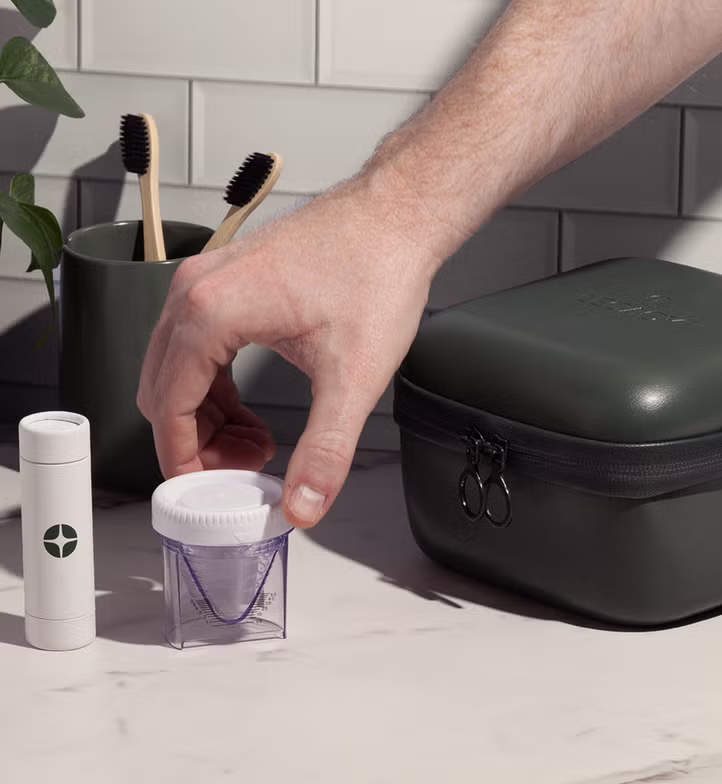
Legacy’s clinic-grade sperm testing evaluates all industry-standard metrics of sperm health.
Our team ranked each state by sperm concentration, the number of sperm per milliliter of semen. Normal sperm concentration ranges from 15 million to more than 200 million sperm per milliliter. A low sperm count is defined as fewer than 15 million sperm per milliliter.
For this ranking, we’ve included fertile and infertile men and trans women from the 48 contiguous states and Washington, DC — all areas served by Legacy’s mail-in semen analysis kits. We excluded men who’d had a vasectomy, as their sperm concentration was likely to be zero (or close to zero).
Best and worst sperm concentration
5 states with the highest sperm concentration
- Wyoming
- Idaho
- Montana
- Iowa
- Washington, D.C.
5 states with the lowest sperm concentration
- Mississippi
- South Carolina
- Oklahoma
- North Dakota
- Delaware
The best and worst sperm in the US, by state
How much do you know about your sperm?
#49: Worst sperm in the United States: Mississippi
Average sperm concentration: 25.7 million/mL

Mike Beaumont/Unsplash
#48: South Carolina
Average sperm concentration: 28.9 million/mL

Leo Heisenberg/Unsplash
#47: Oklahoma
Average sperm concentration: 29.1 million/mL

Zbynek Burival/Unsplash
#46: North Dakota
Average sperm concentration: 30.2 million/mL

Jason Rojas/Unsplash
#45: Delaware
Average sperm concentration: 30.7 million/mL

Gary Cole/Unsplash
#44: West Virginia
Average sperm concentration: 30.98 million/mL

Sharosh Rajasekher/Unsplash
#43: Tennessee
Average sperm concentration: 31 million/mL

Nathan Kosmak/Unsplash
#42: Utah
Average sperm concentration: 32.3 million/mL

Andrey Grinkevich/Unsplash
#41: Alabama
Average sperm concentration: 32.9 million/mL

Nathan Anderson/Unsplash
#40: Kentucky
Average sperm concentration: 33.5 million/mL

Amy Reed/Unsplash
#39: Connecticut
Average sperm concentration: 34.3 million/mL

Rusty Watson/Unsplash
#38: Wisconsin
Average sperm concentration: 34.5 million/mL

Caroline Gunderson/Unsplash
#37: Arizona
Average sperm concentration: 34.7 million/mL

Kaileen Fitzpatrick/Unsplash
#36: Kansas
Average sperm concentration: 35.13 million/mL

Laura Gilchrist/Unsplash
#35: Florida
Average sperm concentration: 35.15 million/mL

Denys Kostyuchenko/Unsplash
#34: Indiana
Average sperm concentration: 35.2 million/mL

Steven Van Elk/Unsplash
#33: Maine
Average sperm concentration: 35.81 million/mL

Mercedes Mehling/Unsplash
#32: Arkansas
Average sperm concentration: 35.82 million/mL

Oliver Graham/Unsplash
#31: Rhode Island
Average sperm concentration: 35.95 million/mL

Michael Denning/Unsplash
#30: Texas
Average sperm concentration: 36 million/mL

Courtney Rose/Unsplash
#29: Louisiana
Average sperm concentration: 36.2 million/mL

Kristina Volgenau/Unsplash
#28: Michigan
Average sperm concentration: 36.46 million/mL

Dan Gomer/Unsplash
#27: New Mexico
Average sperm concentration: 36.5 million/mL

Chase McBride/Unsplash
#26: Nevada
Average sperm concentration: 36.65 million/mL

Grant Cai/Unsplash
#25: Nebraska
Average sperm concentration: 36.66 million/mL

Balazs Busznyak/Unsplash
#24: Colorado
Average sperm concentration: 36.8 million/mL

Sam Dellaporta/Unsplash
#23: Missouri
Average sperm concentration: 37 million/mL

Brittney Butler/Unsplash
#22: Virginia
Average sperm concentration: 37.2 million/mL

Stephen Poore/Unsplash
#21: Massachusetts
Average sperm concentration: 37.6 million/mL

Leo Heisenberg/Unsplash
#20: New Hampshire
Average sperm concentration: 38 million/mL

Rafael Rodrigues/Unsplash
#19: California
Average sperm concentration: 38.3 million/mL

Joonyeop Baek/Unsplash
#18: Georgia
Average sperm concentration: 38.7 million/mL

Ian Baldwin/Unsplash
#17: New York
Average sperm concentration: 39.1 million/mL

Thomas Habr/Unsplash
#16: Ohio
Average sperm concentration: 39.4 million/mL

Jake Blucker/Unsplash
#15: Oregon
Average sperm concentration: 39.6 million/mL

Cedric Letsch/Unsplash
#14: North Carolina
Average sperm concentration: 39.7 million/mL

Daniel Weiss/Unsplash
#13: New Jersey
Average sperm concentration: 39.9 million/mL

Kealan Burke/Unsplash
#12: Washington
Average sperm concentration: 40.17 million/mL

Stephen Plopper/Unsplash
#11: South Dakota
Average sperm concentration: 40.18 million/mL

Sophia Simoes/Unsplash
#10: Pennsylvania
Average sperm concentration: 40.22 million/mL

Yuhan Du/Unsplash
#9: Illinois
Average sperm concentration: 41 million/mL

Nikhil Mistry/Unsplash
#8: Maryland
Average sperm concentration: 41 million/mL

Kat Keeling/Unsplash
#7: Vermont
Average sperm concentration: 45.2 million/mL

Peter James Eisenhaure/Unsplash
#6: Minnesota
Average sperm concentration: 45.4 million/mL

Lee Vue/Unsplash
#5: Washington, DC
Average sperm concentration: 49.1 million/mL

Andy Feliciotti/Unsplash
#4: Iowa
Average sperm concentration: 51.3 million/mL

Joel Drzycimski/Unsplash
#3: Montana
Average sperm concentration: 54.4 million/mL

John Kakuk/Unsplash
#2: Idaho
Average sperm concentration: 55.6 million/mL

Abigail Loney/Unsplash
#1 best sperm in the United States: Wyoming
Average sperm concentration: 56.8 million/mL

Karsten Winegeart/Unsplash
Why did the states rank this way?
Although we can’t reach definitive conclusions from this analysis, decades of scientific research suggest that a person’s environment and lifestyle can affect their sperm health.
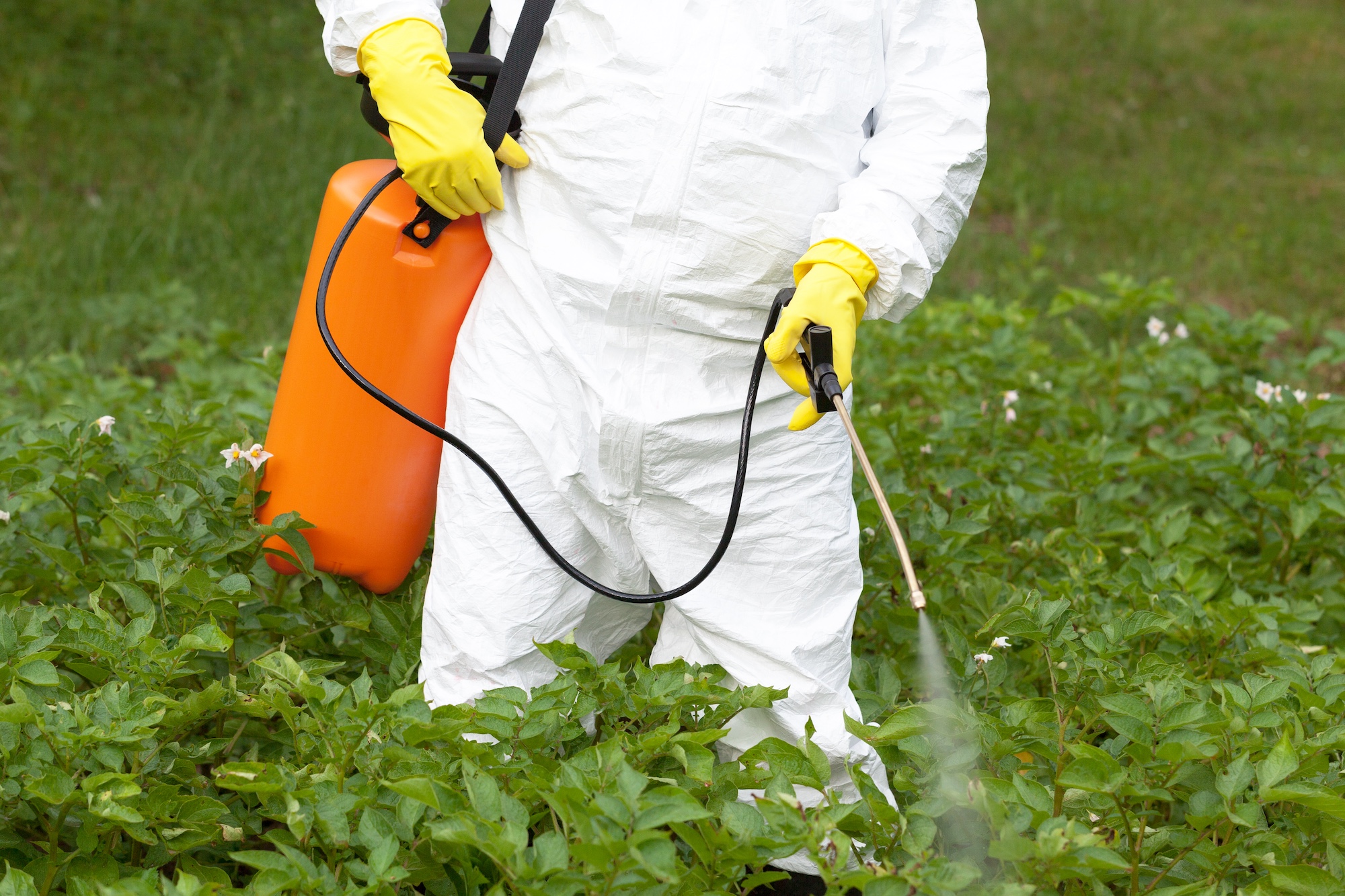
In fact, scientists believe the worldwide decline in sperm count has been primarily caused by widespread exposure to endocrine-disrupting chemicals. These toxic agents — present in thousands of common household items including soap, shampoo, detergents, packaging, home furnishings, and clothing — mimic hormones and seem to inhibit testosterone and sperm production.
Other environmental factors linked to sperm health include:
- Increasing temperatures due to climate change, which lower sperm production
- Air quality, which is increasingly affected by pollution and wildfires
- Time spent in or near nature
Studies have also found that sperm health tracks with many factors that influence overall health — including diet, activity level, body composition, stress level, sleep quality, access to healthcare, and alcohol or drug use.
Considering these factors, it makes sense that several of the country’s hottest states are in the bottom 5 for sperm production, while cooler states rank higher. Additionally, states with lower scores in other health metrics (such as air quality or access to healthcare) also rank low for sperm health.
For more information on how the environment affects sperm quality — and how you can clean up your surroundings to protect your sperm — download our exclusive guide and check out our recent webinar:
And to see how you rank in comparison to your state, test your sperm.
Find what's right for you

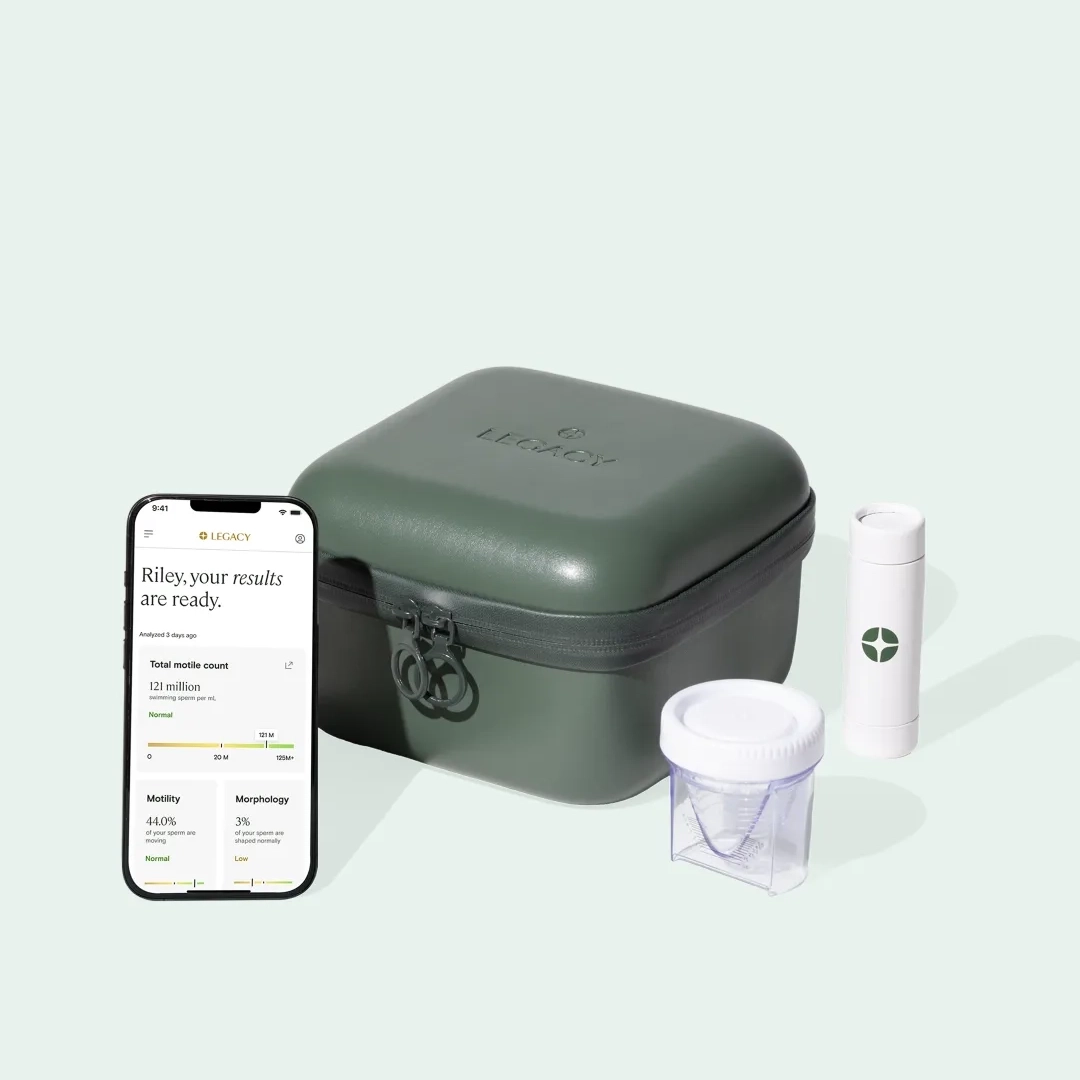
Standard Semen Analysis
$295
Key features

Semen volume
Sperm concentration & count
Motility
Morphology