How weight loss medications may affect male fertility


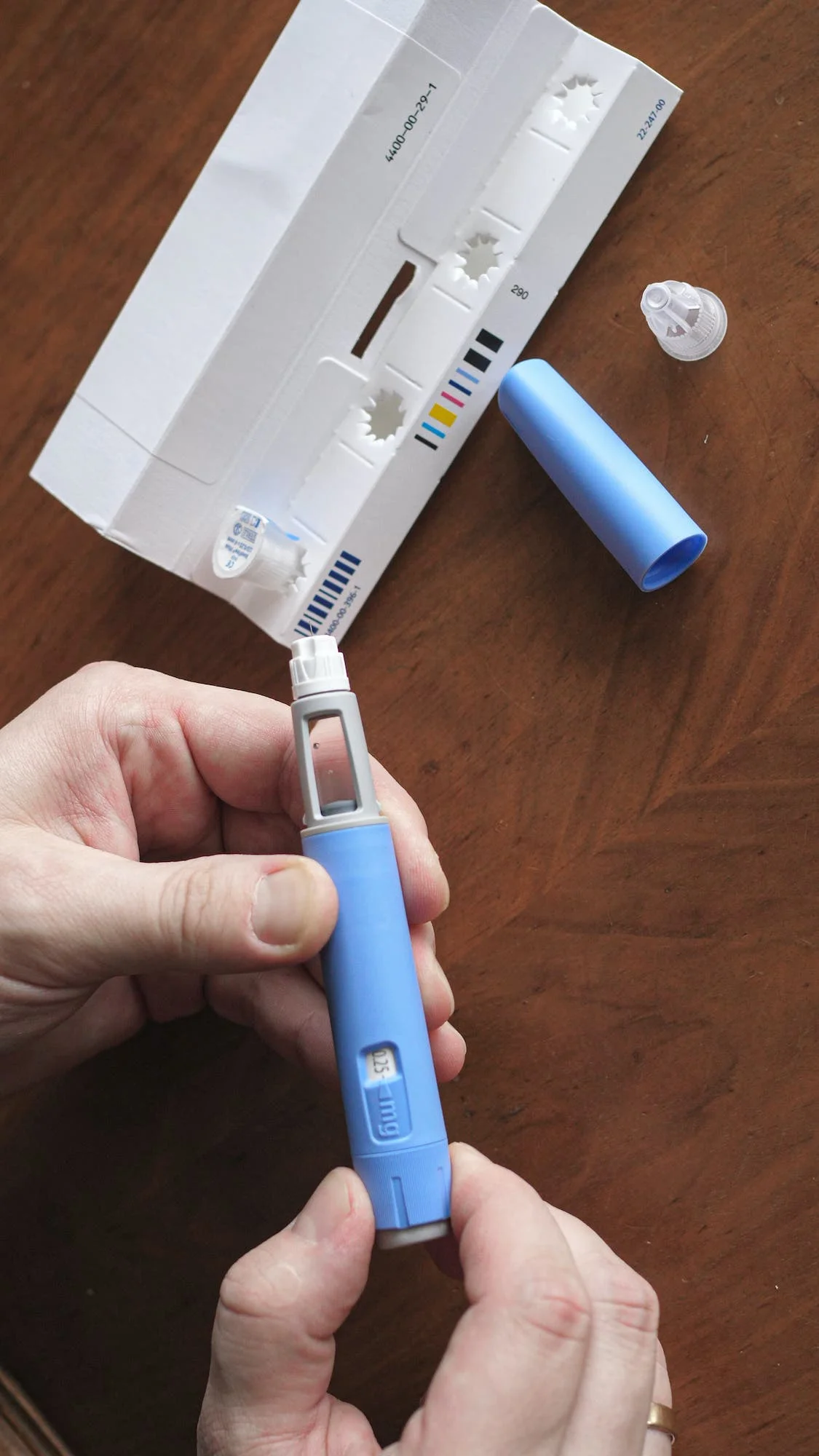
What you need to know about weight loss medications such as Ozempic, Wegovy, and Mounjaro and male fertility.
GLP-1 agonist medications such as Ozempic, Wegovy, or Mounjaro are prescribed for diabetes management and weight loss. Excess weight and diabetes both impact sperm health and your ability to create a healthy pregnancy. Can managing these conditions with medication improve male fertility?
In this article, we will examine medications like Ozempic, Wegovy, and Mounjaro to understand their impact on sperm health, and whether you should take these medications while you’re trying to conceive.
Key takeaways:
- GLP-1 agonist medications like semaglutide and tirzepatide have a few different brand names and dosages, used for either diabetes management, weight loss, or both.
- Research has found that for people who are overweight or obese, weight loss may improve their chances of creating a healthy pregnancy.
- Limited research suggests that medication-assisted weight loss can be beneficial for sperm health. However, more studies are necessary.
- If you are concerned about your fertility, a semen analysis is the best place to start.
What are GLP-1 agonist medications like Ozempic?
Ozempic, Wegovy, Mounjaro and similar weight loss and diabetes medications are GLP-1 (glucagon-like peptide 1) agonists/GLP-1 receptor agonists. GLP-1 is a hormone that’s released from the small intestine when we eat, and is responsible for increasing insulin. GLP-1 regulates blood sugar and digestion, as well as whether we feel “hungry” or “full.”
An “agonist” is a medication that mimics the action of a particular hormone — so in layman’s terms, GLP-1 agonists and receptor agonists mimic the actions of GLP-1 produced naturally in our bodies. Medications such as Ozempic slow digestion, lower blood sugar, and keep hunger levels at bay by maintaining a feeling of fullness between meals. This, in turn, contributes to weight loss and helps patients manage type 2 diabetes.
Ozempic is just one of the brand names for GLP-1 agonist medications, specifically semaglutide. Other medications in this category include:
- Trulicity (dulaglutide)
- Byetta (exenatide)
- Bydureon (extended-release exenatide)
- Victoza (liraglutide)
- Adlyxin (lixisenatide)
- Ozempic/Wegovy (semaglutide injection)
- Rybelsus (semaglutide tablets)
- Mounjaro (tirzepatide)
Why do people take Ozempic and similar medications?
You might be prescribed Ozempic, Mounjaro, or Wegovy by your doctor if:
- You have type 2 diabetes and need help managing blood sugar levels. This should be in addition to lifestyle changes, including improved diet and exercise.
- You have a high risk or history of heart disease or diabetes and need to lower the risk of heart or blood vessel issues such as strokes and/or heart attacks.
- You are experiencing obesity. Only semaglutide (Wegovy) and liraglutide are technically approved for weight management. However, it’s possible for people to be prescribed Ozempic or other medications “off-label” for weight loss.
You're ready to start a family. But are your sperm?

Diabetes and male fertility
Having diabetes does not necessarily mean you will experience infertility. However, for those who are not managing their diabetes well — or when there are corresponding lifestyle factors, such as a poor diet — the chances of infertility are greatly increased.
There are a number of ways diabetes can affect male fertility:
- Erectile dysfunction. Diabetes can cause neuropathy (nerve damage) and reduce blood circulation to the penis, resulting in difficulty achieving or maintaining an erection. While it’s not primarily a fertility issue, erectile dysfunction can make it more challenging to conceive.
- Ejaculation problems. If the nerves in the penis are damaged due to long-term diabetes mismanagement, there can be a significant impact on penile function resulting in delayed or impaired ejaculation.
- Retrograde ejaculation. If the nerve damage caused by long-term diabetes is severe, it can result in semen entering the bladder rather than exiting via the penis.
- Sperm quality. Sperm health can be significantly reduced in those with diabetes.
- Low testosterone levels. Approximately 1 in 4 men with type 2 diabetes will show signs of hypogonadism, or low testosterone. This can reduce sperm count, cause erectile dysfunction and lower libido.
- Diabetes drug interactions with fertility. Metformin has been shown to potentially affect sperm count and activity. Metformin is a commonly prescribed drug used to treat diabetes. It has now been shown that if fathers take this drug in the three months leading up to conception, it can result in genital birth defects in their offspring.
Obesity and sperm health
There is an established connection between obesity and male infertility. Obesity has been linked to many negative effects on male fertility, including:
- Systemic inflammation
- Erectile dysfunction
- Lowered sperm quality and high levels of sperm DNA fragmentation
- Testosterone deficiency and other hormonal imbalances
The research in depth
Repeated research, outlined in one review of 9 studies, has found that:
- Overweight and obese men are more likely to have low sperm count.
- Obese men are at greater risk for poor sperm motility, in which not enough of their sperm are moving or “swimming.”
- Sperm DNA fragmentation — damage to the DNA carried by sperm — is approximately 40% higher in obese men (22–27%), compared to men with normal body weight (15–20%).
Another review of 21 studies and over 13,000 men delved deeper into the connection between body weight and sperm count, finding that overweight and obesity was a risk factor for low sperm count and azoospermia, a condition in which no sperm is found in the semen. A separate study of nearly 4,00 sperm donors found that both underweight and overweight men had, on average, lower total motile sperm counts than men of normal weight.
One set of researchers speculate that it “is possible that the increasing prevalence of overweight and obesity accounts for a portion of the trend… of decreasing sperm counts over recent decades.” Additional studies have found that obese men typically have lower-than-normal testosterone levels.
These changes in sperm quality and hormone health do seem to impact likelihood of getting pregnant. One study found that obese couples take, on average, longer to get pregnant and are more likely to experience infertility. In another study, researchers found that birth rates were lower in couples with an overweight or obese male partner, even if the female partner’s weight was normal.
How do Ozempic or other weight loss meds affect fertility?
Will medications like Ozempic improve male fertility? Since these medications are fairly new, research is quite limited. Here’s what we know about weight loss and sperm health.
Weight loss improves sperm health
The first important thing to note is that, for overweight and obese patients, losing weight has been shown to improve male fertility health.
In one study of 43 obese men, weight loss was associated with an increase in total sperm count, semen volume, and testosterone levels. The group with the largest weight loss — 17–25% of total body weight — had a statistically significant increase in total sperm count and normal sperm morphology, the percentage of sperm that are the proper size and shape.
A case study of 6 obese, infertile men had promising results for the improvement of sperm DNA fragmentation. After several months of a lifestyle program, all 6 men lost abdominal fat, their level of sperm DNA fragmentation decreased, and all 6 of their partners got pregnant and had live births. Another study found similar results — a significant improvement in sperm DNA fragmentation after study participants lost weight.
A 2022 randomized controlled trial looked at the effect of weight loss on fertility and found that a significant weight loss improved sperm parameters. The 8-week study prescribed a low-calorie diet to achieve an average weight loss of 36 lbs. This weight loss resulted in an increase in sperm concentration of around 150%.
Research on weight loss medications and male fertility is still limited
A recent review published by the team of Dr. Ranjith Ramasamy, a renowned male fertility urologist, examined the evidence around the use of GLP-1 agonist medications and their impact on sperm health. Their review looked at lab studies, animal studies, and human studies. Some findings highlighted in the review:
- One clinical trial looked at the impact of the GLP-1 agonist liraglutide on sperm health and hormone levels. Researchers found an improvement in all sperm parameters, erectile function, and reproductive hormone levels in the group treated with liraglutide.
- Another study found that men who were prescribed liraglutide had improved testosterone levels, just like men on testosterone therapy.
- A study of mice showed that treatment with exenatide helped obese mice lose weight and resulted in improved semen parameters.
- The aforementioned clinical trial from 2022 found that, for men who experienced improved semen health as a result of losing weight, the use of GLP-1 agonist medication helped them keep the weight off — and their sperm health up — for longer.
- Sperm actually have a receptor for GLP-1. In one study, researchers added a GLP-1 agonist to sperm in the lab, and found that the medication improved sperm motility.
The bottom line? Wegovy and other weight loss medications effectively help people lose weight, and that losing weight can improve male fertility. We don’t yet know if these medications can improve male fertility aside from facilitating weight loss.
Is it safe to take weight loss medications if I’m trying to get my partner pregnant?
As of early 2024, there’s a lack of evidence specifically investigating the long-term effects of Ozempic and other GLP-1 agonist drugs on fertility or pregnancy.
If you’re taking Ozempic, Wegovy, or Mounjaro — or thinking about starting a GLP-1 agonist medication — and you’re trying to conceive or thinking about starting a family, talk to your doctor. They may recommend caution in the form of a period of 2–3 months between stopping the medication and trying to conceive.
Get tips to optimize sperm health so you can achieve your parenthood dreams.
Tracking sperm health improvement
The best way to understand how your sperm health is affected — for better or for worse — by weight loss or weight loss medication is to complete a semen analysis. This test will assess sperm count as well as additional measures of sperm health:
- Motility — how many of your sperm are moving or “swimming”
- Morphology — how many of your sperm are the proper size and shape
- DNA fragmentation — how many of your sperm contained damaged genetic material
Legacy offers easy at-home sperm testing, so you can start understanding your sperm health today. Get started.
Find what's right for you

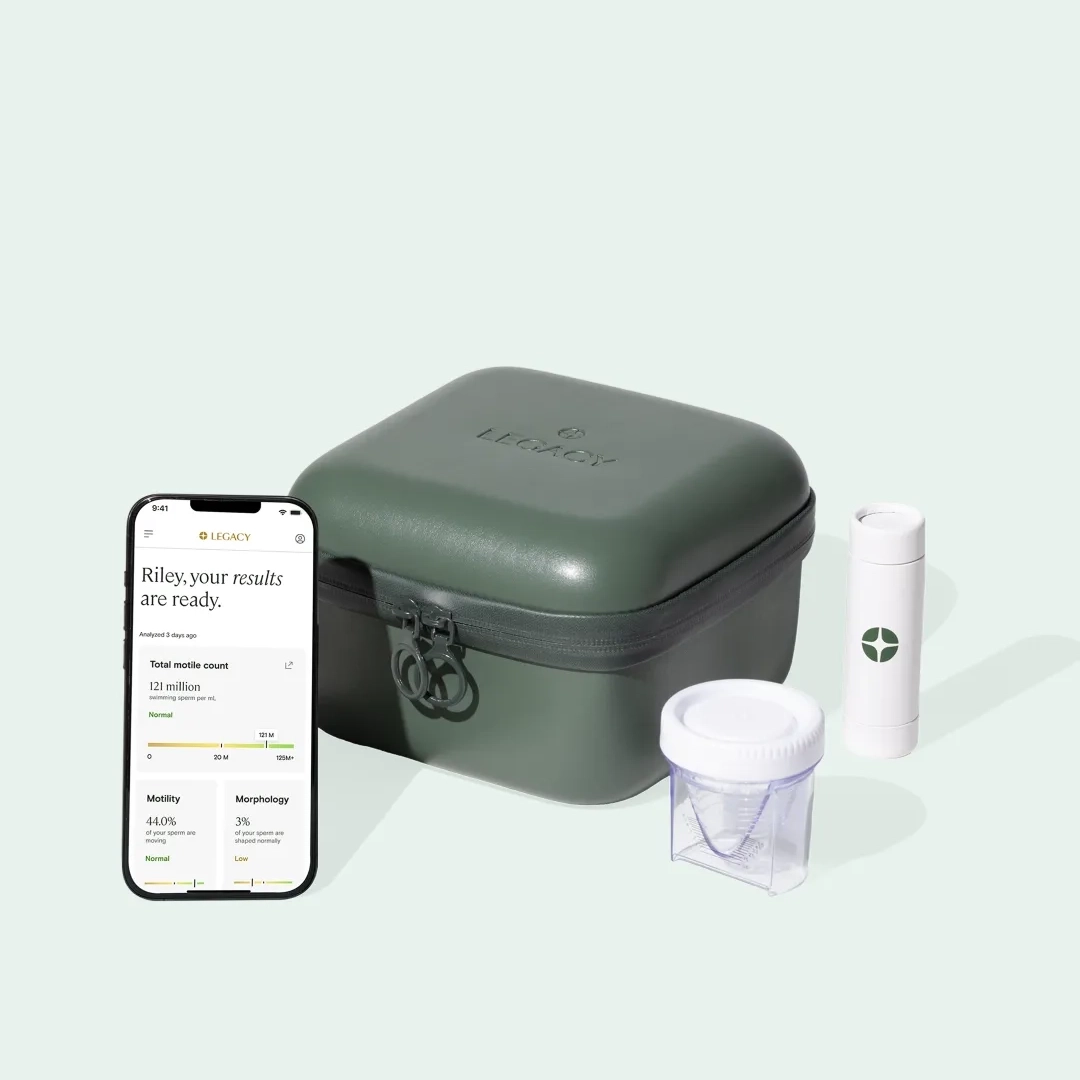
Standard Semen Analysis
$295
Key features

Semen volume
Sperm concentration & count
Motility
Morphology