Preventing male infertility



Preventing male infertility takes a combination of efforts, from sperm freezing to leading a healthy lifestyle. Find out how to preserve your sperm health.
There’s a widespread misconception that infertility is a female issue. But research shows male factor infertility is just as common, and getting worse. Over the past 50 years, human sperm counts appear to have fallen by more than 50% globally.
Though fertility naturally declines with age, preventing male infertility is possible. There are a number of precautions you could take to improve your sperm health and protect your fertility, whether you hope to have a child in the near future or many years from now. And in cases where male-factor infertility isn’t preventable, there are assisted reproductive technology procedures that can help.
Find out what causes male infertility, the symptoms to look out for, and what you can do to protect your chances of conceiving a child.
Key takeaways
- Infertility affects one in every six couples in the US, and in at least half of these cases, male-factor infertility is a contributor.
- Causes of male-factor infertility include poor sperm parameters, anatomical issues, erectile or ejaculatory dysfunction, hormone imbalances, and genetic diseases.
- Male infertility symptoms are not always detectable, but may include difficulties with ejaculation, testicular pain, or decreased body hair.
- It’s not always possible to prevent male infertility, but there are some precautions you can take: freezing your sperm, giving up smoking, following a healthy diet, getting vaccinated against viruses that may impact fertility, and limiting exposure to heat and toxins.
How common is male infertility?
More than five million couples in the US struggle with infertility, defined as the inability to conceive a child after a year of frequent, unprotected sex. The condition affects one in every six couples trying to conceive, and in at least half of these cases, male-factor infertility is a contributor.
Since poor sperm health is one of the most common causes of male-factor infertility, getting a sperm analysis is one of the best ways to assess the quality of your sperm. Despite the prevalence of infertility, not enough men are being tested for infertility. This can be a huge loss for couples who choose to pursue costly reproductive techniques, like in vitro fertilization, without checking if the male had an easily treated condition first.
Poor sperm health is also associated with other health issues like diabetes, an autoimmune disease, or even cancer. Having your sperm tested and detecting infertility can help doctors understand your overall health better, so you can devise a plan of action.
What causes male infertility?
While male factor infertility is most commonly due to poor sperm parameters, it may also be related to anatomical issues, erectile or ejaculatory dysfunction, hormone imbalances, or other factors.
Potential causes for male-factor infertility
Here’s a quick overview:
- Poor sperm parameters
- Low sperm count
- Azoospermia, the absence of sperm in semen
- Poor morphology, or malformed sperm
- Poor motility, or sperm that aren’t “swimming”
- Structural or anatomical issues
- Varicocele, or swollen/enlarged veins in the testicles
- Undescended testicles
- Scar tissue, inflammation, or injuries that block the delivery of sperm
- Absence of the vas deferens, the tube that carries sperm out of the testes
- Sexual dysfunction
- Hormonal imbalances
- Low testosterone
- Abnormalities that affect the hypothalamus, pituitary, thyroid and adrenal glands
- Genetic diseases
- Cancer treatments (chemotherapy or radiation treatment)
- Antisperm antibodies that mistakenly identify sperm as harmful invaders
- Prior surgeries
- Vasectomies
- Prostate surgeries
- Testicular surgeries
Learn more in our Guide to Male Fertility.
Risk factors
Some risk factors that may contribute to male-factor infertility include:
- Smoking
- Alcohol use
- Being overweight
- Family history of infertility
- Being exposed to environmental toxins
- Early or late puberty
Having trouble getting pregnant? The answer may be one test away.

What are the symptoms of male infertility?
The primary symptom of male infertility is being unable to conceive a child after a year of trying. In some cases, there may be no other detectable symptoms. For many, being evaluated with a semen analysis is the only way to know for sure if sperm are contributing to the issue.
In other cases, there may be clues signifying a problem. Male infertility symptoms include:
- Difficulty ejaculating or ejaculating a small amount of liquid
- Being unable to maintain an erection
- Pain or discomfort in the testicles
- Decreased facial or body hair
- Abnormal breast growth
- Low sex drive
- Lumps in the testicles
- No sense of smell
Learn more about symptoms of male infertility.
How can I prevent myself from becoming infertile?
Some causes of male-factor infertility are not preventable. These include anatomical issues or genetic causes like Klinefelter’s syndrome or cystic fibrosis. But if your infertility is caused by lifestyle choices, or you have a treatable medical condition, there are actions you can take to improve your sperm and preserve your fertility.
Sperm freezing
The best way to preserve your fertility is to freeze your sperm proactively. Sperm quality declines with age. Freezing your sperm while you’re young is a great way to save high-quality sperm for future use.
Sperm freezing is also ideal for people who are at a higher risk of becoming infertile, such as those whose careers risk potential bodily harm or exposure to hazardous chemicals (like members of the military). If you’re about to undergo a surgery that may impair your fertility, like a cancer treatment or gender transition, freezing your sperm is another way to protect your chances of conceiving a child in the future.
While freezing your sperm won’t technically prevent male infertility, it does provide a reliable back-up option for having a biological child, no matter what happens.
Lifestyle changes
From avoiding smoking to following a healthy diet, there are a number of simple lifestyle adjustments you can make to improve your sperm health and boost your fertility.
We recommend testing your sperm first to establish a baseline and identify which sperm parameters (if any) are abnormal. If you use Legacy’s at-home semen testing kit, you’ll receive insights into all the key metrics of sperm health along with personalized recommendations based on your results.
Some lifestyle changes you can make to start improving your fertility:
- Quit smoking. Research shows that cigarette smoking is associated with infertility issues, including lower semen volume and total sperm count. This is especially true for heavy smokers. However, there is hope to reverse this. A recent study found that after three months of smoking cessation, there was a significant recovery in semen volume, sperm concentration and total sperm count.
- Follow a healthy diet. The common “Western” diet — high in fried foods, refined grains, added sugars, and red meat — is associated with lower sperm counts and reduced sperm motility, while diets high in processed meats are associated with lower sperm morphology. Conversely, a diet high in fish, lean poultry, fruits and vegetables, legumes, and whole grains is associated with improved sperm health. Loading up on fruits and vegetables, particularly leafy greens, can lead to both higher sperm concentrations and improved motility.
- Exercise and maintain a healthy body weight. Overweight or obesity is a contributing factor to male fertility, negatively impacting sperm count and sperm motility. Research shows that keeping active can help you improve sperm parameters and maintain healthy hormone levels. In one 2017 study that followed a 16-week aerobic training program consisting of hour-long workouts three times a week, obese patients experienced significant improvement in sperm count, motility, and morphology.
- Cut back on drinking. High alcohol consumption is associated with decreased sperm health and sperm quality. Excessive drinking can also contribute to weight gain, dehydration, and erectile dysfunction. But you don’t have to cut out alcohol completely. Some research shows that moderate alcohol consumption may actually benefit fertility if the alcohol contains antioxidants like those found in wine and whiskey. To improve sperm, experts recommend consuming fewer than five units of alcohol per week, which is around four beers, three mixed drinks, or three glasses of wine.
- Take male fertility supplements. Male fertility supplements containing antioxidants and other important nutrients can support healthy sperm production and optimal male hormone health, and protect sperm from damage. Aim for ingredients like CoQ10, vitamin D, lycopene, selenium, zinc, and folate, or a comprehensive multivitamin.
Vaccination
Some viral infections can negatively affect sperm health and male fertility. This includes the STI called HPV, which is associated with a higher incidence of infertility and miscarriage. Another study linked HPV in males to lower chances of success with assisted reproductive technology (ART) cycles. If you are under 26, being vaccinated for HPV can help you avoid these complications.
Hepatitis B is another virus that has been shown to decrease sperm viability and progressive sperm motility, resulting in impaired sperm function. Like HPV, there is a vaccine for hepatitis B, which is part of the normal immunization schedule recommended during infancy.
There is also emerging evidence that COVID-19 may negatively affect male fertility, cause testicular damage, and impair spermatogenesis. This is especially true for severe cases of COVID-19. Being vaccinated against COVID-19 to prevent severe illness is yet another precaution you can take to preserve your fertility.
Avoiding exposure to heat or toxins
There’s an important reason why the scrotum hangs outside of the body: to keep your testes at the optimum, cooler temperature for efficient sperm production. Anything that exposes this vulnerable area to excessive heat can potentially impede production and harm your fertility. If you’re trying to conceive, it’s best to avoid hot tubs, baths, saunas, working with a laptop on your lap, and even wearing tight underwear to keep the scrotal area cool and functional.
Exposure to certain toxins, including endocrine disrupting chemicals, can also impair male fertility. You can reduce your exposure to endocrine disruptors by making thoughtful choices in your personal care, home/garden, and clothing purchases.
The bottom line: Though fertility naturally declines with age, there are precautions you can take to improve your sperm health and protect your fertility.
If you have a condition that makes male infertility unpreventable, there are a number of solutions you can explore to help you parent a child.
Assisted reproductive technology (ART), like in vitro fertilization, intrauterine insemination, testicular sperm retrieval, and sperm freezing, can help infertile individuals and families achieve their family goals.
Gain insights into your own fertility health by ordering an at-home sperm testing kit from Legacy.
Find what's right for you

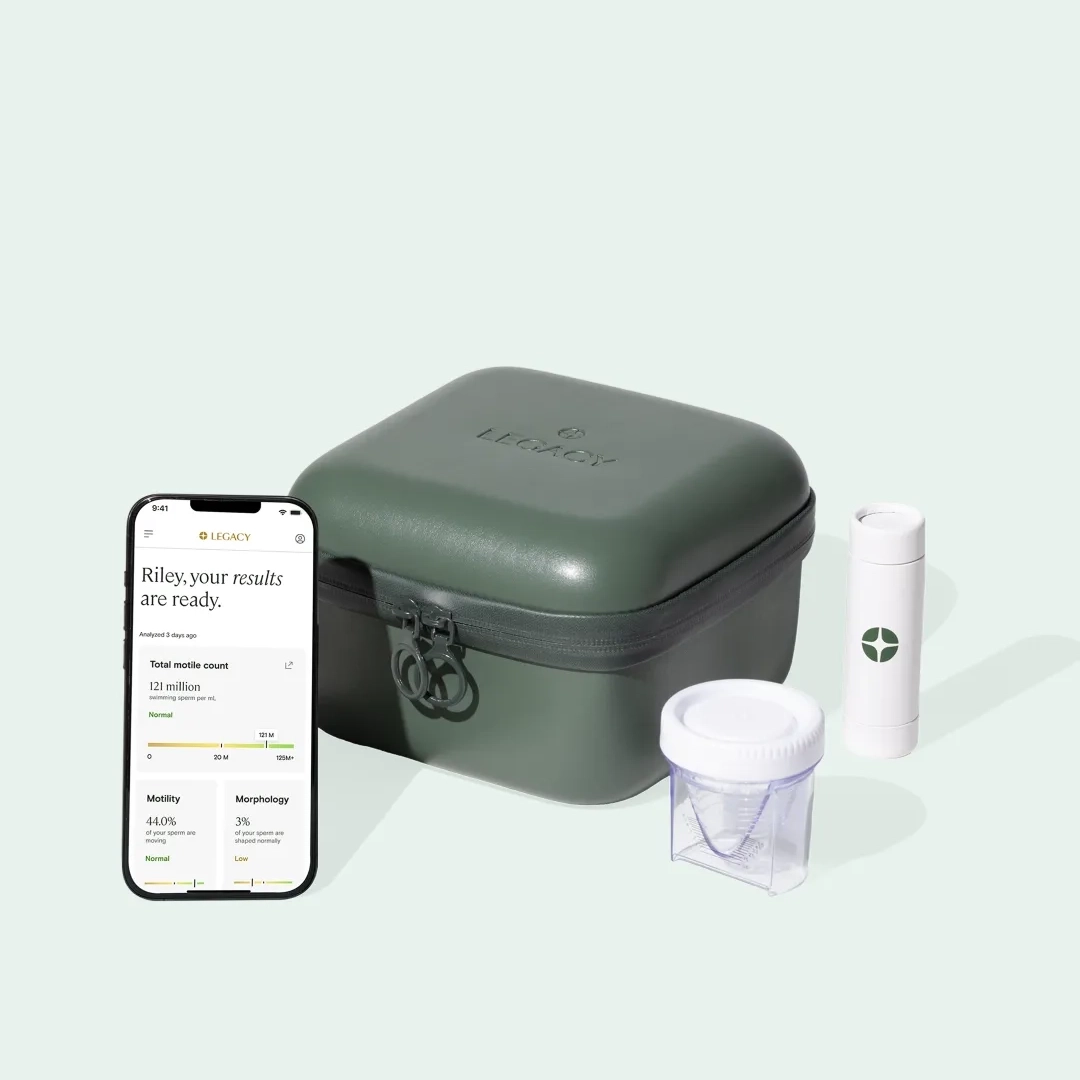
Standard Semen Analysis
$295
Key features

Semen volume
Sperm concentration & count
Motility
Morphology