Kallmann syndrome and male fertility



Everything you need to know about how Kallmann syndrome affects male fertility.
Kallmann syndrome is a rare genetic disorder that can hugely impact male fertility if left untreated. This disorder is more common in males and can delay or totally prevent puberty from starting. Read on to learn more about this syndrome, how clinicians diagnose it, other symptoms to look out for, and how you can treat it.
Key takeaways
- Kallmann syndrome is a disorder that affects sex hormone production and is associated with a diminished or absent sense of smell.
- Scientists believe it to be caused by disruptions to the migration process in the womb, when the nose and hypothalamus are forming.
- Diagnosis usually occurs when puberty does not begin at the usual time and affects all sexes, although it is much more prevalent in males.
- Treatment using hormone replacement therapy can be highly effective and lead to an adequate supply of sperm.
What is Kallmann syndrome?
Kallmann syndrome is an inherited condition that clinicians characterize by totally absent or delayed puberty accompanied by an impaired sense of smell. It is also referred to as hypothalamic hypogonadism, familial hypogonadism with anosmia, or sometimes it is called hypogonadotropic hypogonadism.
It occurs when the body fails to make sufficient levels of a hormone called gonadotrophin-releasing hormone (GnRH). GnRH plays an important role in puberty by stimulating the production of sex hormones. The release of GnRH causes the stimulation of the testicles or ovaries to produce sex hormones. When the levels of sex hormones are too low, a person will not enter puberty, and without treatment, they will be unable to have children of their own.
It is a heritable disorder, meaning it is passed on genetically from parent to child. Fathers can usually only pass the gene on to their daughters, whereas mothers can pass the gene on to both male and female offspring. The syndrome is five times more prevalent in boys compared to girls.
Kallmann syndrome is estimated to be present in 1 in 30,000 male births and 1 in 120,000 female births.
Treatment for Kallmann syndrome is effective and usually includes hormone replacement.
What causes Kallmann syndrome?
Kallmann syndrome is associated with changes across more than 20 genes, but mutations in the ANOS1, CHD7, FGF8, FGFR1, PORK2, or PROKR2 genes are the most common causes of this condition. These genes are associated with the development of some regions of the brain prior to birth, specifically those relating to the formation and movement of specialized nerve cells that process the sense of smell. These are called olfactory neurons.
The above genes also play a role in the migration of the neurons that produce GnRH. Both the olfactory neurons and those responsible for GnRH production migrate from the developing nose region (the nasal olfactory epithelium) to the basal hypothalamus in the developing brain during pregnancy. Studies suggest that mutations in these genes disrupt this migration process, leading to underdeveloped olfactory senses and reduced sex hormone production. However, mutations of these genes only account for around 30% of Kallmann syndrome cases at present. There is ongoing research to determine the genetic changes that have led to the other 70% of cases.
Having trouble getting pregnant? The answer may be one test away.

How is Kallmann syndrome diagnosed?
Individuals with Kallmann syndrome sometimes present with a micropenis (a penis that is unusually small) and undescended testes (also known as cryptorchidism). However, it is most commonly detected when a child enters puberty and does not develop secondary sex characteristics. This could be the absence of facial hair growth or no deepening of the voice in males. In females, it may present with absent menstruation and no breast development. There will also be no typical growth spurt as expected around this age.
Clinicians confirm the diagnosis through testing hormone levels. Low serum testosterone in people with testes or estrogen in people with ovaries, along with low levels of other sex hormones, are tested for to diagnose Kallmann syndrome. The diminished sense of smell is a feature of Kallmann syndrome that is not present in other forms of hypogonadotropic hypogonadism where the olfactory function remains unaffected.
Doctors might also test for the karyotype of Kallmann syndrome. This is the general appearance of the complete set of chromosomes in the cells of an individual. By looking at the karyotype in lab testing, scientists can identify this genetic mutation in a patient.
Other symptoms of Kallmann syndrome
In addition to the symptoms above, Kallmann syndrome also affects a person’s sense of smell. This is one factor that helps to differentiate Kallmann syndrome from other varieties of hypogonadotropic hypogonadism, as no other forms impact the sense of smell. They either have diminished olfactory sense, known as hyposmia, or an absent sense of smell, called anosmia.
Unfortunately, Kallmann syndrome can go hand in hand with a wide range of other symptoms and signs, including unilateral renal agenesis, where one kidney fails to develop. Other symptoms can include:
- cleft lip/palate
- abnormalities in the bones of fingers or toes
- abnormal tooth development
- cryptorchidism — undescended testes at birth, which occurs in around 30% of Kallmann syndrome cases
- color blindness
- congenital heart disease
- hearing loss
- abnormal eye movements
- osteoporosis
- bimanual synkinesis — this is only evident in some individuals with the condition and presents as a person whose hand movements with one hand are mirrored by the other. This results in difficulties with tasks requiring hands to move separately, such as playing musical instruments, driving, and typing.
How does Kallmann syndrome alter male fertility?
Kallmann syndrome can negatively impact male fertility in several ways. The impairment to the hypothalamus region of the brain, caused during development in the womb, results in hypogonadism, which is the impaired functional activity of the gonads — testes and ovaries.
The disruption of the production of gonadotropin hormones, luteinizing hormone (LH), and follicle-stimulating hormone (FSH), which are normally released by the anterior pituitary gland, means that puberty will not start at the normal time. Therefore, sperm production does not begin, and the sex hormones needed to continually build and replace sperm and semen are not present. This is known as azoospermia — where there is no sperm in the ejaculate and therefore results in infertility.
The micropenis and lack of normal male development at puberty can have lasting negative effects on an individual’s well-being and mental health, and it can also make it challenging to engage in sexual activity.
Fertility options and treatments for people with Kallmann syndrome
Unfortunately, there is no way to totally prevent Kallmann syndrome, but you can take steps to decrease the risk factors. These include limiting exposure to radioactive substances and harmful radiation, especially during pregnancy.
You can successfully treat Kallmann syndrome so those suffering from the condition can overcome the obstacles impacting their fertility. There is a reported reversal of symptoms in 10–22% of cases. The current treatment options include:
- Hormone replacement therapy (HRT): This treatment aims to ensure the normal level of sex hormones are circulating in the patient appropriate to their age. People with testes are usually prescribed testosterone using daily capsules, gel, or patches. This allows normal sexual development to continue through their teenage years.
- Human chorionic gonadotrophin (hCG): This is occasionally prescribed to induce ovulation or stimulate testosterone production.
- Human menopausal gonadotrophin (hMG): This contains a mixture of LH and FSH and is normally administered via injection. It can stimulate sperm production, or it can induce ovulation. Taking hMG may lead to testicular enlargement over a long period but can result in an adequate level of sperm production, allowing for better fertility.
These methods usually result in adequate sperm counts to achieve a natural pregnancy. However, some people may need assisted reproductive technologies to conceive. If you have any concerns about your fertility, it is advisable to seek help from a fertility specialist, or you could test your own semen in the comfort of your home using Legacy’s semen analysis package.
Find what's right for you

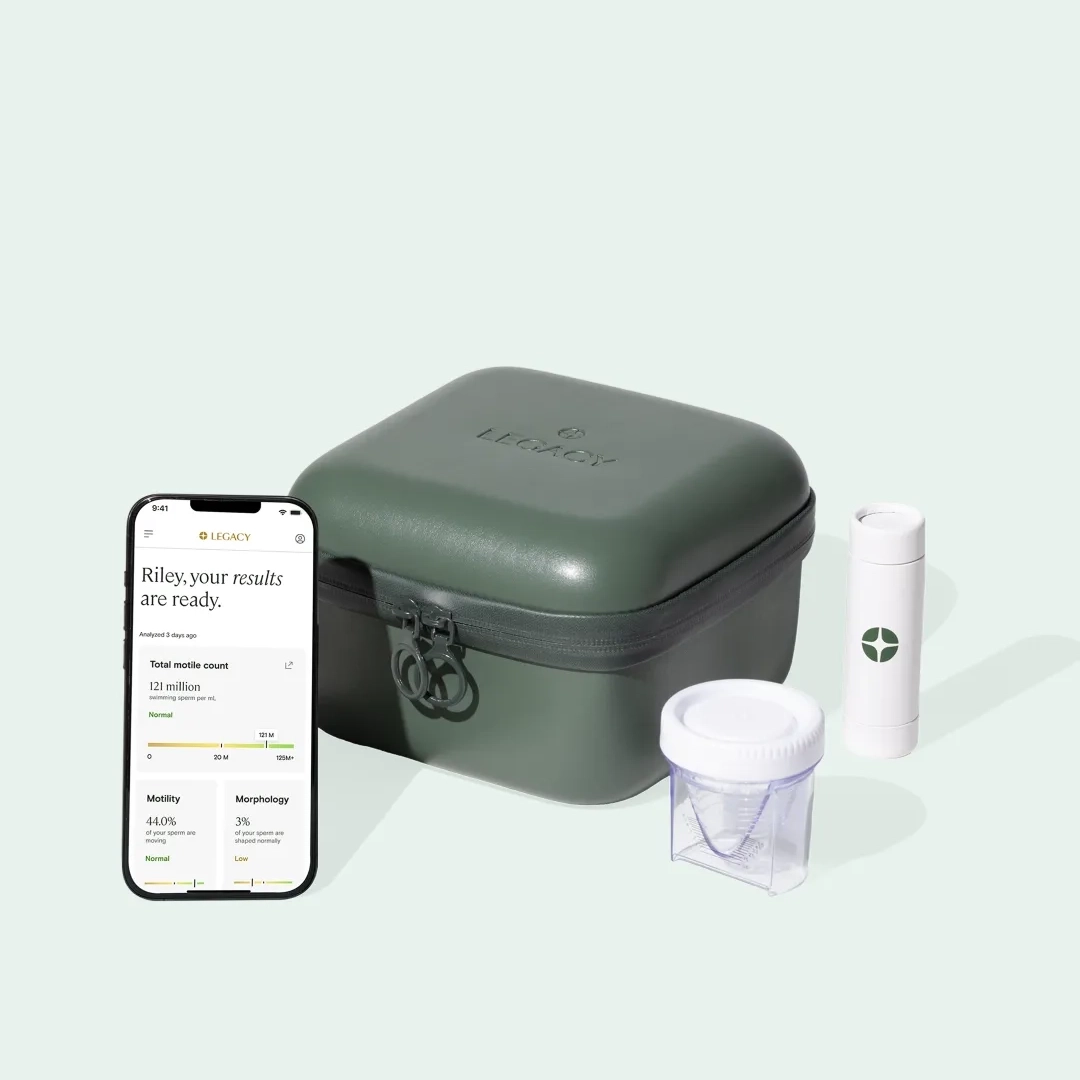
Standard Semen Analysis
$295
Key features

Semen volume
Sperm concentration & count
Motility
Morphology