How STIs affect pregnancy



STIs can reduce fertility, harm your pregnancy and overall health, and, in some cases, be passed on to your child. We examine how STIs affect pregnancy, why it’s important for both you and your partner to be tested, and what to do if you test positive.
Sexually transmitted infections (STIs) may not be the first thing on your mind when you’re pregnant or trying to conceive, but they’re an important consideration. STIs can affect a person’s pregnancy as well as their overall health, and some can even be passed to your baby. We’ll look into the potential effects of STIs on pregnancy, STI testing and STI screening, and what to do if you test positive.
Key takeaways
- STIs are common, and you can still be infected if you’re pregnant.
- Since STIs can affect female and male fertility, overall health, the health of a pregnancy, and even your baby’s long-term health, STI testing is important when trying to conceive and during your pregnancy.
- If you test positive for an STI, receiving treatment early on can help limit its impact. It’s important for your partner to get tested, too.
What is an STI?
STIs are bacterial or viral infections that are typically passed from one partner to another through sexual activity.
STIs are common, with around 20% of people in the US having one in 2018. The majority of cases — 98% — were made up of just four STIs: chlamydia, trichomoniasis, genital herpes, and human papillomavirus (HPV), with HPV being the most common.
Other STIs include:
- gonorrhea
- hepatitis B
- human immunodeficiency virus (HIV)
- syphilis
STIs are sometimes referred to as STDs, or sexually transmitted diseases, and vice versa. While the terms are frequently used interchangeably, some organizations differentiate between them, defining STIs as infections that can be spread and STDs as chronic diseases that may develop from STIs. For example, the STI called HIV can develop into the STD known as acquired immunodeficiency syndrome (AIDS).
Can I test positive for an STI while pregnant?
People who are pregnant are not immune from contracting an STI — or may have an STI from prior to their pregnancy that was never detected or cleared.
Since STIs can affect both a parent and their unborn baby, it’s important to receive an STD screening before and/or during pregnancy, so you and your partner can get treatment. Many STIs have no obvious symptoms, making STI testing the only way to detect an infection.
You're ready to start a family. But are your sperm?
Can I pass an STI to my baby?
Several STIs have the potential to be passed to a baby during pregnancy and delivery. These include:
- syphilis
- gonorrhea
- chlamydia
- hepatitis B
- genital herpes
- HIV
Identifying and treating the infection early can help lower the risk of transmitting it to your baby.
How STIs affect pregnancy and your baby
- Chlamydia: This common STI is associated with preterm labor and low birth weight. Chlamydia can infect a newborn during delivery, and can result in eye and lung infections in the baby.
- Gonorrhea: If left untreated, gonorrhea may cause miscarriages, premature birth, and low birth weight. Like chlamydia, gonorrhea can infect a newborn as they come through the birth canal, leading to eye infections.
- Hepatitis B: A pregnant person with hepatitis B can transmit the infection to the baby during pregnancy, particularly if the infection occurs near delivery. If the newborn is infected, they have up to a 90% chance of developing a chronic infection. This can lead to liver disease, liver cancer, and other complications later on.
- Hepatitis C: Like hepatitis B, this liver infection can be passed to a fetus during pregnancy. Transmission will occur in around 10% of cases, but will typically resolve on its own. However, babies of people with hep C have a higher chance of being born prematurely with a low birth weight.
- Human immunodeficiency virus (HIV): HIV, the virus that can lead to acquired immune deficiency syndrome (AIDS), can pass to a baby during pregnancy, delivery, or breastfeeding. If the pregnant person receives antiviral treatment before getting pregnant or early in the pregnancy, though, the risk of transmission may drop to under 1%.
- Human papillomavirus (HPV): Genital warts from HPV can sometimes block the birth canal and lead to the need for a C-section. HPV may also cause a noncancerous larynx growth in children born to an infected parent.
- Herpes simplex virus (HSV): Both types of herpes, HSV-1 and HSV-2, can infect newborns, though HSV-2 infections are more common. The risk of infection is higher when the pregnant person develops HSV close to their delivery date. Contracting the infection can negatively impact newborns, causing potentially severe illness, high fever, and seizures. Delivery may take place via C-section to lower the risk.
- Syphilis: This disease can be transmitted to a baby during pregnancy and cause premature births and stillbirths. Among pregnant people with untreated syphilis, around 40% of babies will be stillborn or die as a newborn. Babies born with syphilis may have health issues including anemia, jaundice, skin rashes, and nerve problems that lead to deafness or blindness. However, if the pregnant person receives appropriate treatment for syphilis, there’s a lower likelihood they’ll transmit it to their baby.
Breastfeeding with an STI: Can I do it?
Yes, you or your partner should be able to breastfeed with some STIs. Make sure to check with your doctor or care team to confirm. In general, you can breastfeed even if you have:
- chlamydia
- gonorrhea
- HPV
- trichomoniasis, as long as you take an antibiotic before breastfeeding
- syphilis, as long as neither the baby nor any pumping equipment comes in contact with a sore
- herpes, as long as neither the baby nor any pumping equipment comes in contact with a sore
Those with HIV should be aware that breastfeeding poses a risk of transmitting the virus to their child. They should talk to their doctor about the best option.
If you’re receiving treatment for an STI, it’s in many cases still safe to breastfeed. But again, talk with your doctor first to make sure.
STI testing during or prior to pregnancy
It’s best to receive STI testing and STI screening several times throughout pregnancy, including before or while trying to conceive, early in the pregnancy, and close to delivery. This is not only important for pregnancy health, but because untreated STIs like chlamydia can affect fertility and make it more difficult to conceive.
Since those who are trying to conceive are typically having unprotected sex, it’s essential for both partners to undergo STI screening, particularly if testing finds that one partner has an STI. Legacy offers convenient male at-home STI testing kits for your peace of mind.
Once you’re pregnant, you should receive STI testing for syphilis, HIV, hepatitis B, and hepatitis C starting early on. STI testing costs can be as high as $250 in some cases, but is often covered by insurance. You may be able to find free or inexpensive STI testing at some clinics. At-home STI testing kits are an option as well.
STI testing and male fertility
STIs and male fertility is another important factor to consider. Some research indicates that STDs may be linked to male-factor infertility, including lower sperm count and poor sperm genetic health. The importance of STI testing and STI screening for males when trying to conceive appears clear.
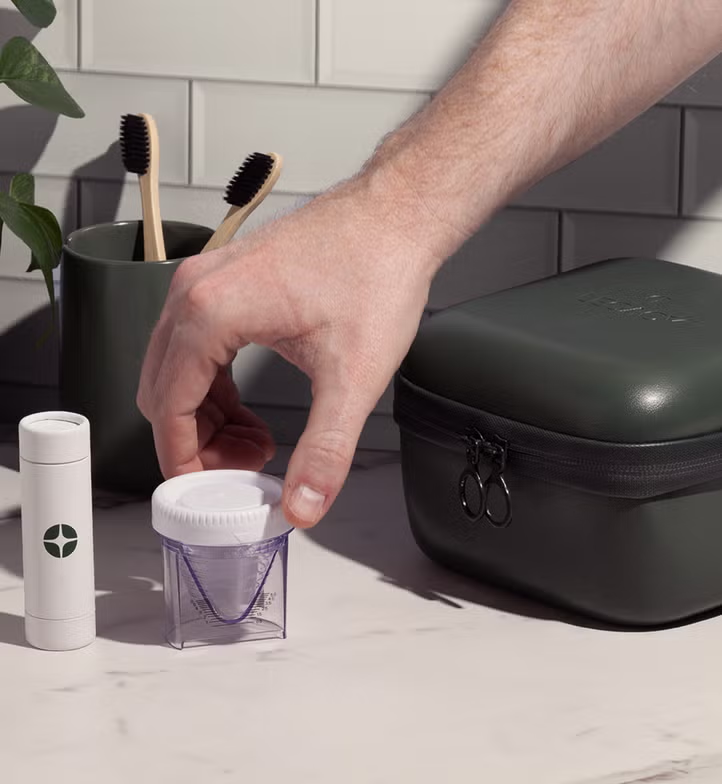
What else affects male fertility and sperm health? You can try an at-home semen analysis to better understand your fertility. Depending on your habits and fertility results, you may explore lifestyle changes and other methods for improving sperm health.
What to do if you test positive for an STI
If you find out that you have an STI, receiving treatment as soon as possible can improve outcomes and lower the likelihood that you’ll transmit the infection to your partner or your baby.
Some STIs can be treated with antibiotics, even during pregnancy. These include:
- chlamydia
- gonorrhea
- syphilis
- trichomoniasis
- bacterial vaginosis
For other STIs, like genital herpes, HIV, and hepatitis B, antiviral medications may help decrease severity of symptoms, and help your partner or baby avoid being infected as well.
If you test positive for an STI, it’s essential that your sex partner(s) to receive testing and treatment, too.
How to prevent STIs
For certain STIs, mainly hepatitis B and HPV, vaccines can help reduce the chance of infection. If you didn’t receive the vaccinations when you were younger, talk with your doctor about getting them now.
Ensuring that any sexual partners have tested negative for STIs lowers your risk as well.
Using a latex condom can help prevent many STIs, but obviously isn’t an option for couples who are trying to have a baby. If you or your partner has a chronic STI like HIV, talk to your doctor about the best ways to get pregnant without risking your partner’s health.
Find what's right for you

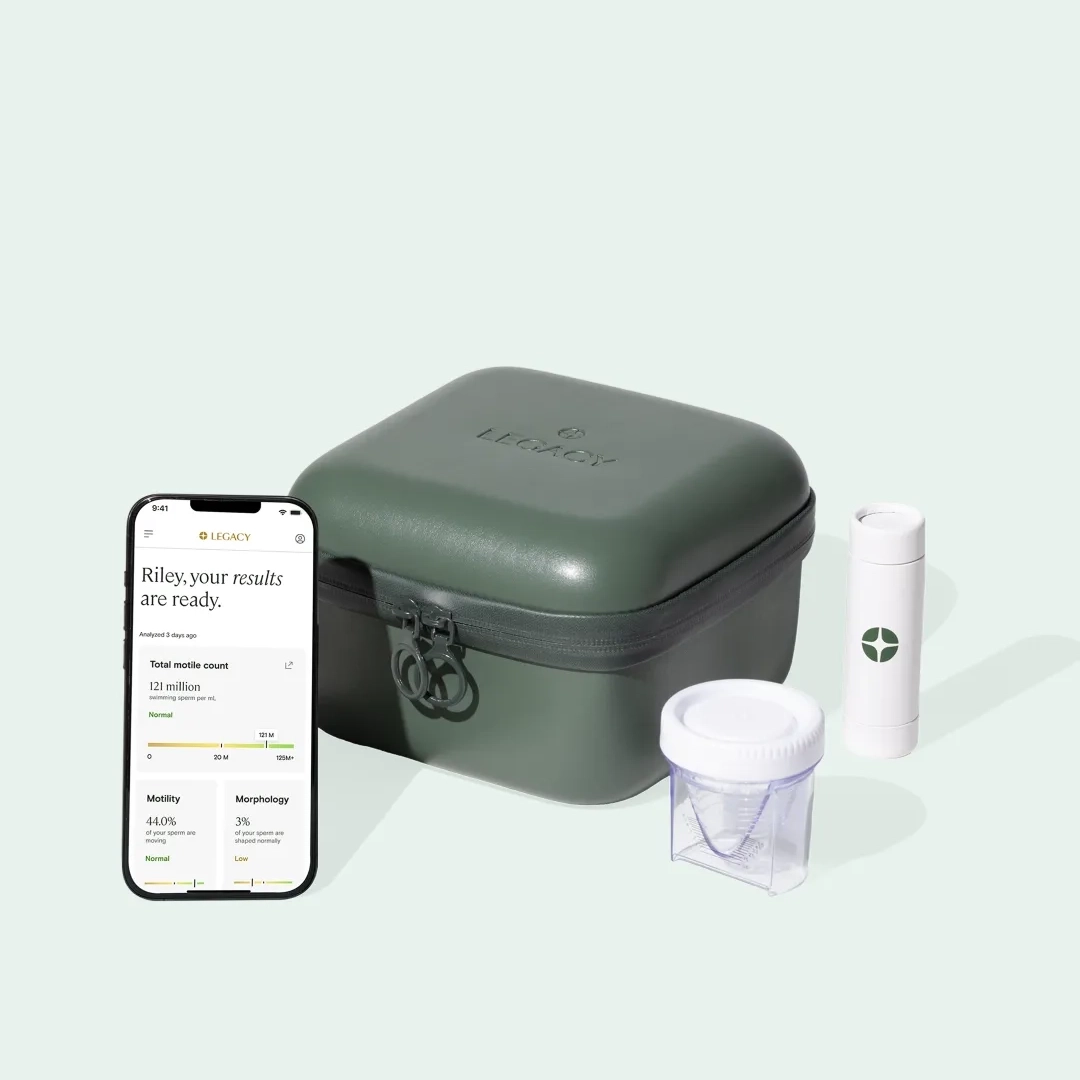
Standard Semen Analysis
$295
Key features

Semen volume
Sperm concentration & count
Motility
Morphology