How often should you have sex when you’re trying to conceive?



How often should you have sex when you’re trying to conceive? The short answer: It depends. Luckily, there’s some good evidence that can help you navigate what’s best for your body and your goals, whether you’re trying to conceive naturally, doing fertility treatment, or even testing or freezing sperm.
If you and your partner are trying to conceive, you’re probably wondering if you need to have sex every day for conception — and if you should “save up” sperm to get pregnant. So what’s the optimal time between ejaculation for pregnancy?
The short answer: it depends. Let’s explore the scientific evidence that can help you navigate how often to have sex when trying to conceive.
Key takeaways
- Abstaining from ejaculation to save up sperm won’t help you get pregnant. While they’re in “storage” in the testes, sperm are subjected to oxidative stress, which causes their quality to deteriorate after about 2 days.
- More frequent ejaculation is better for conception. Daily ejaculation can improve sperm quality by reducing DNA fragmentation and increasing sperm motility.
- The most important factor in figuring out sex frequency while trying to conceive is finding the fertile window, the period before ovulation. For most couples, having sex every 1–2 days during the fertile window is enough to achieve pregnancy.
- For men with low sperm counts, daily intercourse, or even having sex multiple times a day could increase pregnancy chances. Proactively testing your sperm health can help you create an informed conception plan.
Should I be having sex every day to get pregnant?
The most important factor when deciding when to have sex while trying to conceive is finding the female partner’s fertile window. The fertile window is the five days leading up to ovulation, the period in which pregnancy is possible.
In a typical cycle, ovulation happens around day 14 (with “day 1” of the cycle being the first day of menstruation). Many factors can affect the timing of a woman’s fertile window and ovulation. To account for these differences in women’s cycles, traditional advice is to have sex for TTC every other day between day 9 and day 16 or so.
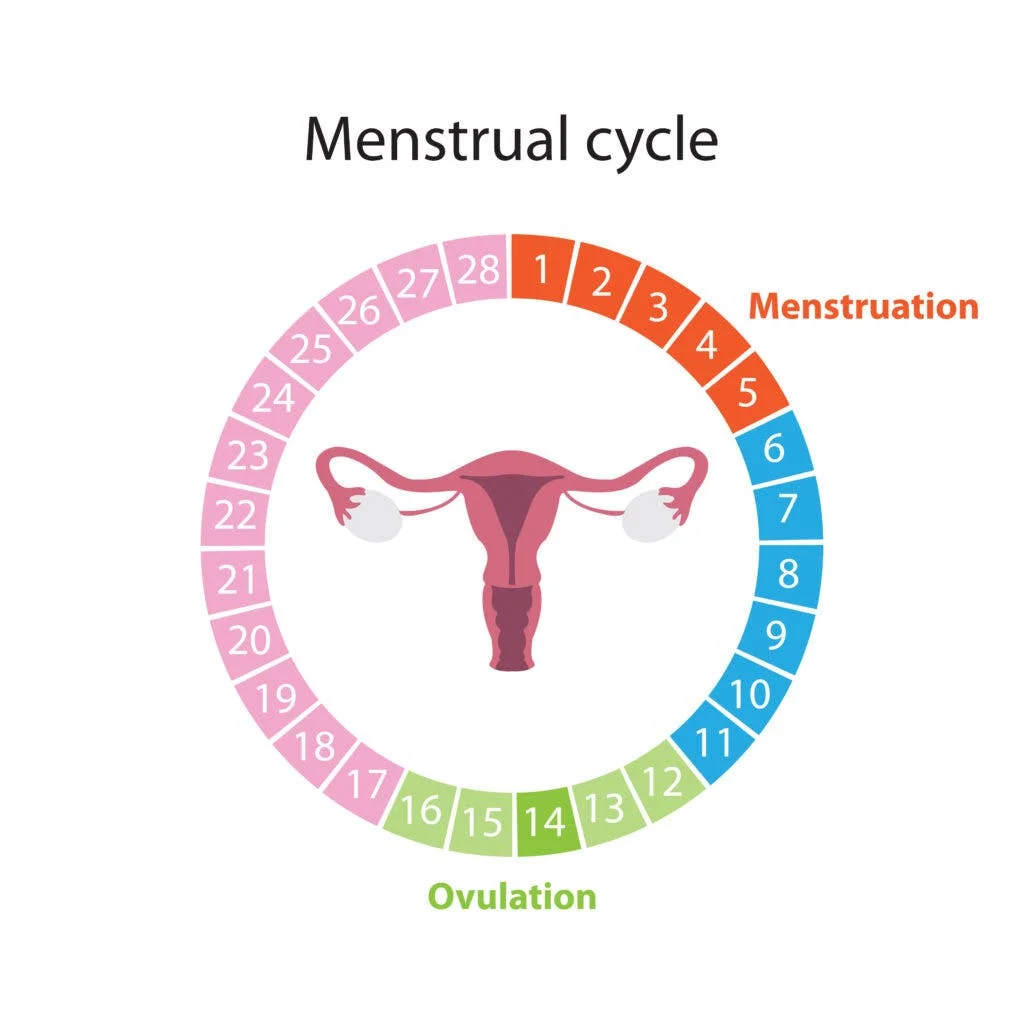
To get your partner’s personalized fertile window, tracking her cycle or testing for ovulation is key. See the man’s guide to ovulation testing for more information.
Does having sex more often improve your chances of conceiving? Not much. A 1995 research article from the New England Journal of Medicine suggested that for couples without fertility challenges, sex every day during the fertile window gave them a 25% chance of conceiving. Sex every other day? 22%.1
So generally, men with normal sperm counts can have sex every other day during the fertile window and still have a good chance of impregnating their partner. Is having sex everyday bad when trying to conceive? No, but since your chances are only slightly better — and daily sex can be stressful for some couples — every other day is the usual advice for conception.
But for men with low sperm counts, the advice changes.
Low sperm count: How often to have intercourse while trying to conceive?
Low sperm count is defined as fewer than 15 million sperm per milliliter of semen. Learn more about low sperm count (oligospermia).
Men with low sperm counts have a better chance of conceiving if they have sex every day for conception during their partner’s fertile window. One study of over 9,400 semen samples from over 6,000 patients suggests that, for men with low sperm count, peak sperm motility (AKA sperm movement) was reached after just one day of abstinence.2
In fact, for these men, having sex multiple times a day may increase pregnancy chances. For most men, ejaculating multiple times reduces sperm count on subsequent ejaculations.
But a study of 576 men at an infertility and IVF unit examined the semen analysis results of men ejaculating twice in a 1–4 hour period. This study found that, in contrast to men with normal fertility, men with low sperm counts had no significant difference in the number of sperm produced in the second ejaculation. The “pooled” samples significantly increased the total sperm count, potentially increasing the chance of pregnancy.3
Another small study in 2016 had similar results, concluding that, for men with low sperm count, ejaculating twice in one hour produced more normal sperm and better motility in the second ejaculation.4
Should I practice abstinence before trying to conceive?
Many people believe men should abstain from ejaculation (either sex or masturbation) before trying to conceive. This myth is based on the idea that abstinence “saved up” sperm, resulting in a higher sperm count during the fertility window.
Should you save sperm for ovulation? No. It’s true that abstinence may lead to higher sperm count — but after a few days without ejaculation, stored sperm can begin to deteriorate in quality.
Sperm are stored in the male reproductive tract, specifically the epididymis, a tightly coiled tube on top of each testicle. While in “storage,” sperm are continuously exposed to oxidative stress, contributing to deterioration. This exposure can damage sperm membranes and the DNA carried by sperm. Research has found that markers of oxidative stress in semen increase after 5+ days of abstinence, potentially compromising fertility.5
So how often should a man ejaculate when trying to conceive? Several studies have shown that frequent, even daily ejaculation may actually improve sperm quality, even if it somewhat reduces the volume of semen and the total sperm count per ejaculation. Sperm counts are typically highest after abstaining for 2 days, and sperm quality is negatively affected after 5–7 days.6
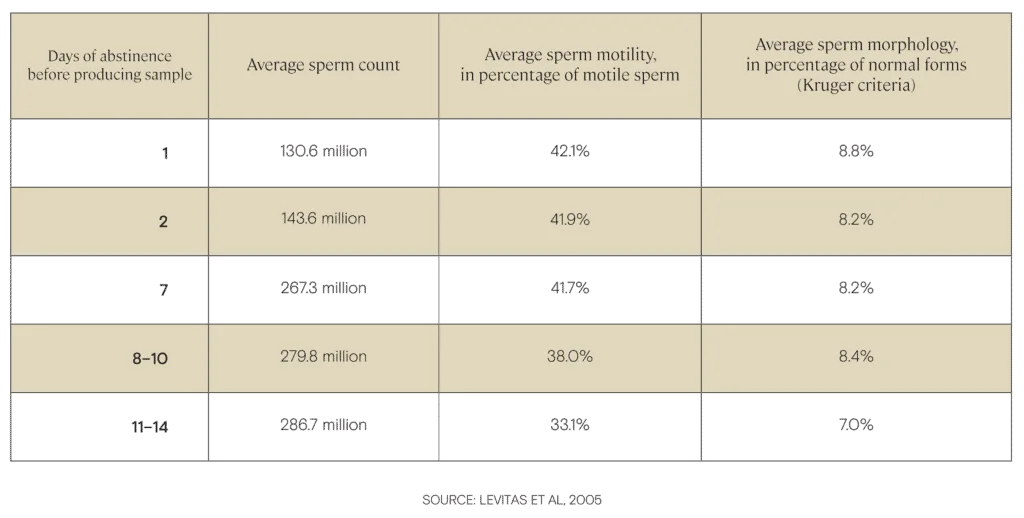
A 2021 meta-analysis published in the Journal of Assisted Reproduction and Genetics examined data from 28 studies involving over 7,000 men and found that although longer abstinence periods (more than 7 days) increased semen volume and sperm count, shorter abstinence periods (1–3 days) were associated with improved sperm motility, morphology, and DNA integrity.7
One study from 2015 found that men who ejaculated daily for a week had higher-quality sperm at the end of the week than at the beginning, with improved motility (the ability of sperm to swim effectively) and morphology (the shape and structure of sperm).8
Another study found that daily ejaculation for up to two weeks may reduce sperm DNA fragmentation.9 Higher sperm DNA fragmentation is associated with infertility, miscarriage, and certain health conditions in offspring.
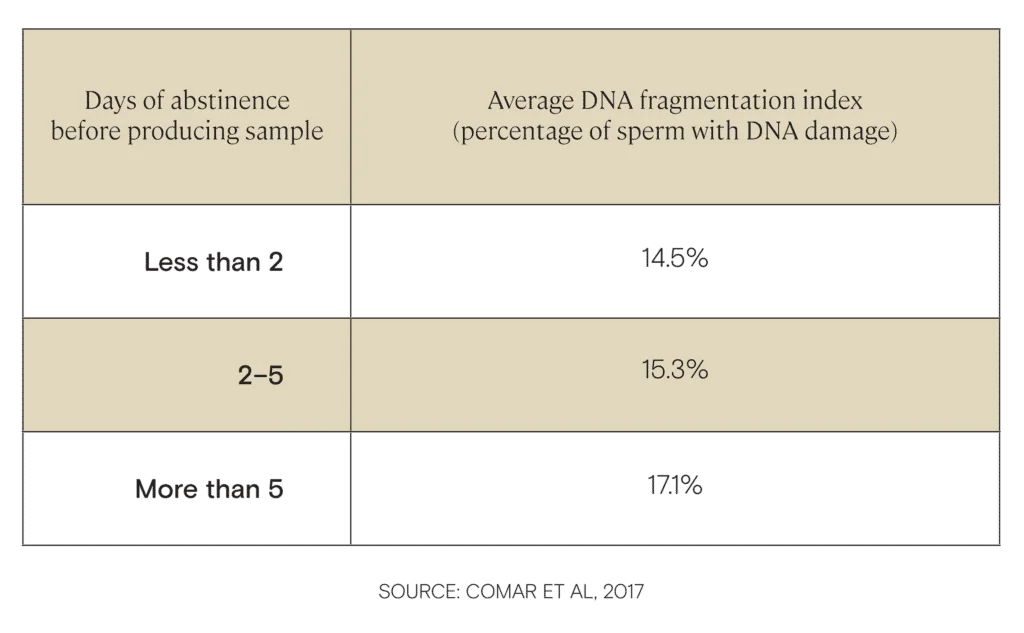
The bottom line: Frequent ejaculation throughout the month, whether it’s sex or masturbation, helps ensure that sperm are fresher and have better motility, which may be more important for conception than simply having a higher number of sperm. Just make sure you’re putting all your ejaculatory efforts toward intercourse during that aforementioned fertile window.
You're ready to start a family. But are your sperm?
What this means for couples trying to conceive
Based on current research, here are some guidelines for couples who are trying to conceive:
- Don’t worry about “saving” sperm for ovulation. Abstaining for more than a few days prior to your partner’s fertile window won’t improve your chances of conception, and may actually lower your sperm quality.
- Have sex every 1–2 days throughout the fertile window, which is typically days 9–16 of a person’s cycle. This ensures a steady supply of fresh, high-quality sperm when you’re most likely to conceive.
- Every other day is fine for most. If daily sex feels too scheduled or stressful, that’s OK. Studies show almost no difference in pregnancy rates between couples who have sex daily versus every other day.
- If you have a low sperm count, have more sex. Having sex daily or even having sex multiple times a day can increase pregnancy chances for men with low sperm count, as “pooled” numbers will be higher.
- Be aware of lifestyle factors. Sex frequency while trying to conceive isn’t the only factor that affects your chances. Research shows that maintaining a healthy weight, reducing alcohol consumption, avoiding tobacco and recreational drugs, managing stress, and getting adequate sleep all contribute significantly to sperm health. Antioxidant-rich foods and supplements (like vitamin C, vitamin E, zinc, and CoQ10) may also help protect sperm from oxidative damage.
See our Guide to Sperm Quality & Motility Improvement.
Sperm testing can give you a clearer picture
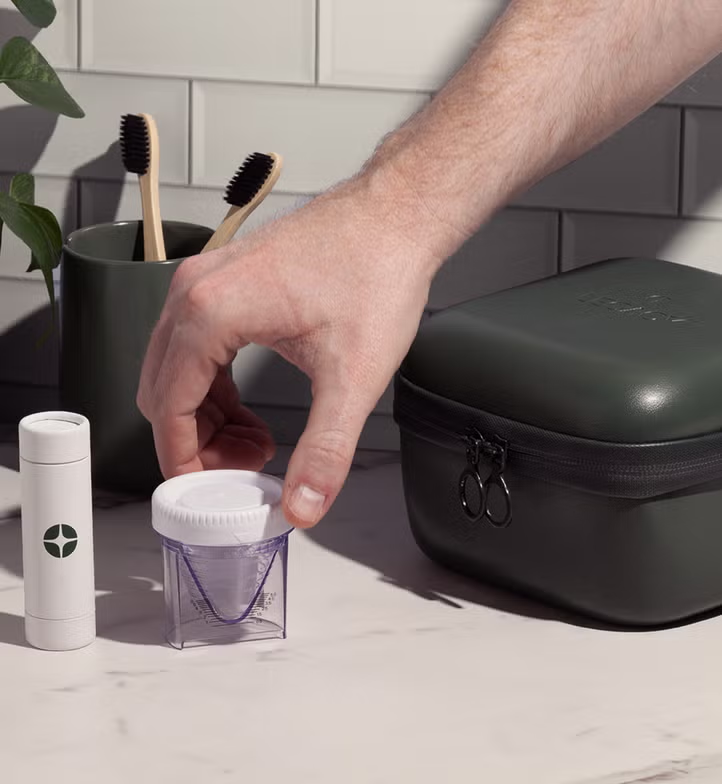
Sperm testing is a key part of a trying-to-conceive strategy — and getting a comprehensive understanding of your sperm health can create an easier path to conception.
Sperm testing can:
- Help you decide how often to have sex while trying to conceive. A normal sperm count could give you the option for a less demanding intercourse schedule, for example. On the other hand, couples experiencing challenges with sperm count might consider having sex twice a day during ovulation.
- Inform a sperm improvement plan. It takes about 74 days for lifestyle changes (such as eating a healthier diet, exercising more, or quitting smoking or alcohol) to affect sperm. If your test results turn out less than ideal, you’ll have the chance to make necessary changes well before you try to conceive.
- Give you better information and more choices. Lifestyle changes can’t fix every potential issue with sperm health. If you know you have a medical issue with sperm health, you can proceed with better information and avoid years of stressful wondering about your fertility.
Sperm testing allows you to take charge of your fertility and be the best partner you can be on the conception journey.
Get started with sperm testing
References
- Wilcox et al. “Timing of Sexual Intercourse in Relation to Ovulation — Effects on the Probability of Conception, Survival of the Pregnancy, and Sex of the Baby,” 1995.
- Levitas et al. “Relationship between the duration of sexual abstinence and semen quality: analysis of 9,489 semen samples,” 2005.
- Tur-Kaspa et. al. “How often should infertile men have intercourse to achieve conception?,” 1994.
- Bahadur, et. al. “Semen characteristics in consecutive ejaculates with short abstinence in subfertile males,” 2016.
- 5. Agarwal, et. al. “Oxidative stress and its implications in female infertility – a clinician’s perspective,” 2016.
- Hanson et. al. “The impact of ejaculatory abstinence on semen analysis parameters: a systematic review,” 2017.
- Borges et al. “Revisiting the impact of ejaculatory abstinence on semen quality and intracytoplasmic sperm injection outcomes,” 2021.
- Alipour et al. “Improved sperm kinematics in semen samples collected after 2 h versus 4–7 days of ejaculation abstinence,” 2015.
- Gosálvez et. al. Shorter abstinence decreases sperm deoxyribonucleic acid fragmentation in ejaculate, 2011.
Find what's right for you

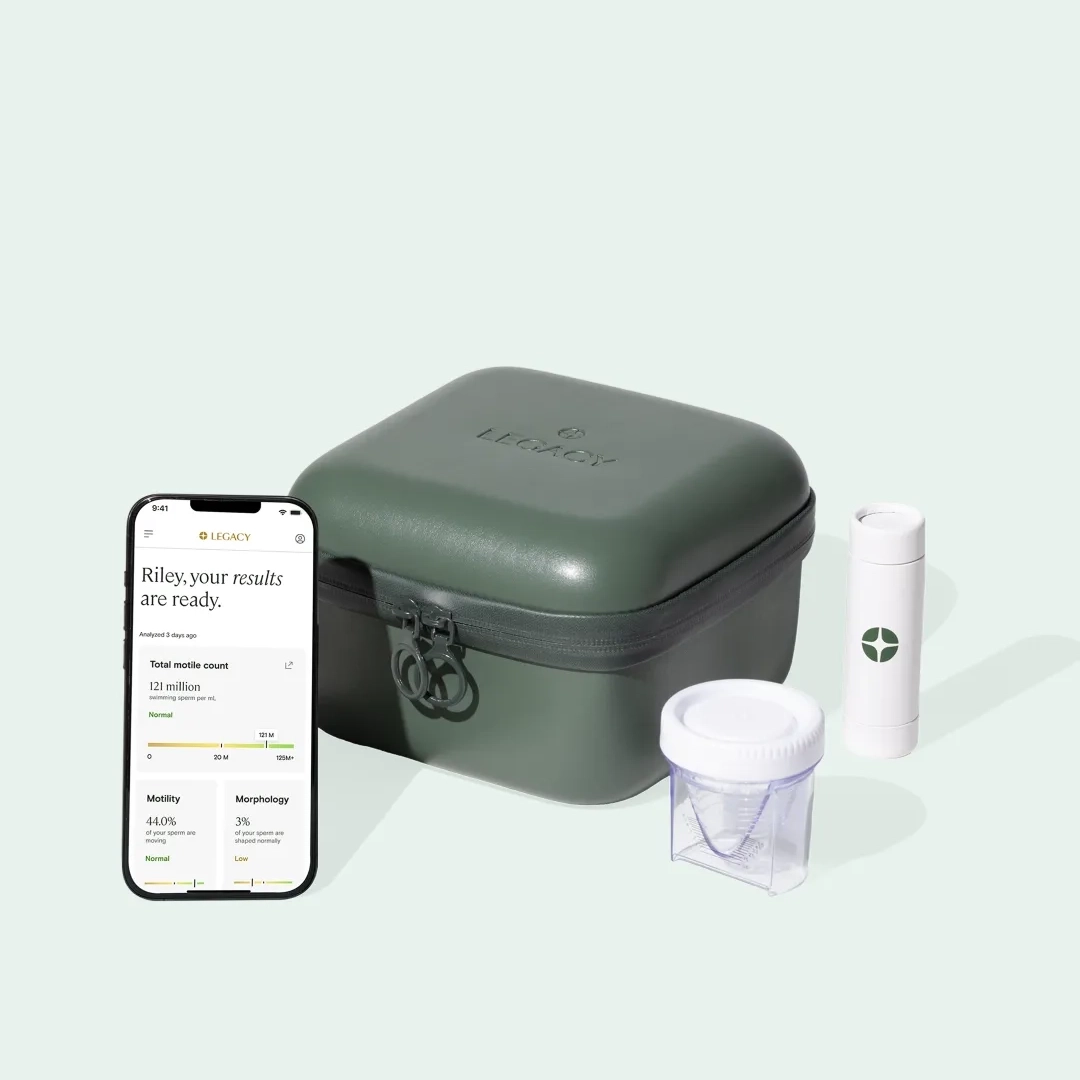
Standard Semen Analysis
$295
Key features

Semen volume
Sperm concentration & count
Motility
Morphology