How Legacy protects your sperm during transit


Find out how Legacy protects your sperm during transit so it can safely arrive at the lab for testing and freezing.
The journey sperm must make to reach and fertilize an egg is a treacherous one despite the short distance from the vagina to the uterus. Of the tens of millions of sperm cells that depart from the vagina, only one will make it to the oocyte to trigger fertilization. But what if sperm had to travel even farther? What if their journey wasn’t just a few centimeters, but thousands of miles instead?
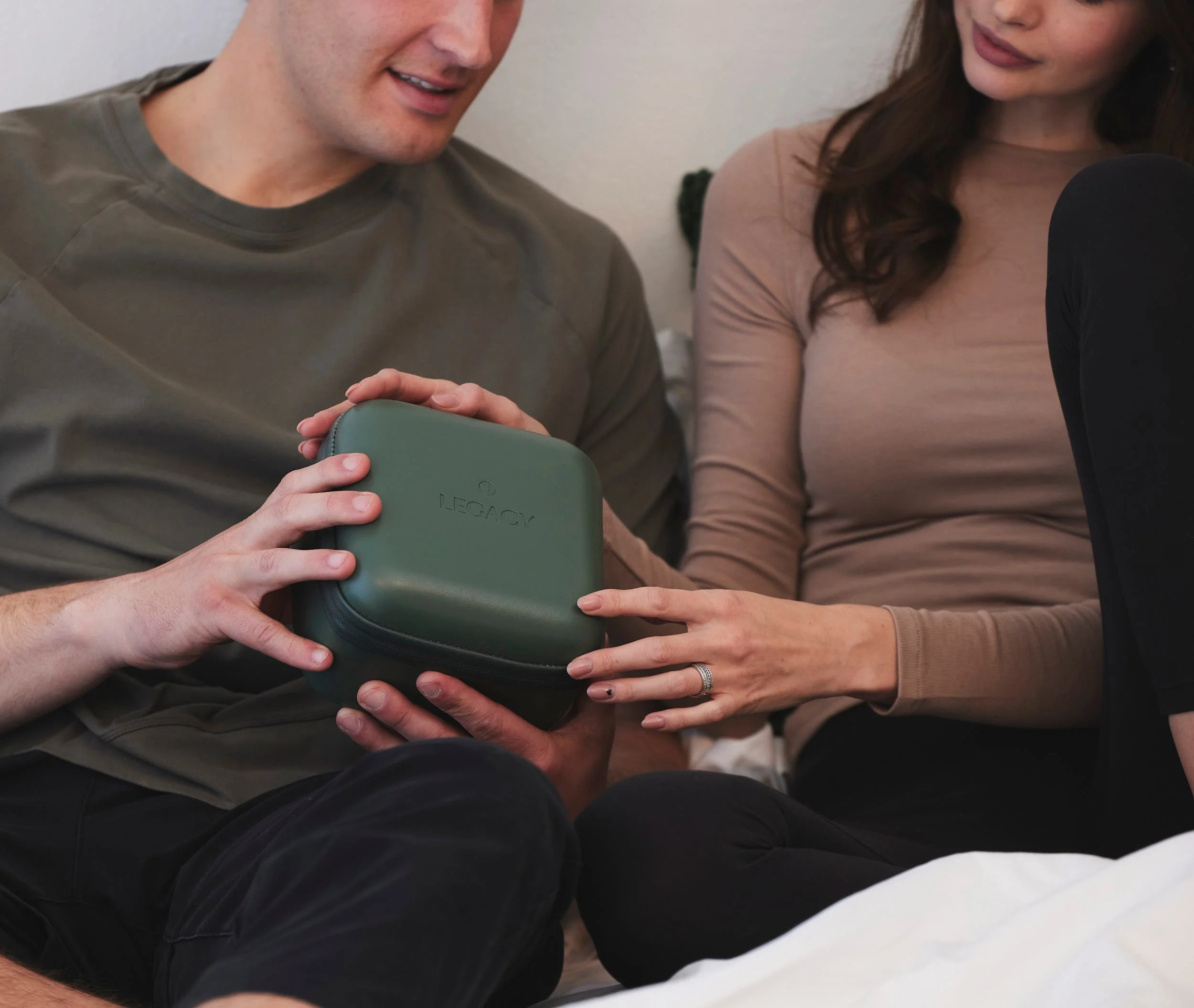
If you use Legacy’s at-home sperm freezing or testing kit, you are able to produce your semen sample in the comfort and privacy of your home and send it directly to the lab by mail. To ensure your sperm survives the trip, Legacy employs a number of precautions, from thermal controls to fast shipping.
Find out how the process works and why you should consider transporting sperm with Legacy for your testing and freezing needs.
Key takeaways
- Sperm freezing at home offers a more comfortable, convenient, and cost-efficient approach than using a traditional clinic. You can produce your sample in the privacy of your home and send it directly to the lab in the mail.
- Legacy’s at-home sperm freezing kits and sperm testing kits use transport media that is clinically proven to protect and extend the life of your sperm to ensure it arrives safely to FDA and CLIA-certified labs.
- A combination of fast shipping, thermal controls, and thorough testing ensures the sperm you are storing is healthy and viable for long-term storage.
How to freeze your sperm at home
In the past, freezing your sperm required a visit to a fertility clinic or sperm bank, where you produced a sample in a private collection room and walked it over to a staff member for safe keeping and handling. Testing and freezing this way can total up to $1,000, with ongoing storage fees ranging from $100 to $500 a year, though these costs can vary depending on your location and the clinic.
Sperm freezing at home offers a more comfortable, convenient, and cost-efficient approach thanks to special transport media that allows for safe overnight shipping directly to the lab. This approach lets you produce your sample in the privacy of your home and send it through the mail without ever stepping foot in a clinic or lab.
With Legacy’s at-home sperm freezing kit, the process is simple:
- Order: After ordering your kit, you’ll work with a client service advisor (CSA) who will assist you through the process. They’ll coordinate your next-day delivery and give you a CLIENTID, which is a safeguard to keep your samples anonymous and secure when being stored.
- Register: Once you receive your kit, you’ll see a QR code inside the box. Scan this code to register your kit and to schedule pick-up.
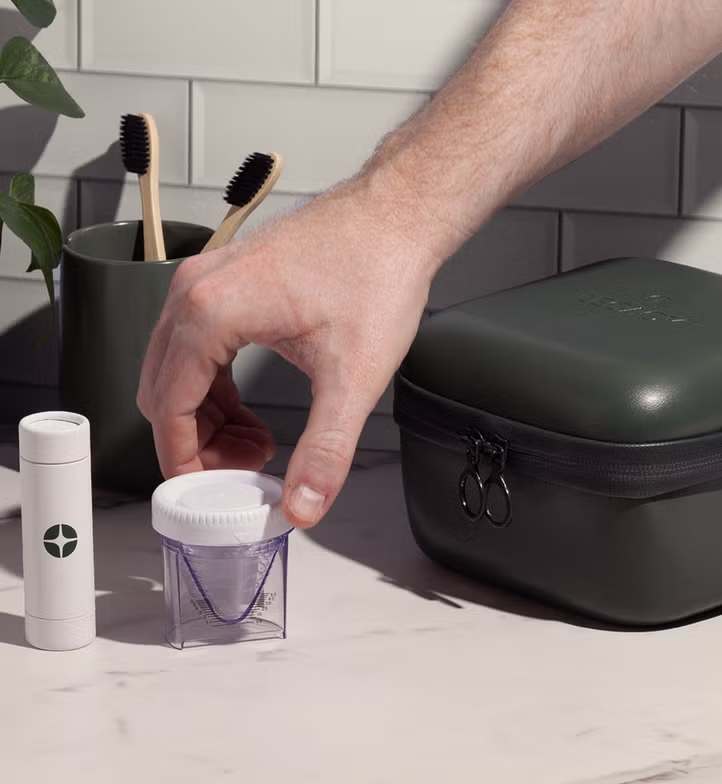
- Produce a sample: Legacy’s at-home sperm freezing kit provides you with a secure storage vessel to collect your sample at home. Through self-stimulation (masturbation) with clean hands, you’ll produce your sample (ejaculate) into this vessel. Do not use lubricant or saliva. After producing your sample, mix it with the special transport media that will protect it during shipping.
It’s important you use your kit within 7 days of receiving it and that you abstain from ejaculating 2–5 days before using the kit.
Please note that, before you freeze your sperm, it’s recommended to screen for sexually transmitted infections (STIs), which can impact sperm quality and be transmitted to partners during artificial insemination. STI testing is also required in many states if you choose to use your sperm in an IVF treatment. It is also recommended to order a sperm analysis, which ensures your sperm is healthy enough to freeze.
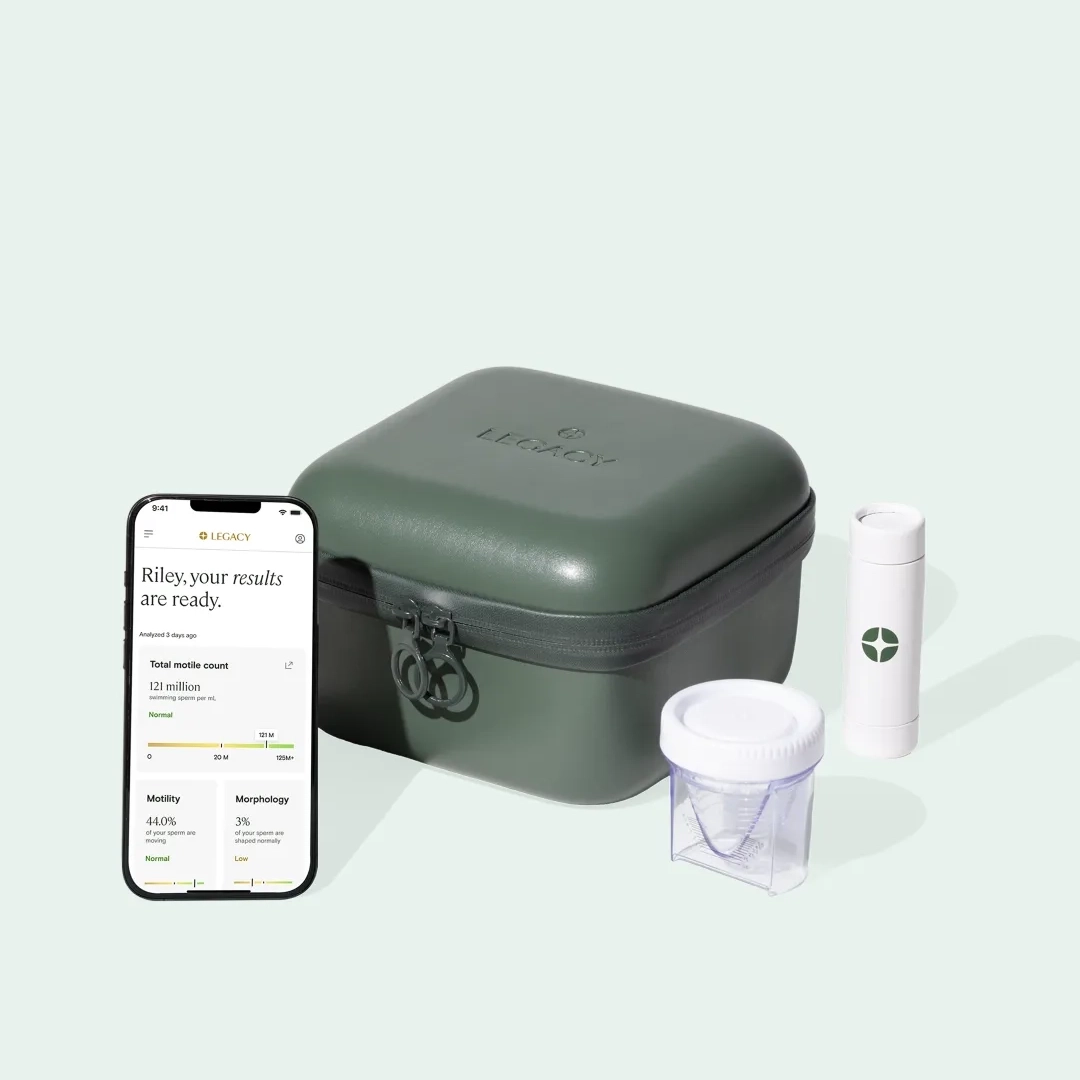
Fortunately, every sperm freezing kit with Legacy includes STI testing and a semen analysis with details on your sperm count, concentration, motility (movement), and morphology (shape), which you’ll receive in an easy-to-read report in as little as a week through our accessible customer portal. If your sperm quality parameters aren’t where you want them to be, you can start implementing lifestyle changes that have been shown to improve sperm quality, such as diet and exercise.
With Legacy, a semen analysis kit costs just $295, and storage costs start at only $120 per year, which is significantly lower than the cost of going through a traditional clinic. There are also sperm storage package options, with additional savings and the option to pay in installments.
How to return your semen sample to a lab
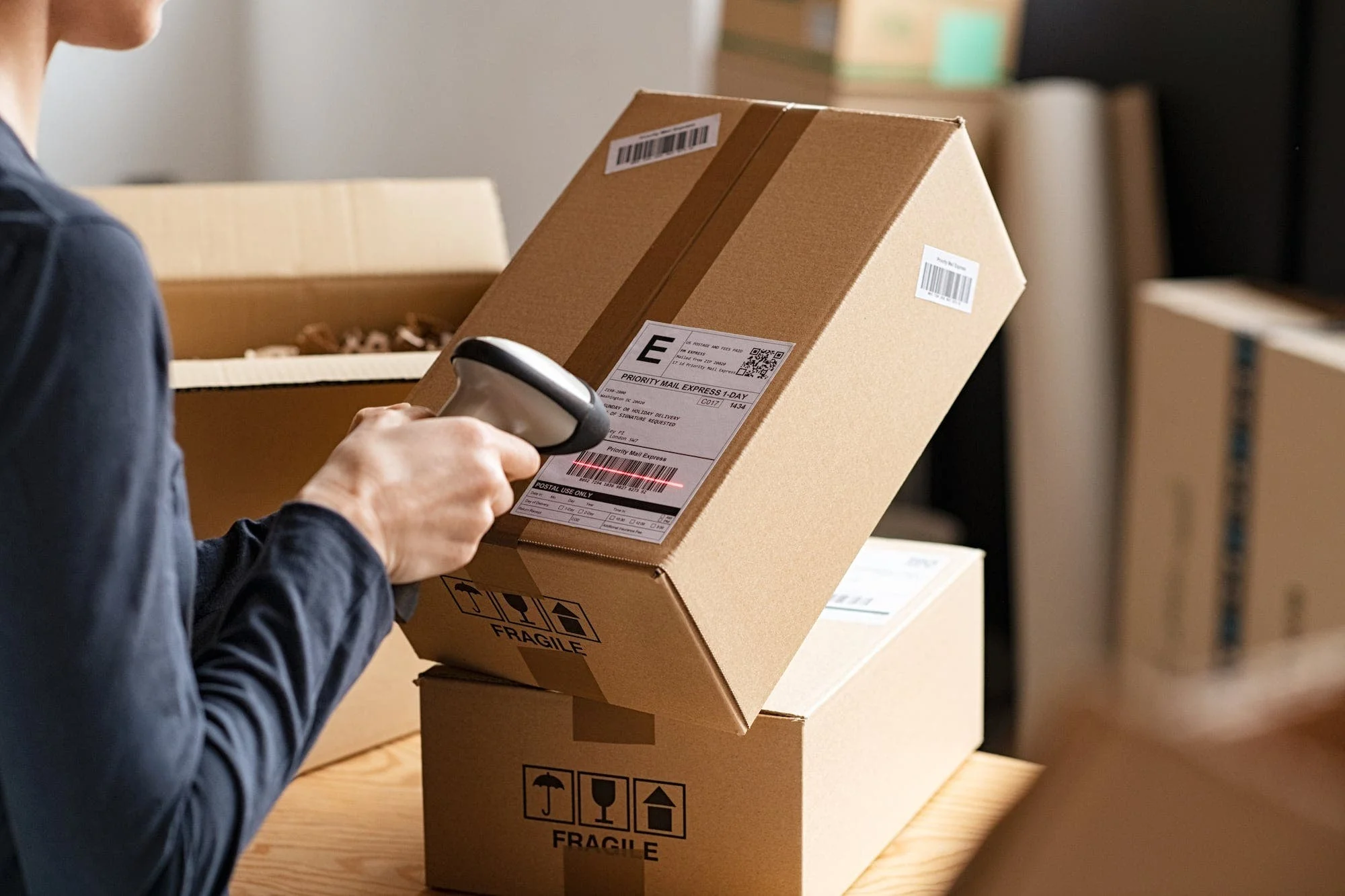
Sending your sperm to the lab is a straightforward process with Legacy. After mixing your semen sample with the special transport media, which will protect it during shipping, you can schedule same-day pick-up for your sample to be mailed overnight.
Simply follow these steps:
- Package and return your kit: Use the included packaging materials to package your sample in the original shipping box. Then return the kit through one of our shipping partners using either at-home pickup or via a participating location.
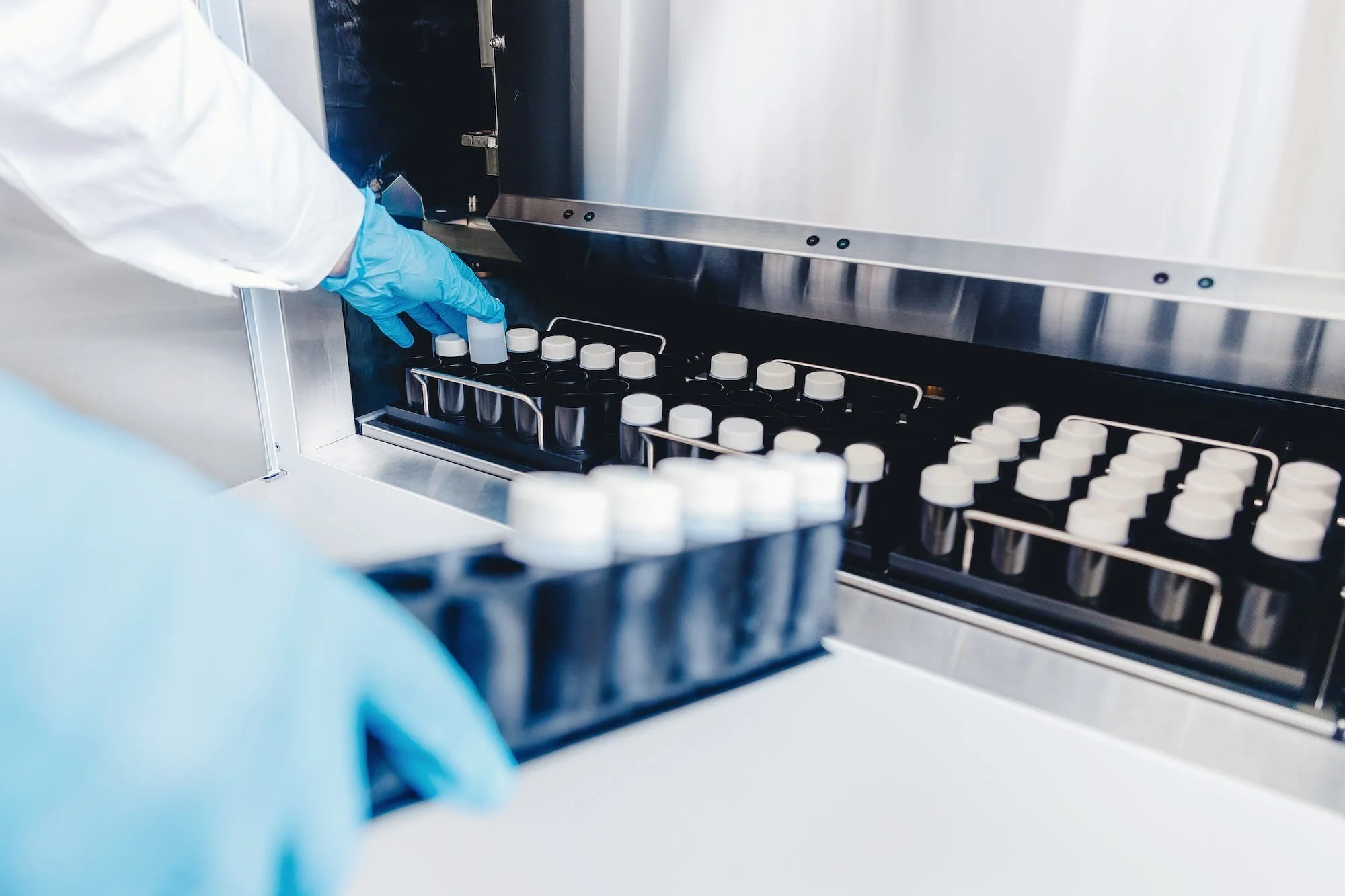
Legacy’s at-home sperm freezing kits and sperm testing kits use transport media that is clinically proven to protect and extend the life of your sperm to ensure it arrives safely to FDA and CLIA-certified labs. Our kit is designed to protect your sperm’s quality for up to 48 hours, and we conduct a full test on arrival to ensure everything went smoothly in transit, in addition to a post-thaw analysis to ensure your sperm is healthy and viable for freezing.
- Receive your report: Your results will be available on your online dashboard in just three business days. You then have the option to schedule a video call with a fertility specialist to review your results and discuss how they relate to your fertility. All your information remains anonymized via your CLIENTID and lives on HIPAA-, GDPR-, and CCPA-compliant servers.
How much do you know about your sperm?
The effects of storing and transporting cryopreserved semen
Research shows it’s normal for semen parameters like sperm motility to decrease slightly after being frozen and thawed. But studies have demonstrated that, on average, around 80% of sperm will survive the thaw.
For even more peace of mind, Legacy’s at-home sperm freezing kit is the only one of its kind that includes a post-thaw analysis. This allows lab technicians to evaluate how a semen sample withstands the sperm freezing and thawing process to ensure it is appropriate for long-term storage.
How long you store your sperm shouldn’t affect its viability either. Some research shows that sperm lasts indefinitely when stored under the proper conditions.
Factors that impact sperm quality
The right conditions for storing sperm and preserving its quality include keeping it at the proper temperature, ensuring sperm is transported safely, and multi-site storage. All of these factors are addressed with care when using Legacy.
Thermal controls
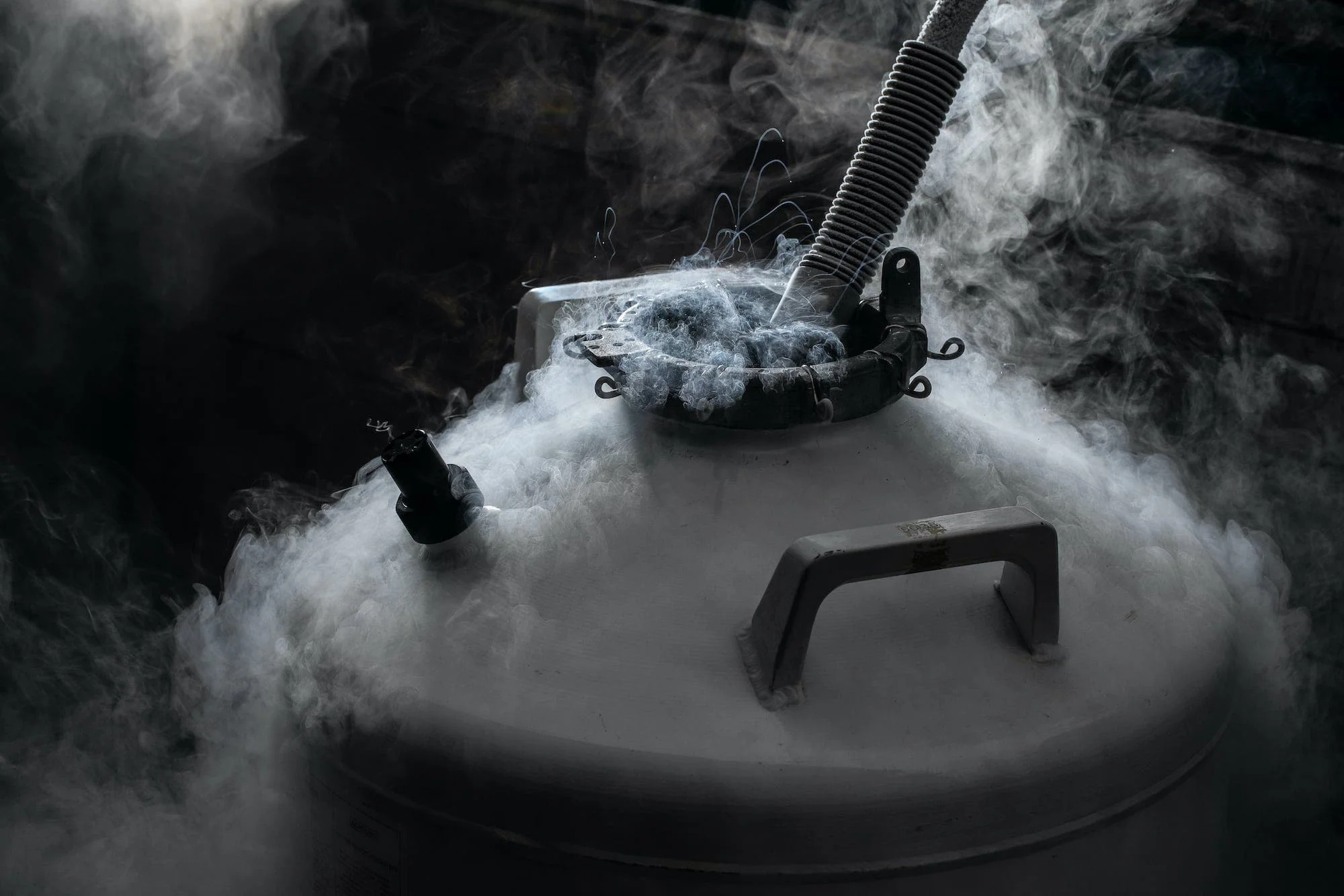
Unlike storing your sperm at home in your kitchen freezer, your sperm will be frozen at a cool -196ºC or lower using liquid nitrogen in the lab. This is after your sample has been mixed with a cryoprotectant, a substance that draws water out of the sperm cell to prevent damage during freezing. This cool temperature is maintained in cryogenic vials.
Keep in mind that home freezers usually hover at a temperature around -18°C (0–2° F). This is simply not cold enough and, if attempted, your sperm will not be usable.
Speedy delivery options
Using a freezing kit with speedy delivery is key to preserving the quality of your sperm. This is why Legacy’s at-home freezing kit offers same-day pick-up and provides analysis results within three business days. The faster your semen sample is received, the better because living sperm cells and activity start to fall within minutes of ejaculation.
And when it’s time to withdraw and use your sperm, your sample is transported just as efficiently in cryo-shippers, which are portable liquid nitrogen semen storage tanks that maintain cryopreservation temperatures of -196ºC for up to 14 days.
Reasons for transporting sperm
Once you are ready to use your sperm, it will be transported directly to your doctor to be used in one of several different fertility procedures. These include:
- IUI (intrauterine insemination): A process in which sperm is inserted directly into the uterus at the time of ovulation, to facilitate conception. IUI typically requires one vial of frozen sperm, and if you plan to use IUI in the future, we highly recommend storing multiple samples.
- IVF (in vitro fertilization): A procedure in which multiple eggs are retrieved from a female patient’s ovaries and fertilized in a lab. There, they develop into embryos that can be transferred back into a patient’s uterus to attempt pregnancy. IVF typically requires one vial of frozen sperm, unless using ICSI.
- ICSI (intracytoplasmic sperm injection): An IVF technique in which a single sperm is injected into an egg to fertilize it. If you plan to use IVF with ICSI, freezing one or two sperm samples should suffice.
Legacy’s labs and cryogenic storage facilities
Legacy is the only at-home sperm freezing option that offers multi-site storage. This means your sperm samples will be divided into several batches, and stored at different locations. This reduces the risk, however small, of your sperm being lost or damaged at a facility. It also ensures your sperm will be safe and accessible whenever you need it.
Find what's right for you

Standard Semen Analysis
$295
Key features

Semen volume
Sperm concentration & count
Motility
Morphology