“Hit in the balls”: How testicular impact could affect fertility



Find out how testicular impact affects fertility, how to prevent this kind of trauma, and what you can do if you experience an injury.
Getting “hit in the balls” is a common joke in Hollywood movies. It even happened to Mickey Mouse. But, in real life, testicular trauma is far from funny. If the injury is significant, it can lead to complications like low testosterone, sexual dysfunction, urological problems, and even male-factor infertility.
Read on to find out why testicles are so sensitive, explore different types of injuries, and learn what to do if you do get hurt.
Key takeaways
- Because the testicles are located outside of the body, they are vulnerable to getting hurt more easily than other reproductive organs.
- Testicular injuries include contusions, torsions, ruptures, degloving, dislocations, and detachments.
- While some injuries can be treated with ice and over-the-counter pain relievers, other injuries require surgical intervention.
- Untreated injuries can result in a reduction in sperm or sperm quality, low testosterone, and sexual dysfunction.
- Freezing your sperm while you’re young and healthy and taking safety precautions are the best ways to safeguard your fertility for the future.
Anatomy of the testicles
The testicles, or testes, are two small egg-shaped organs contained in the scrotum of people assigned male at birth. In most people, there are two testicles, and they are the site of sperm and testosterone production.
Testicles hang outside of the body, which keeps them about 2°C lower in temperature than the rest of the body. This ensures an ideal temperature for sperm production, which happens in the seminiferous tubules of each testicle. There are around 700 of these coiled tubes inside each testis. Other important anatomical parts include:
- Scrotum: The bag of skin that holds and protects the testicles.
- Tunica albuginea: The tough fibrous covering of the testes.
- Epididymis: A long tube through which sperm moves from the testicles.
- Vas deferens: A storage space for sperm, which connects the epididymis to the urethra.
- Seminal vesicles: Located behind the bladder, it releases a fluid that forms part of the semen.
- Prostate gland: Located just below the bladder,it produces the fluid that nourishes and transports sperm.
- Urethra: A tube allowing both urine and semen to exit the body.
- Penis: An external sex organ consisting of the glans (head) and the shaft, which is the main, cylindrical part of the penis.
Testicular trauma
Because the testicles are located outside of the body, they are vulnerable to getting hurt more easily than other reproductive organs. Though the scrotum offers some protection in terms of thermoregulation, there are no bones or muscles to safeguard against blunt force or penetrating injuries.
Types of testicular injuries
Studies show blunt trauma accounts for 85% of testicular injuries, with penetrating injuries accounting for 15%. Blunt trauma refers to getting kicked or struck by an object, while penetrating injuries result from items that pierce through the skin, like knives or bullets. Car, motorcycle, or bicycle collisions can also result in testicular impact, as well as animal bites or machinery accidents.
Types of testicular injuries include:
- Contusion: Swelling, bleeding, or bruising resulting from damage to the blood vessels in the testicles.
- Testicular torsion: When the scrotum causes the spermatic cord inside the testicle to become twisted, leading to tissue death.
- Rupture or fracture: A tear in the testicle covering.
- Degloving: When the scrotum skin is torn away from the testicles.
- Dislocation: An injury in which the testicle is forced out of position.
- Detaching: When the testicle has been detached.
In some cases, an injury will lead to an infection or inflammation of the testicles or related areas, like the epididymis.
Symptoms of injuries
One of the most obvious symptoms of a testicular injury is pain, which may spread as far as the abdomen. Other symptoms include:
- bruising and/or swelling of the scrotum
- nausea or vomiting
- blood in the urine
- difficulty urinating
- fever (especially in the case of an infection)
Treatment for injuries
If the testicular injury is mild, your doctor may recommend that you apply ice, take an over-the-counter pain reliever, and avoid strenuous activity. If their examination reveals there is an infection, they might also prescribe antibiotics or medication to relieve inflammation.
In some cases, your doctor may order an MRI or ultrasound to ensure there are no significant internal injuries. If more treatment is needed, it could include surgical intervention.
Surgical treatments for testicular injuries depend on the trauma involved:
- If you have a testicular torsion, your doctor will make a small incision in your scrotum and untwist your spermatic cord.
- A rupture or fracture will require stitches and a tube may be placed in the scrotum to drain blood and other fluids.
- If your testicle has been dislocated, your doctor may try to press it back into place without surgery, but if this fails, surgery is required.
- A detached testicle must be surgically reattached.
- Skin grafts can help repair a degloving injury.
In rare cases, if the injury is too significant, your doctor may suggest removing the testicle in a procedure called an orchiectomy.
How testicular impact affects fertility
While painful, most of the time, a hit in the balls will not harm your fertility. But if the impact is significant or an unaddressed injury causes an infection, your fertility may be at risk. Here are some ways testicular trauma can affect your fertility:
- Sperm production: Scar tissue and other problems with the testicular tissue may result in reduced sperm production. In some cases, if an infection is not treated, it can spread to the epididymis and impair its ability to carry sperm. Testicular torsions may also impact sperm production; research shows low sperm count and poor sperm vitality occurs in >50% of patients with testicular torsion. Studies also show testicular torsion is associated with abnormally low sperm motility or morphology, which describe sperm movement and sperm shape, respectively.
- Low testosterone: A testicular injury can also affect hormone production. Low testosterone levels may make it difficult to conceive or affect your erections.
It’s also important to remember that while external injury to a testicle can result in significant pain and damage, if one testicle is functioning normally, it should be able to produce adequate sperm and testosterone without the other. However, when infection or inflammation remain untreated, secondary problems may develop, putting your fertility at risk.
How much do you know about your sperm?
How to prevent scrotal injury
If you handle complex machinery at work or play contact sports in your spare time, there are a variety of ways you can protect yourself from scrotal injury. These include:
- wearing a cup or jockstrap when playing sports (and making sure it fits!)
- being mindful of exposed belts or chains when operating machinery so you don’t become entangled
- applying caution when riding motorcycles or bicycles
- wearing your seatbelt while driving, and
- seeking medical attention if you become injured.
What to do after experiencing a testicular injury
If you’ve experienced a testicular injury, it’s crucial you seek medical attention quickly. This 2019 study found testicular rupture was 80–90% “salvageable” when surgery occurred within 72 hours of the incident, decreasing to 40–50% from that point on.
Call your doctor if you experience any of the following:
- significant swelling or bruising of the scrotum
- worsening pain for more than hour
- fever
- blood in urine
- trouble urinating
You can’t always anticipate a testicular injury, but safety precautions can help. Another thing you can do to ensure an injury doesn’t impact your fertility is consider freezing your sperm. Legacy makes it easy to freeze your sperm in the comfort and privacy of your home with an easy mail-in kit and lets you keep it preserved for as long as you need, with flexible, affordable sperm storage plans.
Even if you’re not sure you want kids in the future, freezing your sperm while you’re young and healthy gives you peace of mind that should you want to take that path, it will be available to you. Not sure your sperm is young and healthy? Find out about sperm testing at home.
Find what's right for you

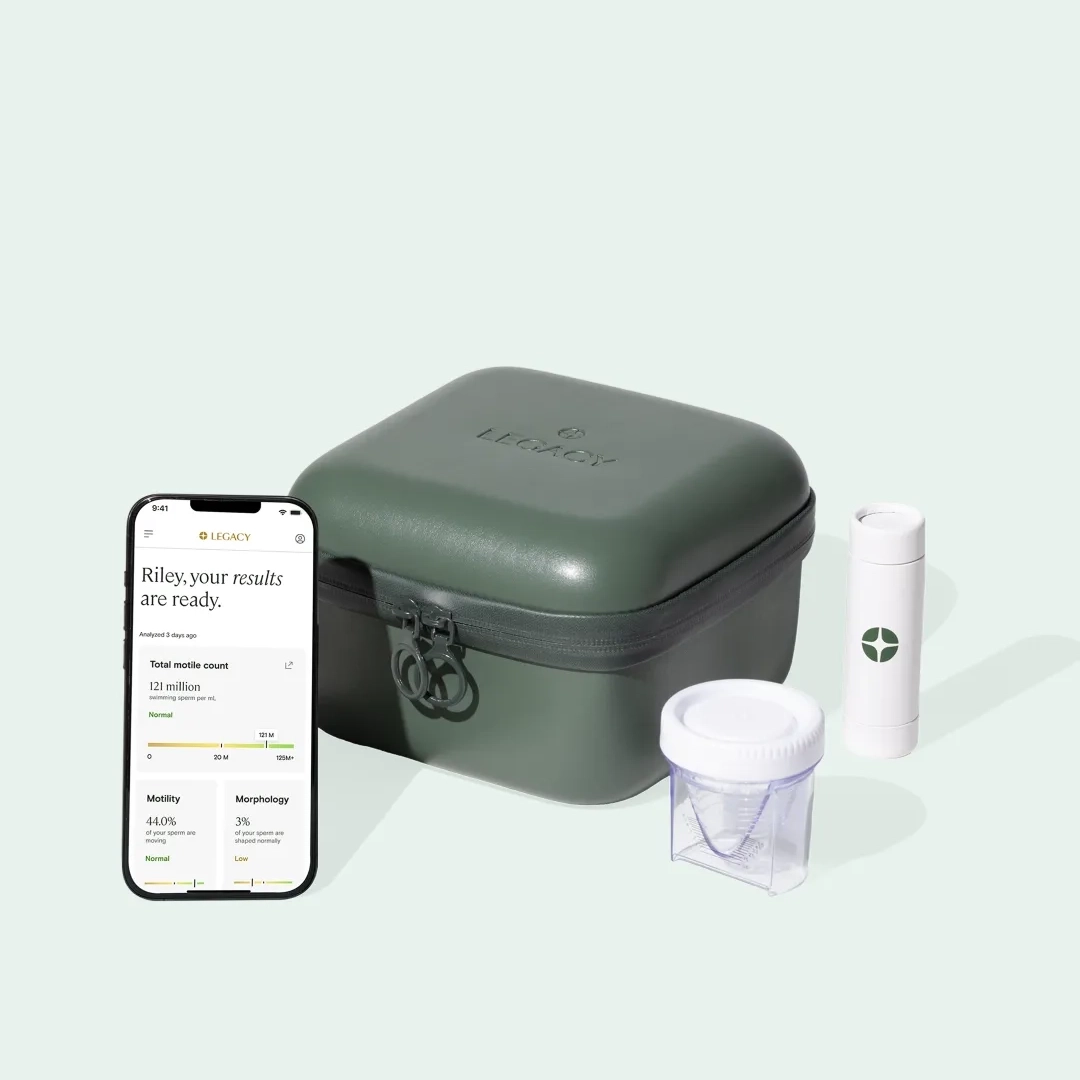
Standard Semen Analysis
$295
Key features

Semen volume
Sperm concentration & count
Motility
Morphology