Fertility coverage in the United States



Does insurance cover IVF? Find out about different types of fertility coverage you may be entitled to.
Embarking on fertility treatment can seem like learning a whole new language. And on top of that, there are alarming costs that can seem daunting when you first see them. One of the first questions that might pop into your head is, “Does my insurance cover IVF?” This article will explain the ins and outs of insurance coverage for fertility care and fertility coverage by state.
Keys takeaways
- Only certain states mandate fertility coverage, and coverage changes from state to state.
- The best way to find out if you have fertility coverage is to speak to your insurance company, your employer, and your territory’s insurance commissioner’s office.
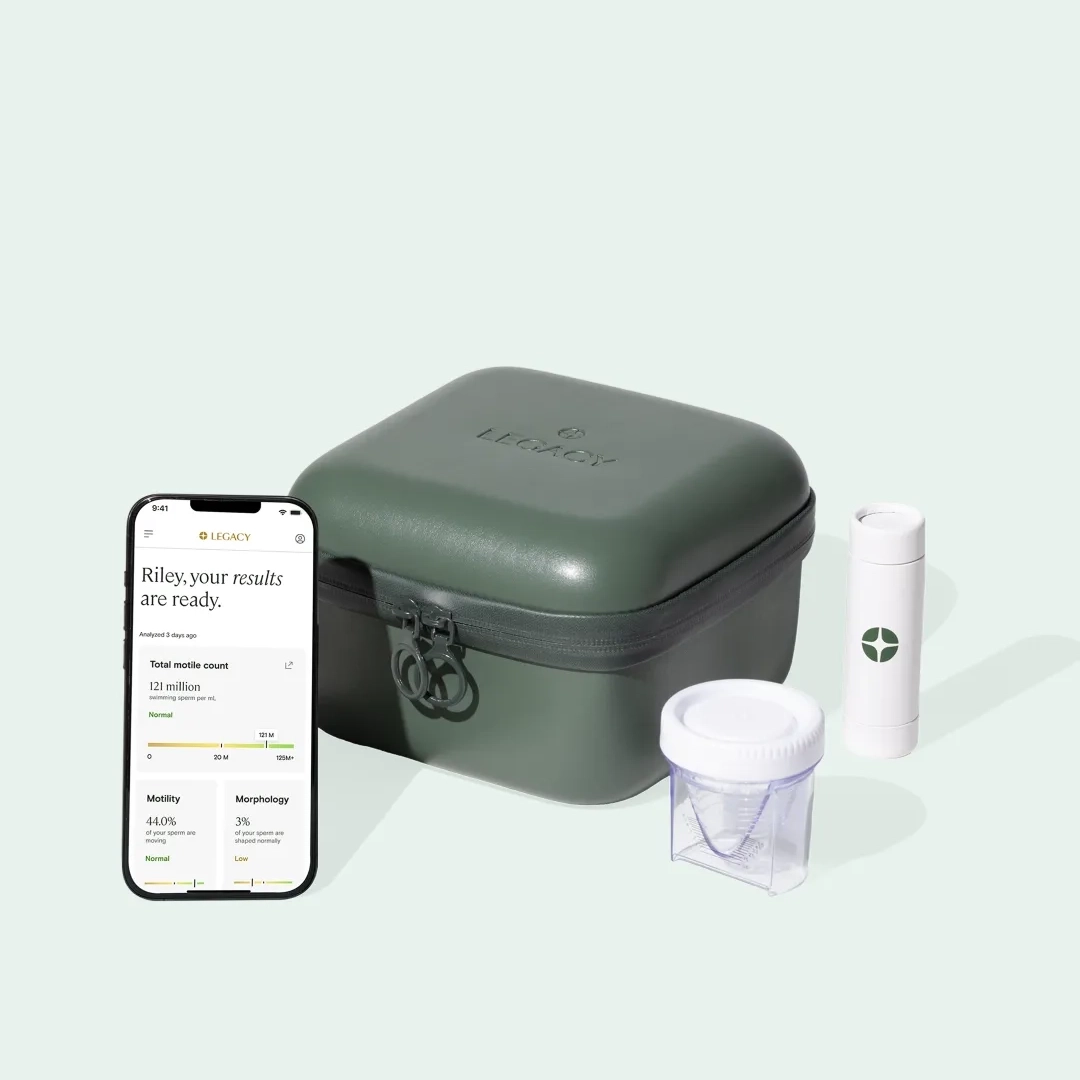
- Legacy is in network with leading health insurance plans and fertility benefits providers.
- Legacy also has several programs that support military members seeking fertility care.
Does insurance cover fertility care?
This question isn’t so straightforward. It varies depending on the state you live in and the size of your employer if you have employer-sponsored insurance. There are different levels of insurance coverage — some will cover “diagnosis,” some will cover treatment, and some will cover elective fertility preservation.
The best place to start is to ring your insurance company directly and ask if they cover fertility care. If the answer is yes, then get specific answers by asking questions such as:
- Which specific fertility treatments do you cover?
- Is fertility testing covered?
- Do you cover fertility medications?
- How do you define infertility to obtain grant coverage?
- Do I need to use a particular clinic?
- Are there any maximums on procedures or spend?
If you already know what type of fertility treatments you may need — pre-implantation genetic testing, cryopreservation, in vitro fertilization (IVF), intracytoplasmic sperm injection (ICSI), etc. — then ask about them specifically. Find out the best way to track your approvals and denials and how you communicate with your insurance company through the process.
With regards to state coverage, according to RESOLVE: The National Infertility Association, 20 states currently have fertility insurance coverage laws of some kind. These vary from state to state, with some including IVF coverage and some offering fertility preservation laws for iatrogenic (medically-induced) infertility. Let’s break this down into a little more detail.
Fertility coverage by state
If you have questions about insurance laws in your state or territory, you can call your territory’s insurance commissioner’s office to get more details.
RESOLVE has a thorough “Insurance Coverage by State” article laying out all the details you need to know here.
A few practical details to know are:
- States that mandate coverage for IVF include Arkansas, Hawaii, Utah, Colorado, Illinois, Massachusetts, Connecticut, Delaware, New York, Maryland, New Hampshire, New Jersey, and Rhode Island.
- States that mandate fertility preservation coverage include Maine, California, Utah, Colorado, Illinois, Connecticut, Delaware, New York, Maryland, New Hampshire, New Jersey, and Rhode Island.
To find out if you are covered by state law, you will need to ask your employer if your plan is:
- fully insured: required to follow state insurance laws
- self-insured: exempt from state insurance laws
- a “greater than 25” plan: might not have to provide coverage if the law excludes employers with employees under a certain number
- a “greater than 50” plan: might not have to provide coverage if the law excludes employers with employees under a certain number
- written in the governed state: usually the policy must be written in the state for coverage to apply
Having trouble getting pregnant? The answer may be one test away.

Does the military cover fertility care?
TRICARE provides limited fertility care. It’s telling that TRICARE refers to fertility health care as “assisted reproductive services.” The services must be medically necessary and combined with coital conception, as described here.
John Crowley, Head of Military Affairs at Legacy, explained there are several issues with TRICARE’s current approach to fertility care.
First and foremost, Crowley discussed that the services covered are reactive instead of proactive. For example, a military service member may be eligible for fertility care after they’ve been seriously wounded in combat or injured in training. Unfortunately, requesting care post-injury is only the first bureaucratic hurdle.
Next, the service member must make the case that their fertility has been compromised with respect to an incomplete (and anachronistic) means of family building and coital conception. According to the Centers for Disease Control and Prevention (CDC), infertility is defined as not being able to get pregnant (conceive) after one year (or longer) of unprotected sex.
For the majority of military families, this 12-month timeline is disrupted by FTXs (field training exercises), CTC (Combat Training Center) rotations, PCS (permanent change of station) moves, and overseas deployments. Ironically, those who are most at risk — special operators — are the least likely to have a 12-month window of opportunity for coital conception with their spouses due to frequent training and deployment. Needless to say, LGBTQ+ service members are completely excluded from fertility care because they are unable to engage in coital conception.
Hypothetically, if a military service member could satisfy TRICARE’s requirements for fertility care, they may be eligible for a semen analysis or a hormone evaluation — that’s it. Assisted reproductive technologies such as IVF and intrauterine insemination (IUI) are not covered. Fertility preservation is not covered. However, if a military service member was injured while serving on active duty, they may be eligible for the following: sperm retrieval, egg retrieval, IVF, artificial insemination, blastocyst implantation, cryopreservation, and storage of embryos (but not gametes).
What programs does Legacy offer to support military members seeking fertility care?
“We believe Legacy is a private-sector solution to a public-sector problem. We offer fertility products and services to military and veteran communities through various channels, most of which are summarized on our website,” explained Crowley. He went on to advise how Legacy supports military members seeking fertility care:
- Online marketplaces: Legacy is available to active duty service members, reservists, National Guard members, retirees, and their families at a discount via two identity verification services, Veterans Advantage and ID.me.
- Nonprofit partners: Legacy is a proud partner of the Military Family Building Coalition (MFBC), the SEAL Family Foundation (SFF), the Operation Baby Foundation (OBF), and the Green Beret Foundation (GBF). The Tadpole Project, Legacy’s flagship nonprofit program, in partnership with MFBC, provides all members of Naval Special Warfare (NSW) Command with free sperm testing and 12 months of cryopreservation.
- Insurance: Legacy has an ancillary agreement with TriWest, which provides healthcare for VA Community Care Network (CCN) Regions 4 and 5.
- U.S. Congress: Legacy actively advocates for policy change aimed at improving fertility care for military families. Our work, in partnership with MFBC, has shaped House report language requiring the Pentagonto investigate family-building challenges for active duty military. This investigation must be completed and shared with the House Armed Services Committee by December 1, 2023. The report will include important data on the prevalence of infertility and accessibility to treatment, among other considerations
Legacy’s work continues to receive recognition on the federal level. Rep. Dan Crenshaw (R-TX) highlights our partnership initiative with MFBC — the Tadpole Project — in a statement for the Congressional Record during National Infertility Awareness Week in April 2022.
Rep. Larsen’s (D-WA) gamete testing and cryopreservation effort passed in the House of Representatives in June 2022 but was not adopted by the Senate in the final version of the $858B bill. On December 23rd, 2022, President Biden signed the FY23 National Defense Authorization Act into law.
- U.S. Department of Veterans Affairs: In August 2022, Legacy announced its partnership with the U.S. Department of Veterans Affairs (covered by MilitaryTimes, The Boston Globe, and the Daily Mail). Together, Legacy and the Veterans Health Administration (VHA) have committed to testing and freezing sperm for 1,000 Global War on Terror (GWOT) veterans across the United States. More information is available here.
Fertility benefits programs
Fertility benefits programs are separate from your traditional insurance policies. They are additional coverage plans that might bridge the gap in fertility coverage in traditional insurance contracts.
Fertility benefits programs might offer specific coverage, discounts, or funds for fertility care, such as diagnostic tests, infertility treatment, and fertility preservation (like sperm freezing).
To find out if you have access to fertility benefits, talk to your employer. Examples of fertility benefits providers include:
- Carrot
- Progyny
- Maven
- Stork Club
- WINFertility
Frequently asked questions about fertility coverage
Jennifer O’Brien, M.D., Legacy’s medical billing specialist, answered a few FAQs about fertility coverage.
Will my insurance cover sperm testing or sperm freezing?
“Most insurers will cover semen analysis, and many cover storage,” said O’Brien, “but you have to choose a plan that includes fertility benefits.” She explained that every employee should ask their employer to include some kind of benefits for fertility — if not traditional insurance, then fertility benefits providers.
Is Legacy covered by insurance?
O’Brien confirmed that Legacy does participate with insurance: “We are currently contracted and in network with some United, Aetna, Cigna, Emblem, and TriWest plans. As mentioned above, coverage will vary based on employer offerings, but we are part of their packages in some states,” she advised.
Can I use my FSA or HSA to pay for fertility care?
“Yes,” said O’Brien. “HSA/FSA will cover fertility benefits, including ‘temporary storage’ of sperm.”
Find what's right for you

Standard Semen Analysis
$295
Key features

Semen volume
Sperm concentration & count
Motility
Morphology