Female fertility testing options — Testing before trying to conceive


What you need to know about female fertility testing before trying to get pregnant.
Deciding to try for a baby opens the door to a world of overwhelming information and can leave you asking, “Is now the right time?” and “What supplements should I be taking?” But what if you have been trying for a while and nothing has happened? What are your options as a female if you want to check out your fertility? In this article, we’ll explore female fertility testing options and help you decide your next steps if you have any fertility concerns.
Key takeaways
- Many factors can affect female fertility by influencing egg count, egg quality, and fallopian tube and uterine health.
- Several female fertility testing options are available and can indicate the health of each part of the female reproductive system.
- There are at-home testing options, but these vary in accuracy and price.
- Other screening tests can help you get a clearer picture of your and your partner’s overall fertility before you begin trying to conceive, including genetic carrier screening and semen analysis.
What affects female fertility?
Fertility issues can arise for both men and women, and an important starting point when trying to conceive is knowing what you can do to improve your fertility before you begin. Natural conception depends on several factors working harmoniously, but, essentially, the female partner needs to produce an egg from one of her ovaries. This egg must then be exposed to a high number of good-quality sperm to fertilize the egg. Once fertilized, the embryo must implant and develop, which is dependent on a healthy uterus. Each stage of this process influences the likelihood of a healthy baby developing, and if any of these steps are compromised, your fertility can be negatively affected. Let’s examine the specific factors that can have the biggest impact on female fertility.
Egg quantity
Several factors influence a woman’s egg quantity and quality:
- Maternal age: Women are born with a set number of eggs, which will gradually diminish over their lifetime. By the time of their first period, most women will have around 300,000 eggs on average. The number of viable eggs a woman has is called her “ovarian reserve.” Unfortunately, the quantity and quality of a woman’s eggs begin to decline with age. Women start losing follicles at an increasing rate from their mid-30s onwards, which results in a lower number and quality of eggs, negatively impacting the rate of conception and increasing the risk of miscarriage.
- Smoking: Chemicals commonly found in cigarette smoke can speed up the loss of eggs and lead to a diminished ovarian reserve.
- Weight: A review of the research base shows a significant correlation between the ovarian reserve and body mass index (BMI), with obese women having markedly fewer viable eggs compared to those with a BMI in the healthy range.
- Surgery: Ovarian reserve can be impacted if ovary removal is involved in the procedure.
- Chemotherapy: Chemo or radiation therapy may result in ovarian damage and can be linked with a significant reduction in egg count.
Having trouble getting pregnant? The answer may be one test away.

Egg quality
Egg quality refers to how healthy the egg is and how likely it is to be fertilized and grow into a healthy baby. Maternal age is the main contributing factor in the decline of egg quality in healthy women, but other factors, in addition to those above, can impact egg quality:
- Lifestyle factors: Habits such as smoking and nutritional choices, like alcohol, refined sugar, high-fat diets, and artificial sweetener consumption, are associated with poor egg quality. However, the dosage plays a key role, and research highlights that when women consume more of these products, there is a higher risk of poor egg quality.
- Endometriosis: This is a condition that causes the growth of normal uterine tissue in places other than the uterus. The surgical removal can cause scarring, which could block the route between sperm and the egg, but it has also been linked to sperm and egg damage.
- Fallopian tube health: Poor fallopian tube health prevents the sperm from reaching the egg in the first instance, but if successful fertilization does occur, this can then block the route the fertilized egg would take to move into the uterus to grow. This can lead to an ectopic pregnancy, where the fertilized ovum implants outside the uterine cavity. Studies show this may be due to sexually transmitted diseases (STDs) or previous surgery in the area (which may have caused scar tissue formation), cigarette smoking, and pelvic inflammatory disease.
- Uterine health: Several factors may influence uterine health and have a knock-on effect on female fertility, including:
- heavy or irregular menstrual bleeding
- uterine fibroids — benign tumors in the female genital tract
- adenomyosis — a common disorder of the uterus, resulting in an enlarged uterus, heavy menstrual bleeding, and pelvic pain, that can negatively impact fertility
Female fertility testing options
So what is the best course of action if you have any concerns about your fertility and are hoping to begin your fertility journey? Let’s explore some of the best fertility testing options available.
AMH testing
This test measures the level of anti-Müllerian hormone (AMH) in a female’s blood. It is made in the reproductive tissues of both males and females and plays an essential role in developing sex organs in an unborn baby. Testing AMH levels can provide helpful information about the fertility of women and their ability to get pregnant. It can also help diagnose menstrual disorders that may inhibit fertility.
Testing other female hormones
To get a full picture of your fertility, clinicians may advise you to test various hormone levels to see if each part of your female reproductive system is working normally. Follicle stimulating hormone (FSH), estradiol, prolactin, sex hormone binding globulin, testosterone, thyroxine, thyroid-stimulating hormone, and luteinizing hormone (LH) are often tested in addition to AMH to determine the health of a woman’s fertility. All of these hormones play a vital role in fertilization, and a balance is needed between them to result in successful pregnancies. A quick blood test can determine if these hormones are not balanced and inform fertility treatments.
Ultrasound/HSG
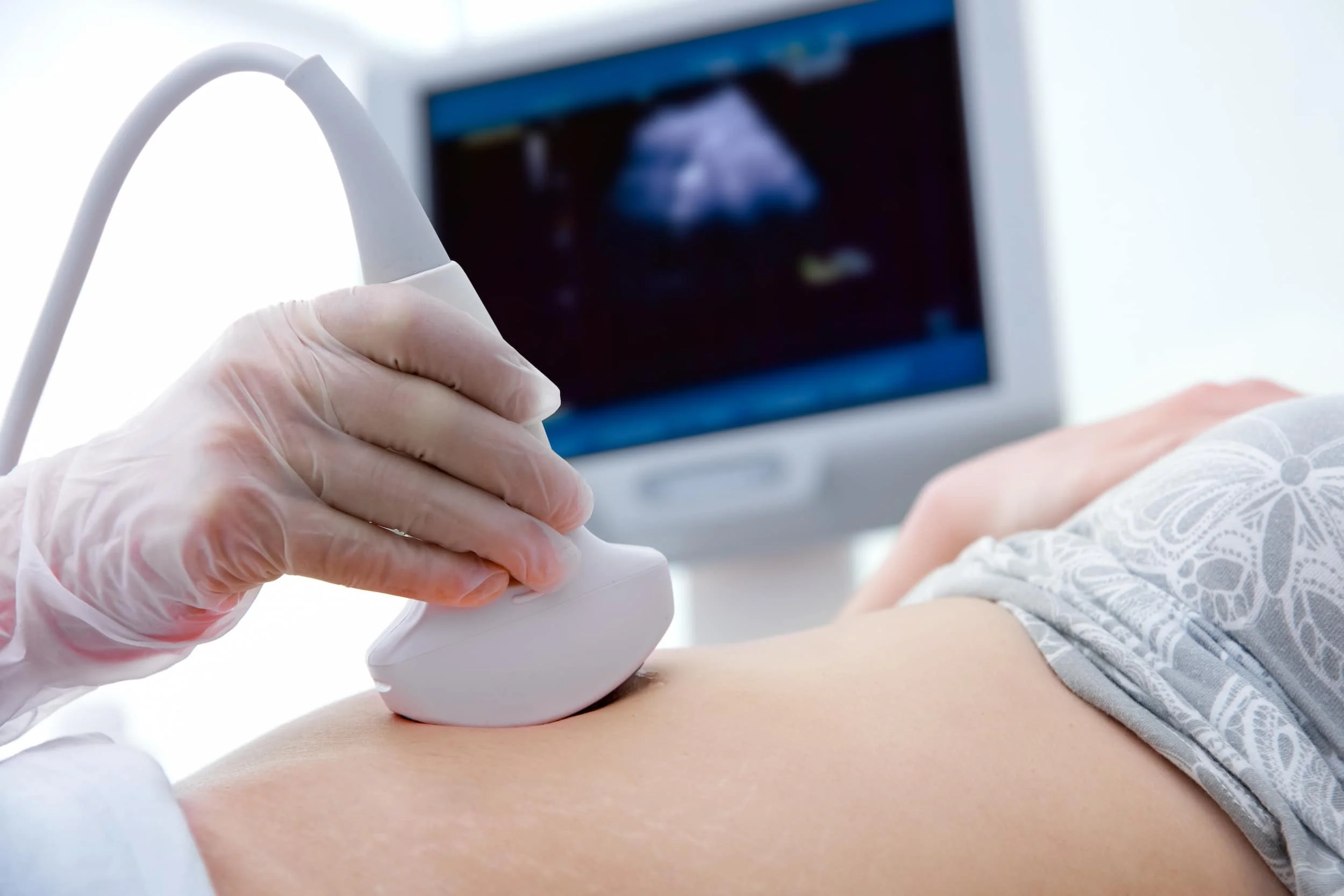
Ultrasound imaging and hysterosalpingography (HSG) provide a clear visualization of the female reproductive tract. They can offer a useful level of detail about the health of a woman’s fertility as they are able to detect ovarian reserve, ovulatory function, and any structural abnormalities that could hinder successful pregnancies.
Options for at-home female fertility testing
A range of at-home tests are available for women to examine their fertility from the comfort and ease of their own homes. They measure different elements of the reproductive process to indicate how suitable or balanced a woman’s hormones are at that moment in time. These often measure levels of FSH, which are said to be a good indicator of ovarian reserve. This is because FSH levels typically increase with age due to diminishing ovarian reserve, so measuring this hormone could be a good indicator of female fertility.
Is at-home female fertility testing accurate?
While home fertility tests may be a helpful starting point, these tests do not take into account that certain medical conditions may have affected the levels of the hormones you are testing. This could be true for those suffering from polycystic ovary syndrome (PCOS), which would have a marked effect on baseline female hormone levels. Therefore, at-home tests may be a better option if you have no other health conditions and want to begin tracking your fertility to help you get pregnant. These tests do not consider your overall health and do not give a complete picture of the many factors that could influence your ability to get pregnant.
Cost of female fertility testing
There is a huge variation in price when it comes to at-home fertility testing. Some cost as little as $10 but only provide ovulation test strips that are pretty basic. This can be a good option if you are on a low budget or just starting out on your fertility journey. Other options range from $129 to $600 depending on the number of fertility health biomarkers being tested, the turnaround time, and the support package. It is important to consider if you just want female fertility testing or if you’d like sperm testing carried out as well, as only some companies offer both of these options.
Alternative testing for couples who are trying to conceive
When starting out on your fertility journey, it is sometimes helpful to consider everything that could affect your success before you even begin. If you see your doctor at this stage, they may offer you tests that look at more than just your female fertility.
Carrier genetic screening
You can have this test done before you conceive and also during pregnancy. It looks at the genetic risk you or your partner may have of passing along certain genetic diseases to your future children. This is an entirely optional test and identifies if you or your partner is a carrier of a genetic mutation that may be associated with certain diseases. If both partners possess the genetic mutation, there is an increased risk of the associated disease being passed on to your child.
Semen analysis
Semen analysis is a useful at-home test that can provide in-depth information about the health of your partner’s sperm. This is extremely important because 30–60% of couples struggling to conceive face male-factor infertility. There are also many ways you can improve sperm health. For more information on lifestyle factors that could improve sperm health, click here. If you’d like to explore semen analysis, Legacy provides in-depth analysis from the comfort of your own home.
Find what's right for you

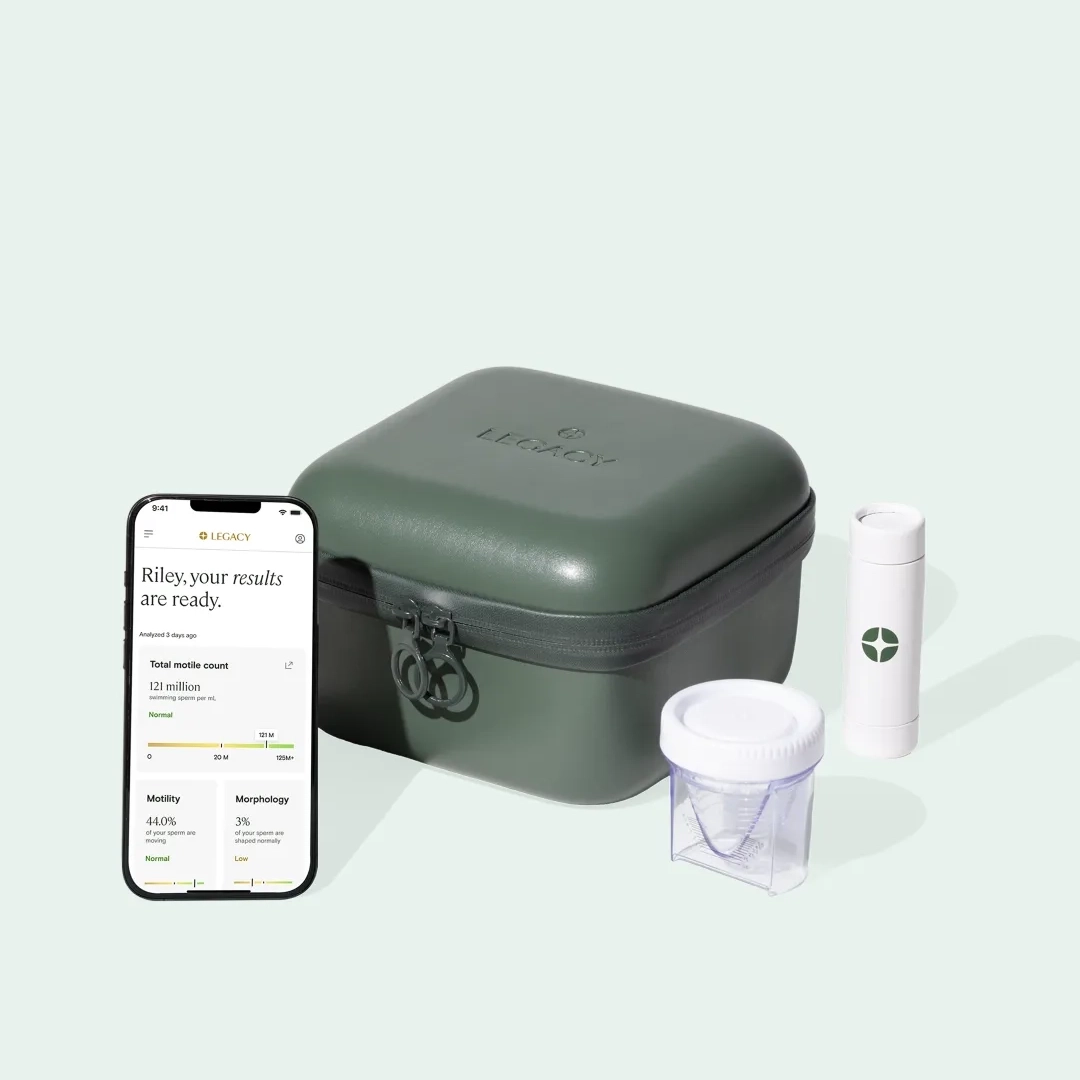
Standard Semen Analysis
$295
Key features

Semen volume
Sperm concentration & count
Motility
Morphology