Is there a connection between penis size and male fertility?


In 2021, a study published in Translational Andrology and Urology found a correlation between infertility and shorter “stretched penile length.” But is it really harder to get someone pregnant if you have a smaller penis? The short answer is no. The study needs more context — so let’s delve into the connection between penis size and fertility a little further.
Does penis size affect fertility? A 2021 study got an outsized amount of attention when researchers reported they’d found a correlation between infertility and shorter penile length, suggesting that size matters when trying to get pregnant.
Is it really more difficult to get someone pregnant if you have a penis that’s on the smaller side? The short answer is no. The study needs more context — so let’s delve into the connection between penis size and fertility.
Key takeaways
- A 2021 study linking smaller penises with lower fertility had several limitations. Researchers can’t conclude that people with larger penises are more fertile.
- People with penises of all lengths, widths, and shapes have children naturally. Don’t be too worried about your penis or testicle size if you’re trying to get someone pregnant.
- If erectile dysfunction (ED) is hindering your ability to have sex or conceive with your partner, a doctor can help.
Study finds a connection between penis size and fertility
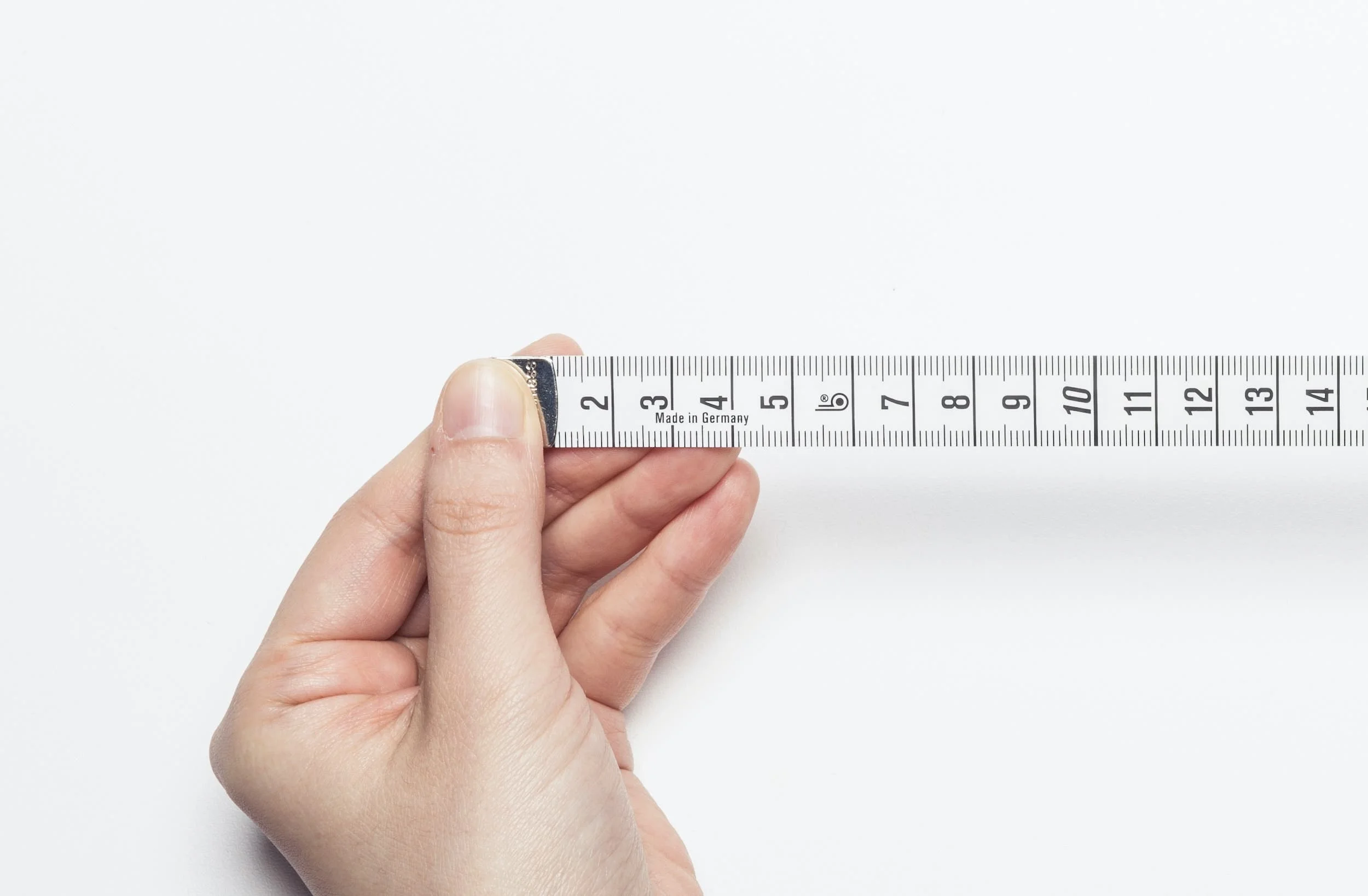
The details of the aforementioned study: Researchers looked at the “stretched penile length” of 664 men, of which 161 were diagnosed with infertility and 503 were not.1 (Stretched penile length refers to the length of the penis while flaccid, but pulled.) The average penile length for the group with infertility was 4.84 inches, while the average for the other group was 5.28 inches.
The authors of the study explained that the results do not suggest that all men with smaller penises have reduced fertility, or that all men with infertility have reduced penile lengths. The study notes a weak association between adult testosterone levels and penile size, and a small difference of 1.1 centimeters between the average penile length of fertile men and infertile men.
There are many limitations to the research. The group of men studied was small. And the authors theorized that the lower fertility and the lower penile length were actually both symptoms of the primary issue, which was lower testosterone.
There is currently no further peer-reviewed research to link penis size and fertility. And people with penises of all lengths, widths, and shapes can children naturally.
What affects penis size?
Penis size is believed to be mainly genetic. It’s not just inherited from your father; it’s a unique combination of genes received from both parents. (Male siblings can have penises of different sizes, since they inherit a different combination of chromosomes.) Interestingly, while genes from your father determine your biological sex and whether or not you’ll develop a penis, it’s actually genes from your mother’s side — the X chromosome — that determine penile size.
What else affects penis size, or can cause a small penis? If androgens, a group of sex hormones including testosterone, are low as the fetus grows, or the fetus has an abnormal hypothalamic or pituitary function, it could stunt penile growth.2
Some rare genetic conditions may affect both penis size and fertility, including Kallmann syndrome and Klinefelter syndrome.
Delayed puberty can pose a concern for some children, as their penis can appear smaller than their peers. However, most adolescents experiencing a delayed growth spurt catch up to others their age by the time they’re 18.
Overall, there isn’t much you can do to control your penis size. Factors like your body shape and how much body fat you have, as well as the amount of pubic hair you have, can make your penis appear larger or smaller, without affecting its actual size.
Does the penis get smaller with age?
The penis doesn’t actually shrink with age. However, it may look and feel slightly smaller while it’s erect.
The penis is made up of spongy tissue, and blood flowing into that tissue is what creates an erection. Therefore, blood flow to the penis is one factor that determines the size of an erection. As you age, you’re more likely to have fatty deposits in your arteries, reducing blood flow and the apparent size of your erection.
Weight gain can also make the penis appear smaller. Many men see their waistlines grow with age: The average male gains 1 to 2 pounds per year from early adulthood through middle age, experts say.3 When the fat pad in the pubic area grows, it can cover more of the penis and make it seem shorter. (A good incentive to lose weight if you need to: For every 30 pounds you lose, you gain about a half-inch of penile length.4)
Another factor impacting erection size is testosterone. The key male hormone declines naturally with age, about 1% to 2% per year after age 40. This can potentially affect how hard you can get and the apparent size of your penis.
You're ready to start a family. But are your sperm?

Micropenis and fertility
Penises of all shapes and sizes can successfully impregnate a partner. But one category of penis size is associated with infertility: Micropenis, a rare condition in which a penis is abnormally short.
What size is a micropenis?
How is a micropenis defined? The average adult man has a stretched penile length (SPL) of 5.25 inches. A micropenis is defined as an SPL of 3.67 inches or less for adult men.
In some cases, having a micropenis can lead to reduced fertility or infertility. That’s because testosterone is one of the key hormones involved in sperm production, and the primary cause of micropenis is testosterone deficiency.
What causes micropenis?
This testosterone deficiency usually occurs in the womb. When a fetus doesn’t produce enough testosterone while it’s developing, the penis and testicles can turn out to be smaller than normal.
This can result from genetic disorders, including:
- hypogonadotropic hypogonadism, in which the brain doesn’t signal the testicles to produce enough testosterone;
- androgen insensitivity syndrome, in which testosterone levels may be normal but the body doesn’t respond to testosterone properly;
- Prader-Willi syndrome, a rare metabolism disorder;
- the aforementioned Kallman syndrome.
Sometimes, there is no apparent cause for a micropenis.
Does having a micropenis affect fertility?
Having a micropenis doesn’t necessarily make a person infertile. It is possible for a man with a micropenis to get a woman pregnant, as long as his sperm count is normal. Doctors say many men with below-average-sized penises have normal fertility, and many men who have larger-than-normal-sized penises deal with infertility.
Keep reading: What is a normal sperm count?
What about the testicles? Is there a connection between testicle size and fertility?
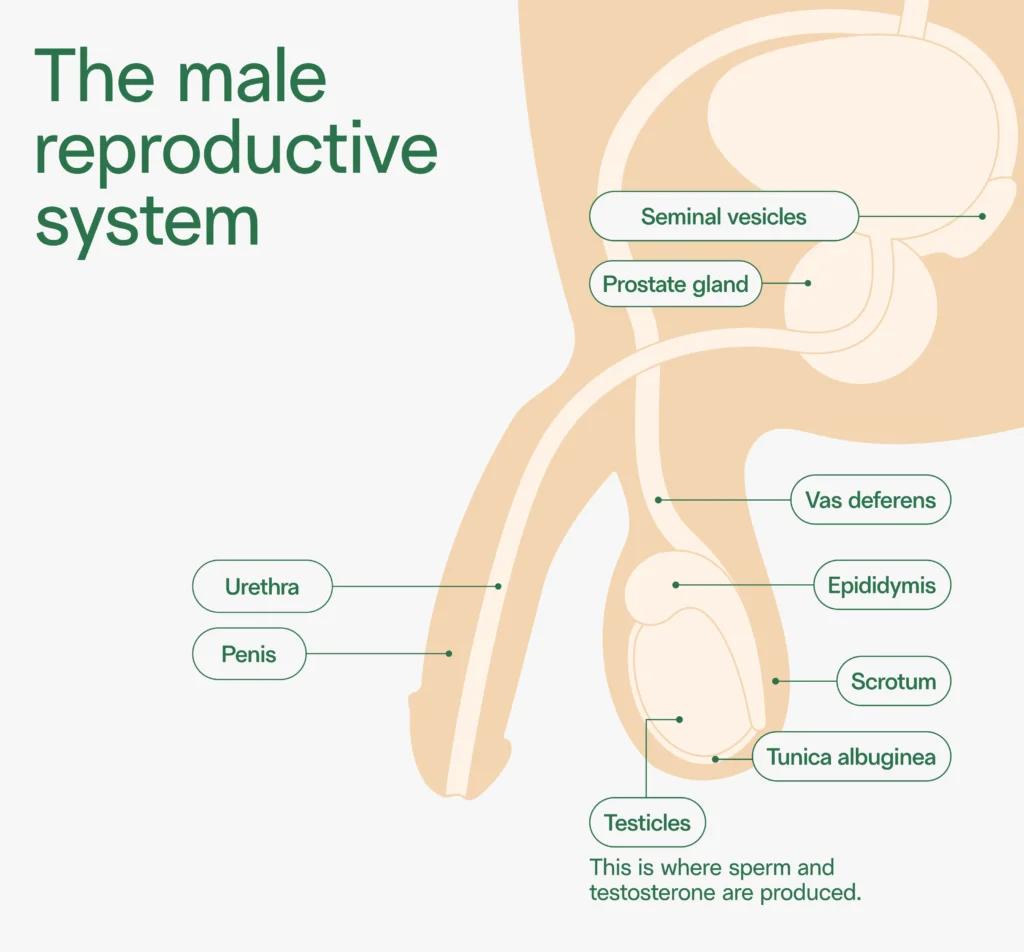
Testicular size varies from person to person. The average diameter is around 4.5 to 5.1 cm.6 The role of the testicles is two-fold:
- To produce sperm
- To secrete testosterone, the hormone associated with the development of male physical characteristics and sex drive
There is little research to link testicle size and infertility directly. Seminiferous tubules, tube-like structures that create sperm cells, make up 80% of the testicle volume.7 Therefore, testicular size has been associated with testicular function. In theory, you might produce less sperm if your testicles are much smaller than average.
Testicular atrophy, or shrinking of the testicles, can be a side effect of a hormonal imbalance, infection, or steroid use. This can have a detrimental effect on fertility. Additionally, undescended testicles — when one or both testicles haven’t “dropped” into the scrotum — has been shown to affect fertility.
Kallmann syndrome and Klinefelter syndrome, the aforementioned genetic conditions affecting fertility and penis size, may also result in smaller testicles.
It’s normal for testicles to come in all shapes and sizes. It’s also normal for one testicle to be a bit larger than the other, or for them to hang at different heights. As long as your testicles aren’t exceedingly small or large, your testicle size isn’t likely to have a significant impact on your testosterone levels or fertility.
The main consideration is to look for changes in your testicles. Check your testicles regularly. Inspect them for noticeable changes. Roll the scrotum and testes slowly between your fingers, noting any hard lumps, bumps, or change in e size, shape, or consistency. If you find anything new, or feel any pain or heaviness in your testicles, consult your healthcare provider.
Some issues with the testicles can affect fertility:
- Varicoceles: About 40% of males with infertility have varicocele, an enlargement of the veins within the testicles.8
- Testicular cancer: Treatment for testicular cancer might affect fertility.
- Testicular atrophy because of steroid use, hormone imbalance, or infection.
Can erectile dysfunction indicate infertility?
Erectile dysfunction is the inability to achieve or maintain an erection. It is very common, affecting around 30 million men in the United States. Studies have associated erectile dysfunction with poor semen quality, but the relationship between fertility and ED is typically indirect.5
Several physical and psychological factors can contribute to ED, including:
- Cardiovascular problems
- Obesity
- Specific medications
- Low testosterone
- Neurological disorders
- Sleep disorders
- Pelvic surgery
- Stress, depression, and anxiety
If you can’t get hard, does that mean you’re infertile? No. But some of the underlying causes of ED — such as obesity, low testosterone, sleep disorders, and stress — are also associated with infertility. ED may affect the chances of conception by inhibiting a person’s ability to maintain an erection, have sex, and have an orgasm, all required for natural pregnancy.
Keep reading: Erectile dysfunction & male fertility
The best way to understand your fertility is a semen analysis
The key takeaway here is that you shouldn’t be too worried about your penis or testicle size if you’re trying to get someone pregnant. If you have difficulty conceiving with your partner or are concerned about your fertility, a proactive first step is to have a semen analysis.
A sperm analysis can tell you:
- Semen volume: How much semen you produce
- Sperm count and concentration. How many sperm you have
- Motility: How well your sperm are moving
- Morphology: How many of your sperm are the proper shape, size, and structure

These key parameters of sperm health can impact your chances of having a child with your partner. However, an abnormal semen analysis result doesn’t mean that’s impossible. Semen parameters may improve if you make changes to your lifestyle and overall health.
A reproductive specialist can guide you through your sperm analysis results. They can help you understand your fertility, provide clinical advice, and discuss actionable day-to-day changes that can help you take control of your sperm health.
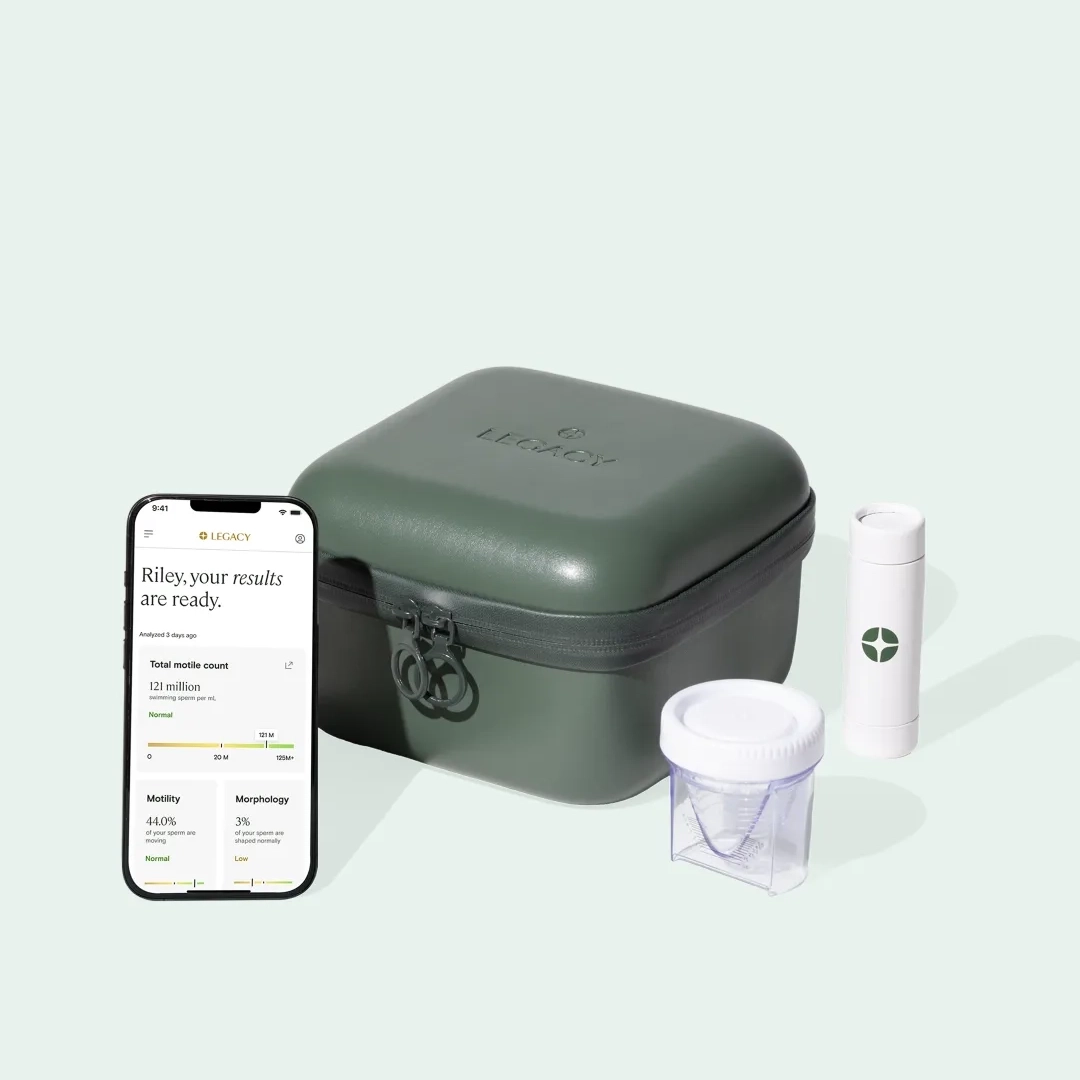
Legacy’s semen analysis kit tests the key parameters of sperm health from the comfort of home.
References
2. Nerli et al. “Penile growth in response to hormone treatment in children with micropenis,” 2013.
3. Hutfless et al. “Strategies to prevent weight gain among adults,” 2013.
6. Weill Cornell Medicine. “Testicular anatomy.”
8. Kupis, et al. “Varicocele as a source of male infertility – current treatment techniques,” 2015.
Find what's right for you

Standard Semen Analysis
$295
Key features

Semen volume
Sperm concentration & count
Motility
Morphology