For certain active-duty service members, the 3-year demonstration program will reimburse expenses related to gamete retrieval, testing, cryopreservation, shipping, and storage.
Your commander will need to validate your eligibility in writing in order to receive your reimbursement.
The DoD Fertility Preservation Program will cover up to $500 per year for sperm preservation and up to $10,000 per year for egg preservation.
What is the DoD Fertility Preservation Pilot Program?
The DoD Fertility Preservation Pilot Program — officially known as “Demonstration Project on Reimbursement for the Cryopreservation and Storage of Gametes of Certain Members of the Armed Forces” — was mandated by the FY2025 National Defense Authorization Act, Section 709.
As part of the 3-year program, the Department of Defense will reimburse eligible expenses related to gamete retrieval, testing, cryopreservation, shipping, and storage for certain active-duty service members. This can be done at either a military treatment facility or with a civilian fertility provider, including clinics outside the TRICARE network (the healthcare program for military members, retirees, and their families).
In plain language, this program offers financial support for members of the military to freeze sperm or eggs to preserve fertility, and they don’t need to use a military hospital to do it. This may be beneficial for active-duty members, especially prior to deployment, as those in military careers may be more at-risk for infertility in the future.
Who is eligible for the DoD Fertility Preservation Program?
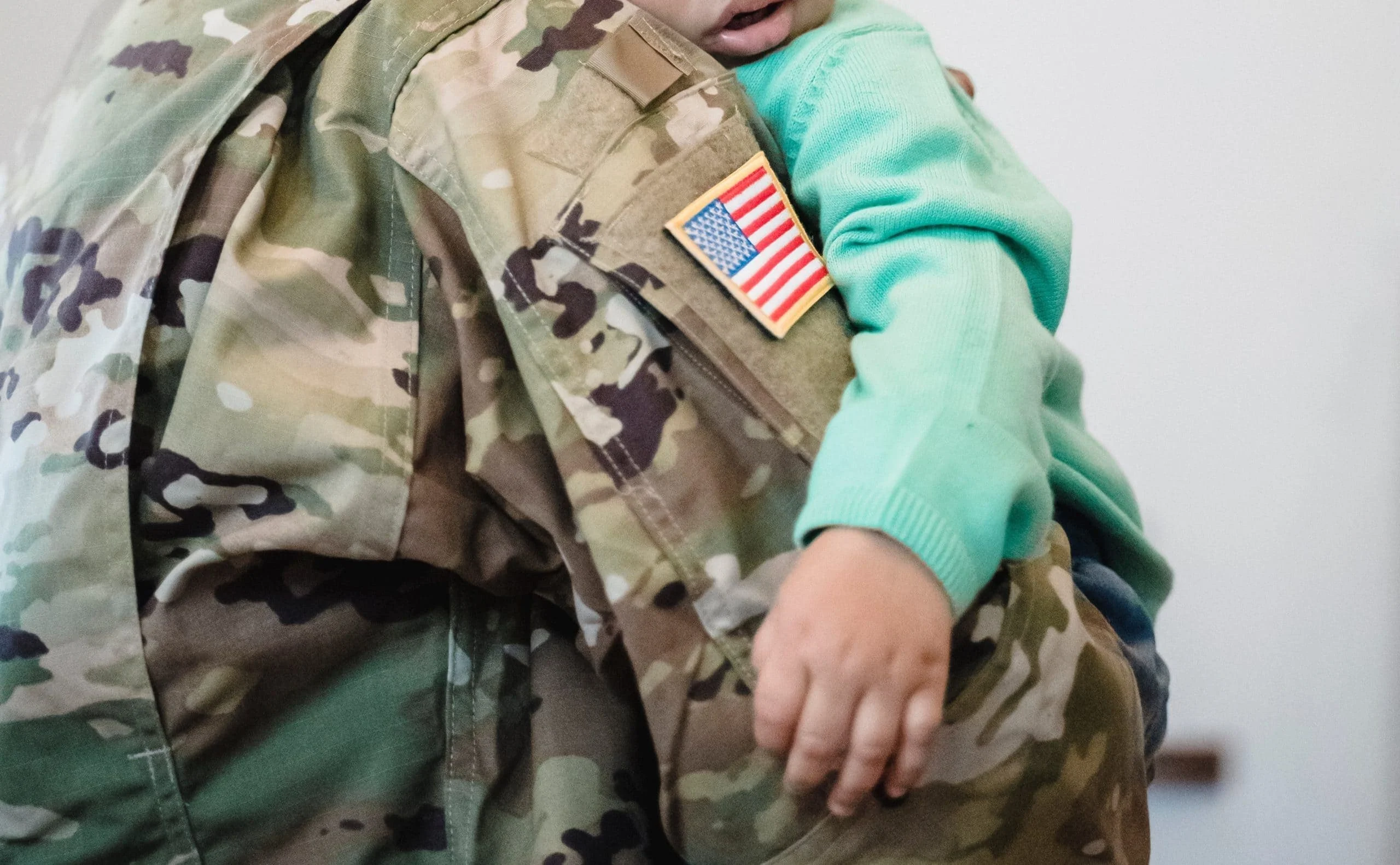
According to the Defense Health Agency (DHA), eligible participants of the DoD Fertility Preservation Program include active-duty members of the Army, Navy, Marine Corps, Air Force, and Space Force.
Specifically, the reimbursement is available to those who:
have received orders for duty qualifying for hazardous duty pay; or
are likely to receive qualifying orders within 120 days; or
will be geographically separated from a spouse, domestic partner, or dating partner for at least 180 days under military orders, including sea duty.2
If you’re deploying or expecting to deploy on orders for which you may receive hazardous duty pay, you must freeze your sperm before your orders begin.
If you’re facing an extended separation of greater than 180 days, you may freeze your sperm either before your departure date or during the separation period, provided there is a facility at your assigned location.
In any case, your commander will need to validate your eligibility in writing as part of the reimbursement process.
What does the DoD Fertility Preservation Program cover?
The DoD Fertility Preservation Program will cover:
up to $500 per year for sperm preservation
up to $10,000 per year for egg preservation
The window for reimbursement depends on the individual and begins with the first reimbursable service. Eligible expenses for reimbursement include:
Gamete retrieval
Associated medications
Laboratory evaluation and imaging
Medical testing
Cryopreservation/freezing (for sperm and eggs)
Shipping
Storage in an appropriate private facility during the demonstration period
The DoD Fertility Preservation Program will not, however, cover IVF, embryo creation, or other elective procedures.
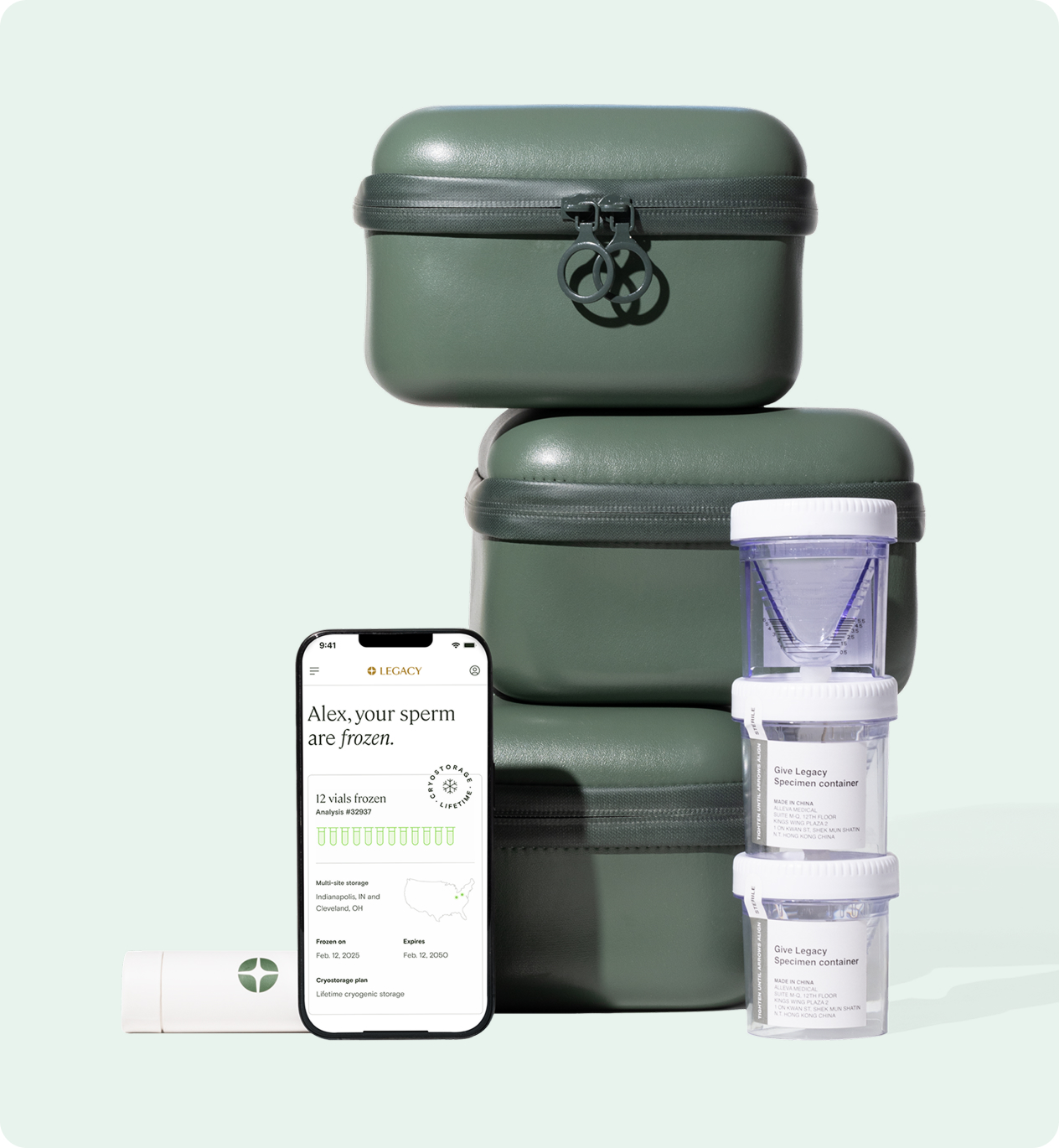
Here at Legacy, we offer a 1-sample, annual freezing plan that is under $500 for the first year and $245 for ongoing freezing, with a sample collected from the comfort of home. Learn more about our pre-deployment freezing plans.
DoD Fertility Preservation Program vs. TRICARE coverage for sperm freezing
The DoD Fertility Preservation Program is not a standard TRICARE benefit. The DHA specifically states that this pilot program is separate from TRICARE, the healthcare program for military members, retirees, and their families.
TRICARE covers some services associated with infertility diagnoses, such as semen analyses and hormone evaluations, but sperm freezing is excluded from TRICARE coverage.
How do you get reimbursed for sperm freezing through the DoD?
To receive reimbursement for sperm freezing:
Complete your sperm freezing process.
Set up an advanced directive, a legal document that outlines what you want to happen to your sperm, along with other healthcare decisions if you become unable to make decisions for yourself.
Complete a request for reimbursement via DHA Form 459 within 120 days of completing service.
Share this form to your commander for approval.
Submit the form along with your invoices to the DoD.2
These reimbursement rules are set by the Department of Defense, not by Legacy or any other clinic. It’s always recommended to check with your unit’s admin office or the Defense Health Agency’s website for the latest, most up-to-date requirements.
According to the DHA, the DoD Fertility Preservation Program will reimburse up to $500 per year for sperm preservation and storage and up to $10,000 per year for egg preservation and storage.
Can you use a civilian sperm bank or fertility clinic?
Anyone, including military service members, can use civilian sperm banks or fertility clinics for their personal fertility preservation.
As part of the DoD Fertility Preservation Program, eligible military members do not have to use a military medical facility. The DoD will reimburse for services received from civilian sperm banks and fertility clinics, up to the specified maximum.
Can military members use Legacy?
Legacy is committed to supporting military families with discounts and special programs.
Through our partnerships with the Military Family Building Coalition and the Green Beret Foundation, we’re proud to offer sperm testing and freezing to Naval Special Warfare (Navy SEALs) and Army Special Forces (Green Berets) with zero out-of-pocket cost.
The average cost of sperm freezing in the US will typically range anywhere from $500 to $1,000, depending on how long you’re freezing for and how many sperm samples you plan to freeze.
For your first year, your total cost will likely fall between $450 and $1,500. These costs include:
Initial semen testing and analysis
Processing and the initial cryopreservation (freezing) process
An annual or long-term sperm storage fee
Service
Average cost at traditional clinics & banks
Cost at Legacy
Consultation for referral
$325
Not required
Initial semen analysis
$160
$295
Initial cryopreservation (freezing) process
$388
Included
Annual sperm storage fee
$600 per sample
$245 per sample
Total
$450–1,500 for the first year
$300–700 per year ongoing
At Legacy, you can freeze your sperm at just $245 per sample, per year sample. If you choose a larger freezing bundle — longer storage contracts and more samples frozen — sperm banking costs can be significantly lower. Compare that to a total of at least $500 at a traditional clinic or sperm bank on freezing and storage alone.
When should service members consider freezing sperm?
Service members should consider freezing their sperm before high-risk deployments, combat missions, or any long term separation from their partners.
Being in the military involves the possibility of combat-related injuries and exposure to chemical warfare or toxins, both of which can negatively impact a male’s fertility or a couple’s pregnancy outcomes.
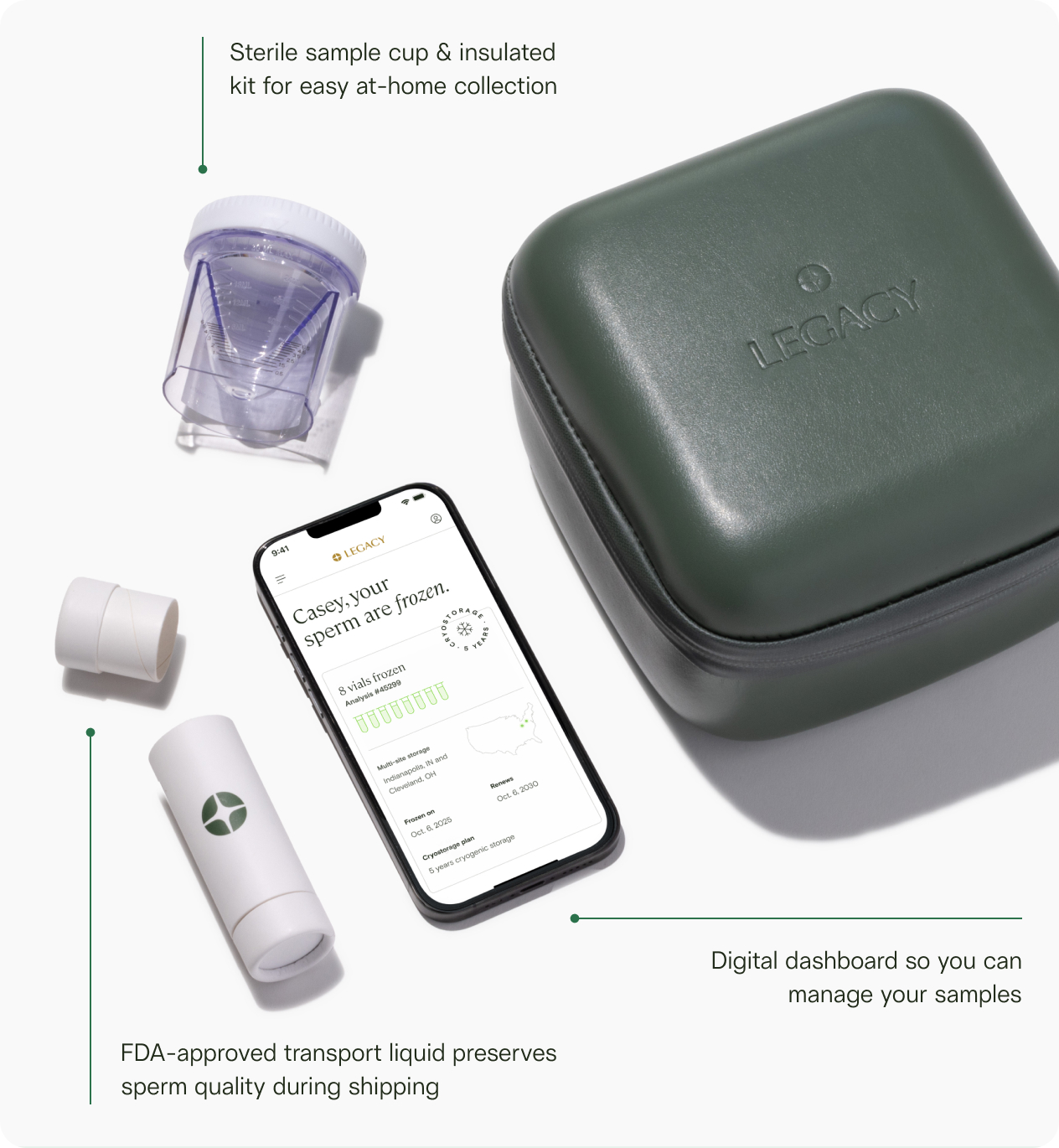
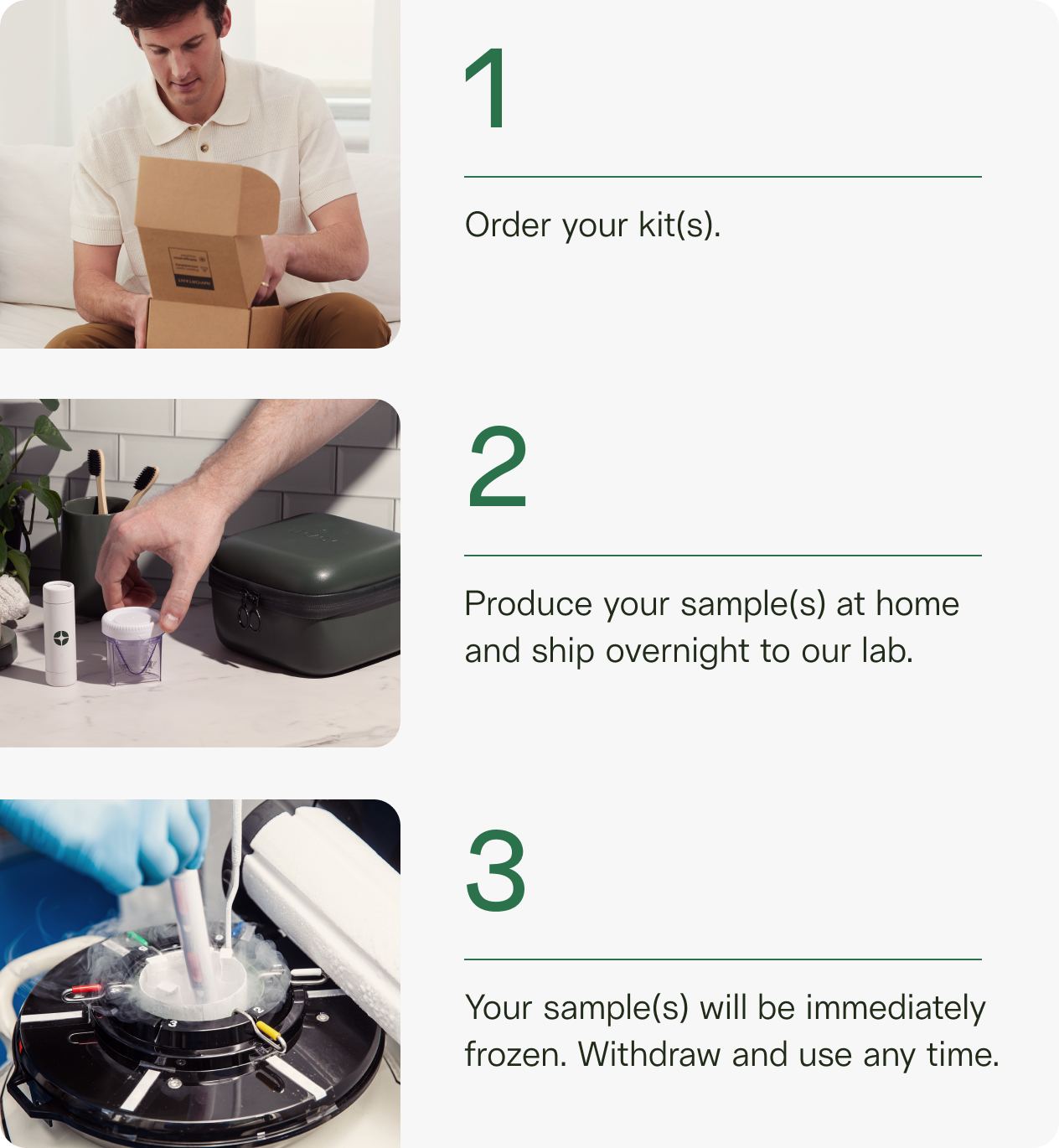
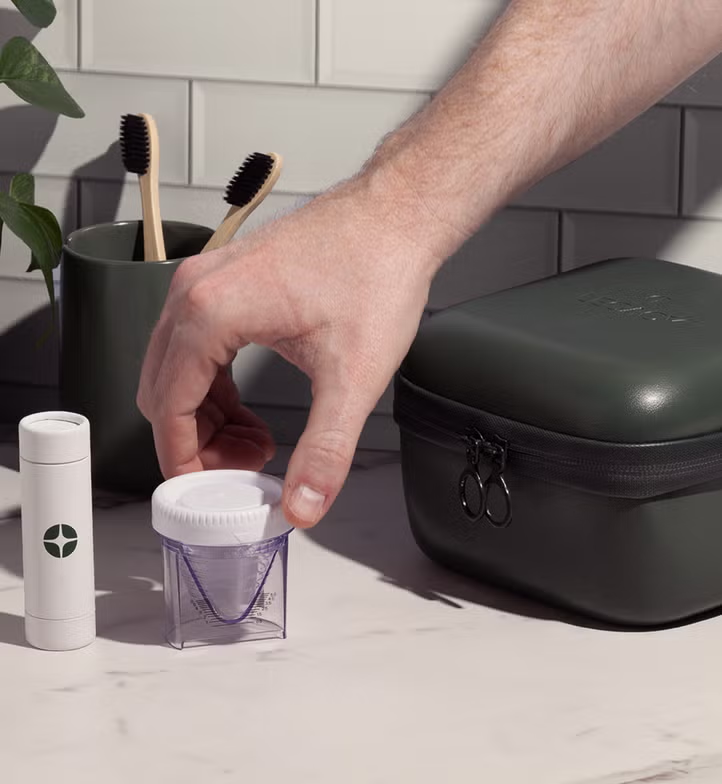
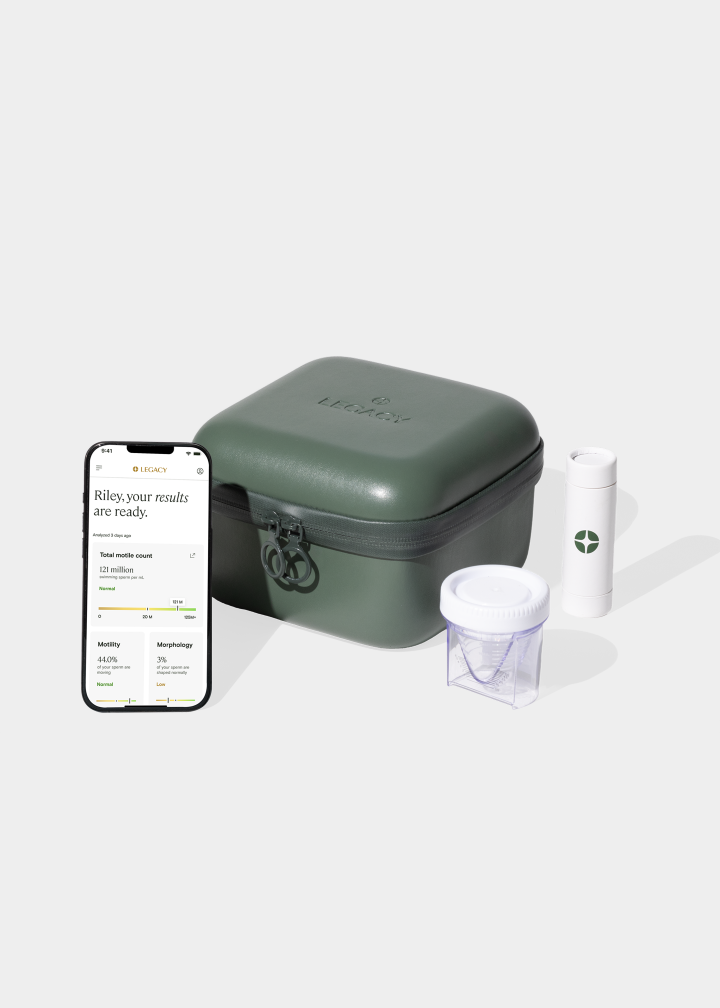
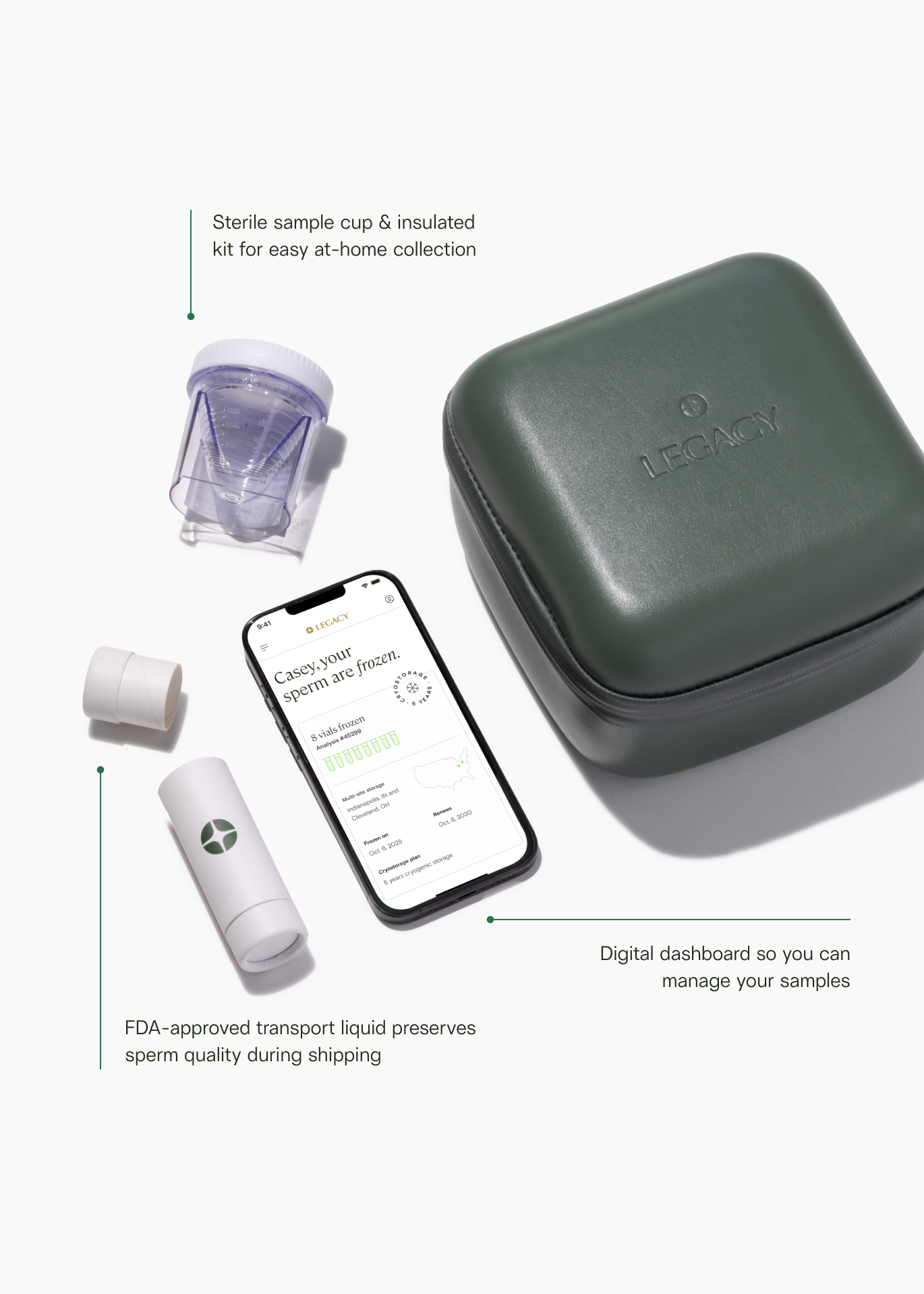
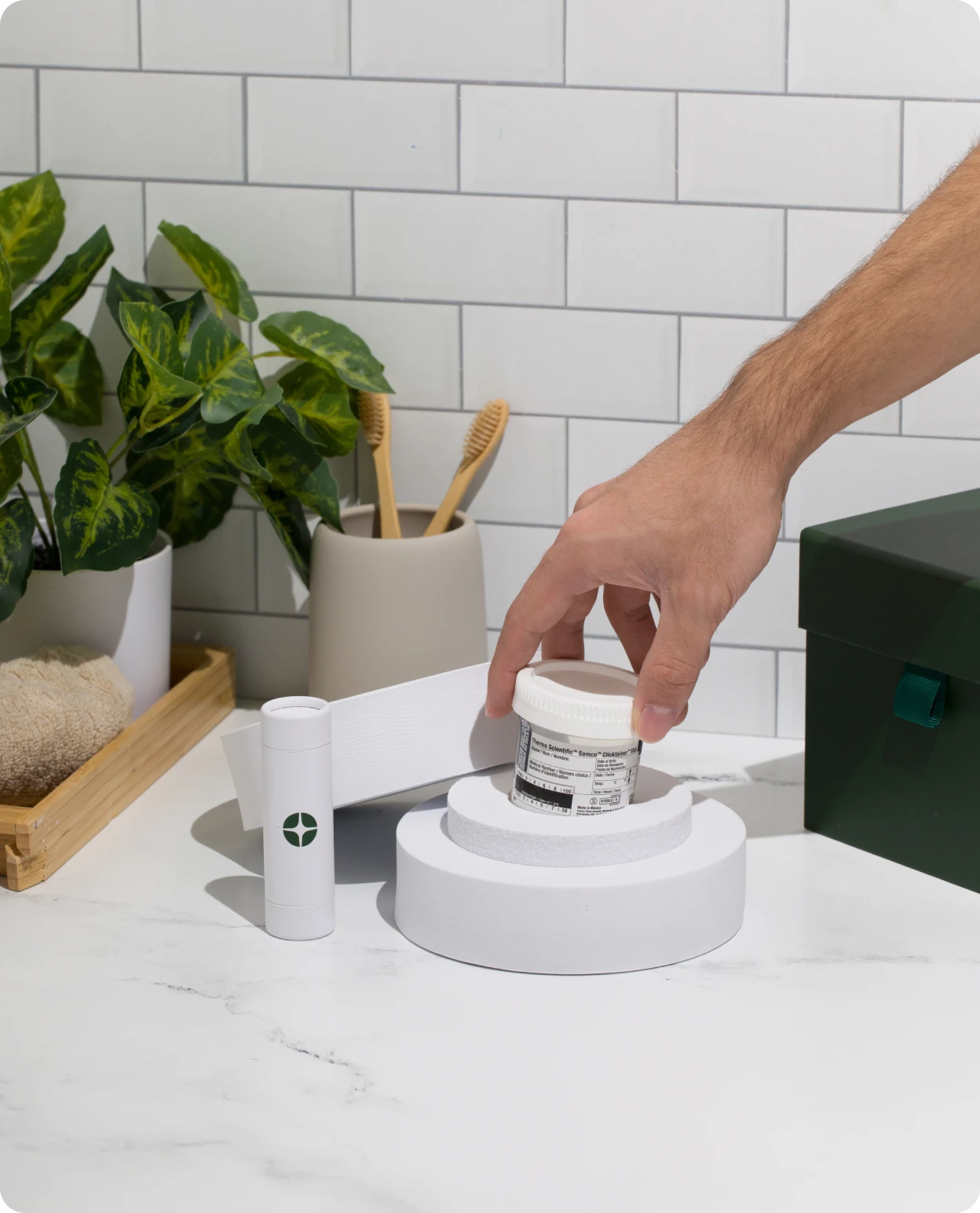
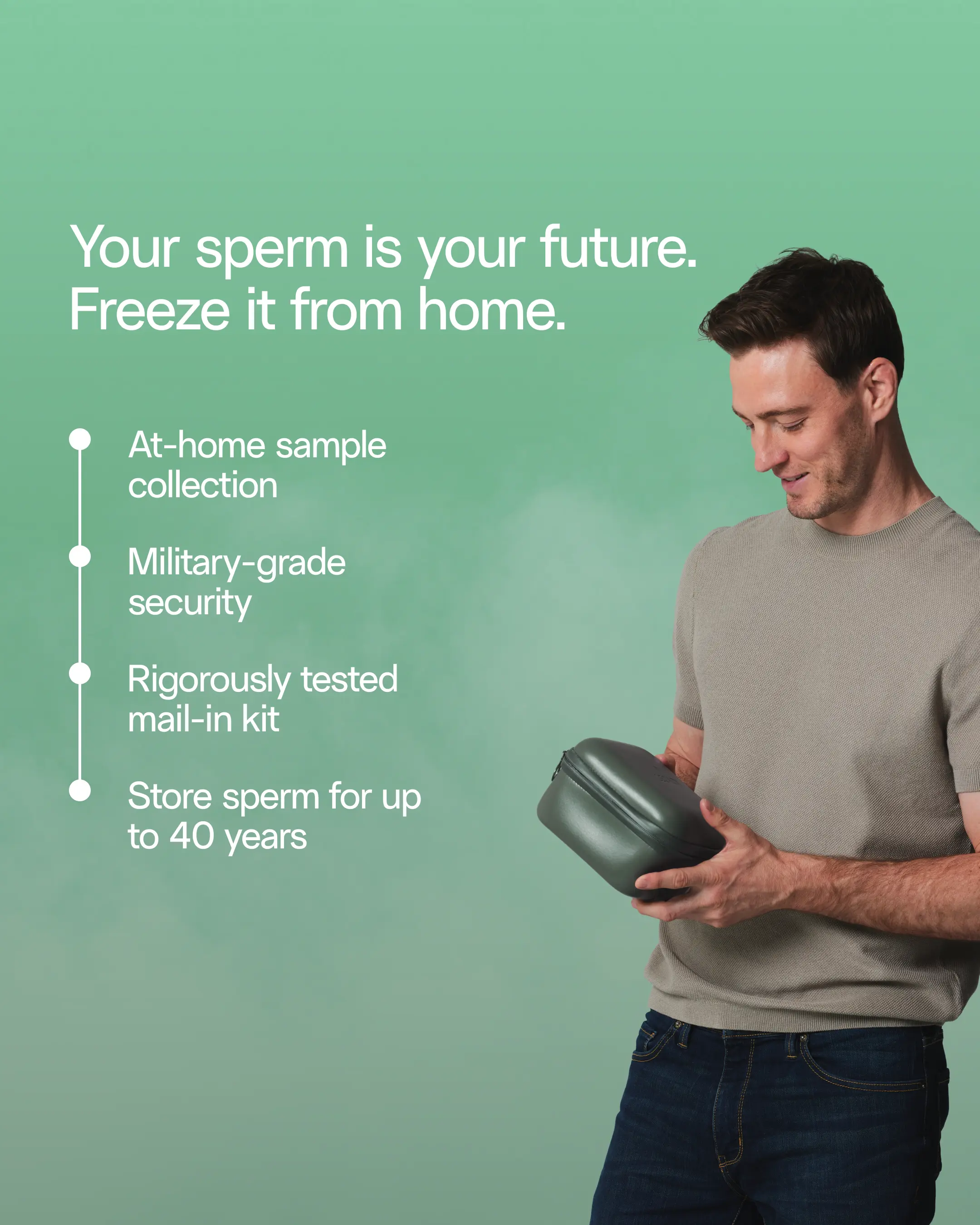
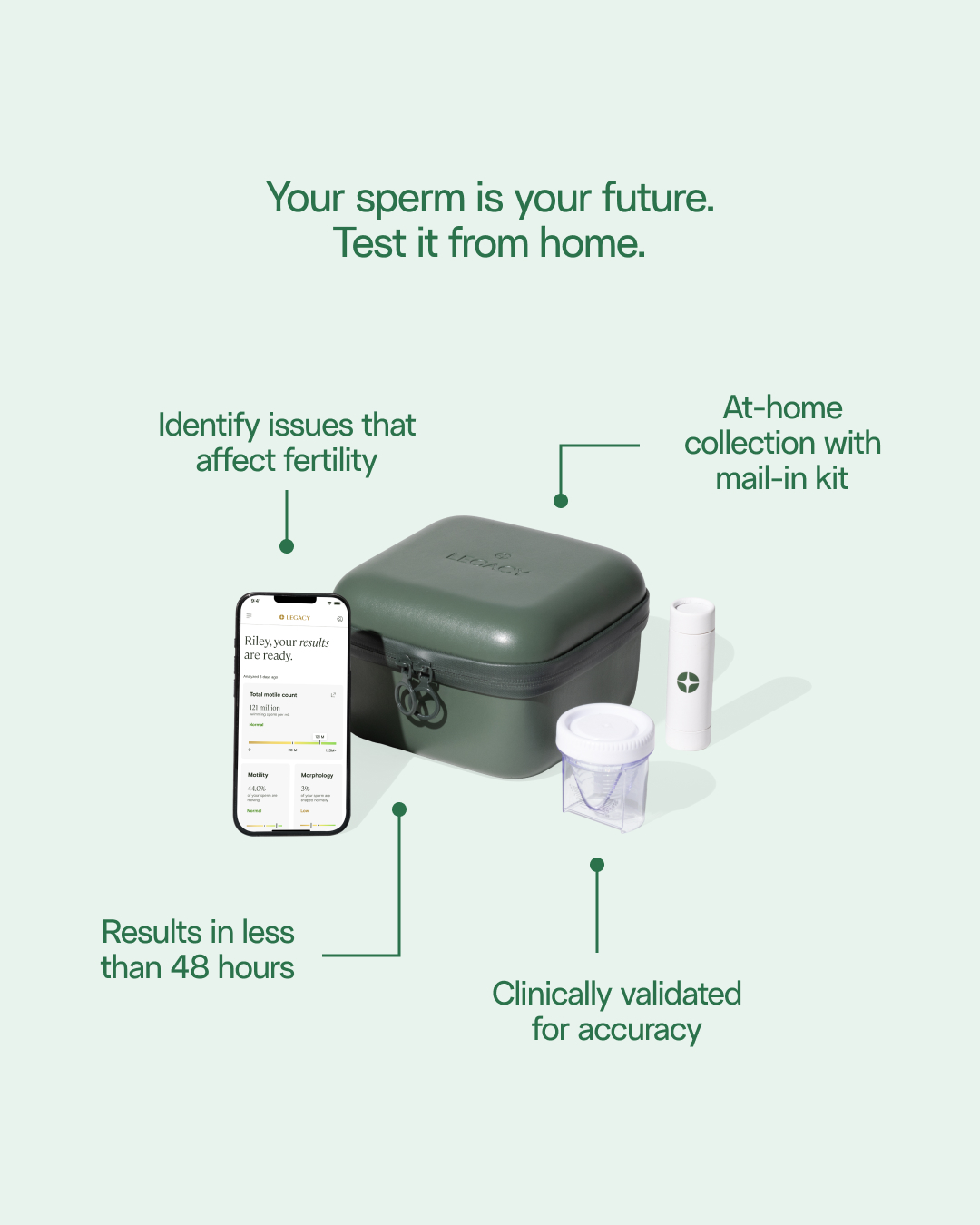
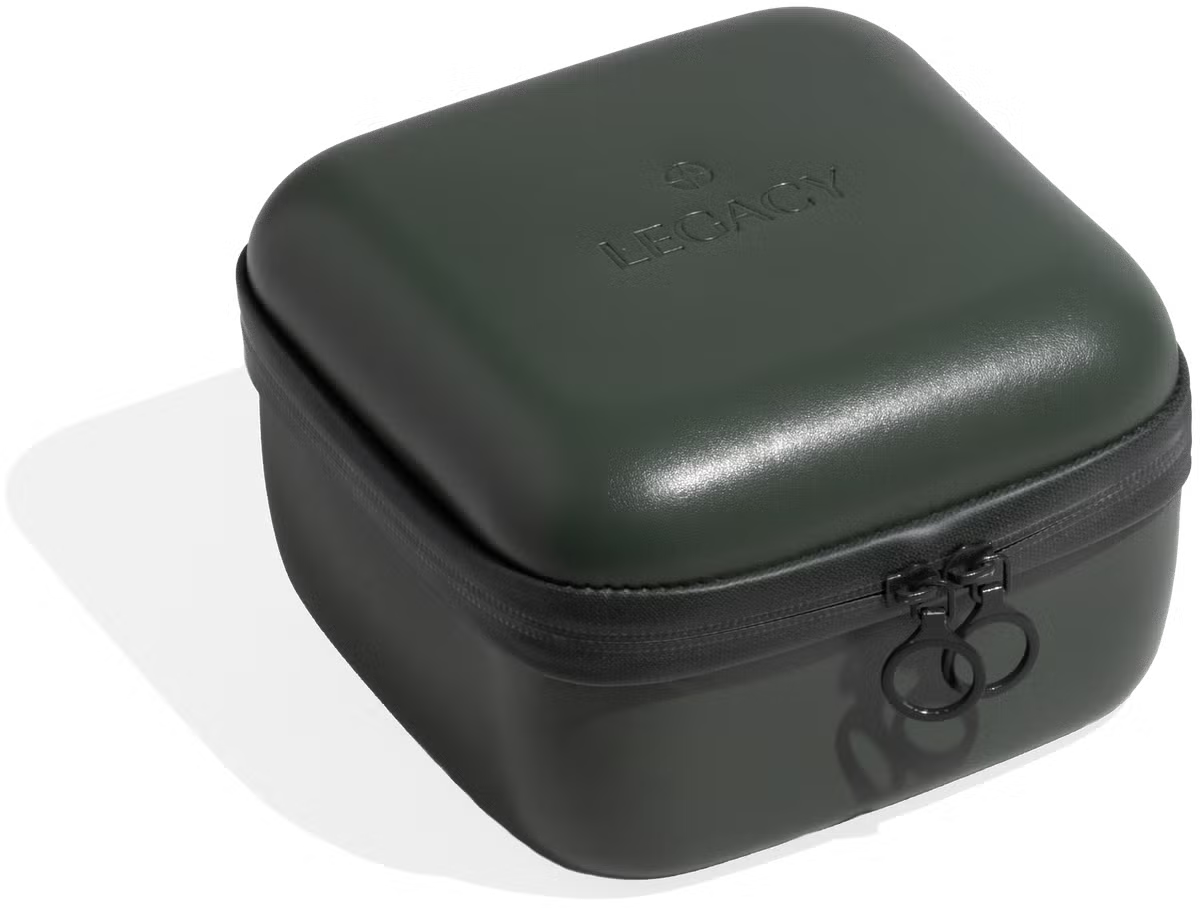
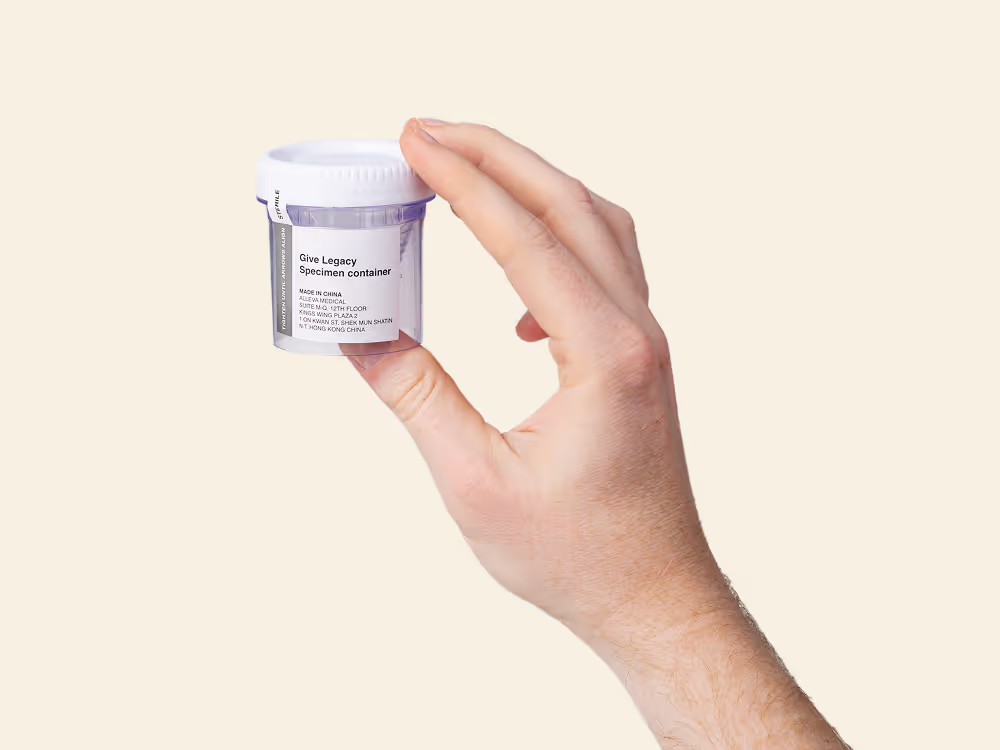
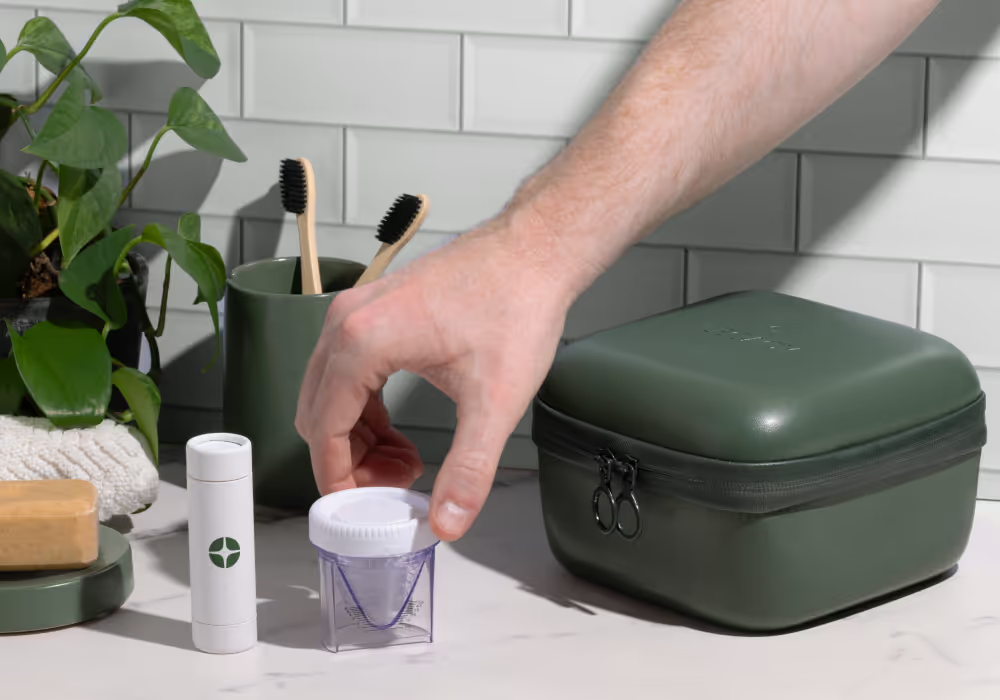
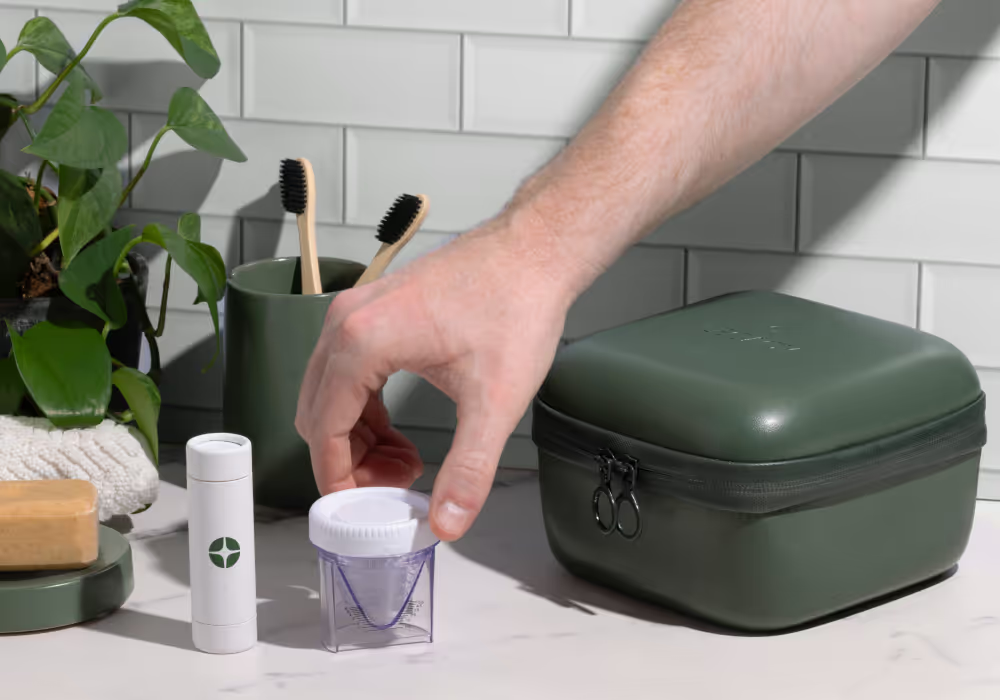
Sperm freezing is a routine process made simpler by the fact that you no longer have to visit a clinic in person to collect a sperm sample. Now, you can do everything in the comfort and convenience of your own home.
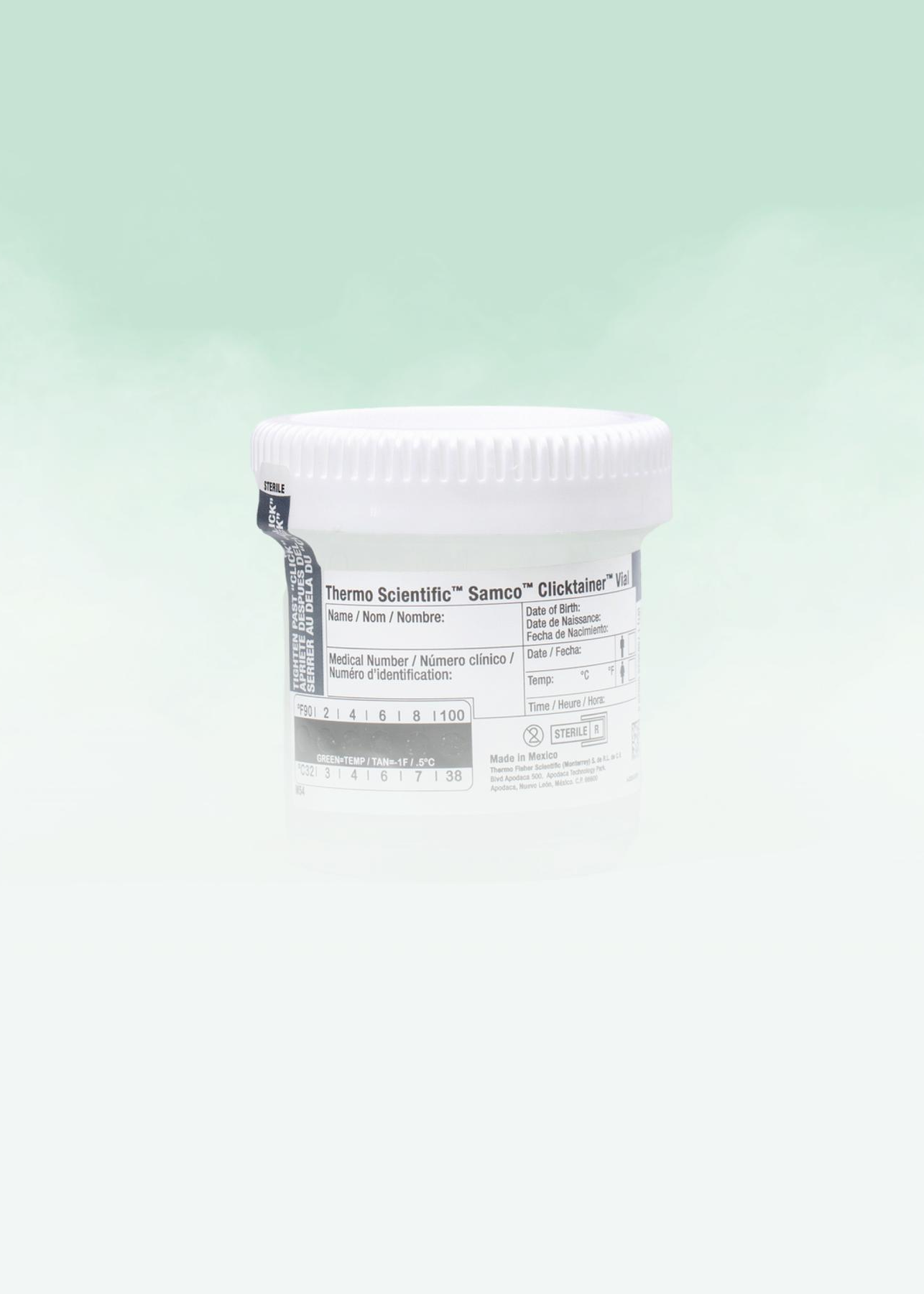
The best way to collect a sample for semen analysis is via masturbation until ejaculation into a secure and sterile storage vessel, which is included in your at-home sperm freezing kit. You’ll mix the sample with a transport media to protect it during shipping and can schedule a same-day pick-up for your sample to be mailed overnight to a lab.
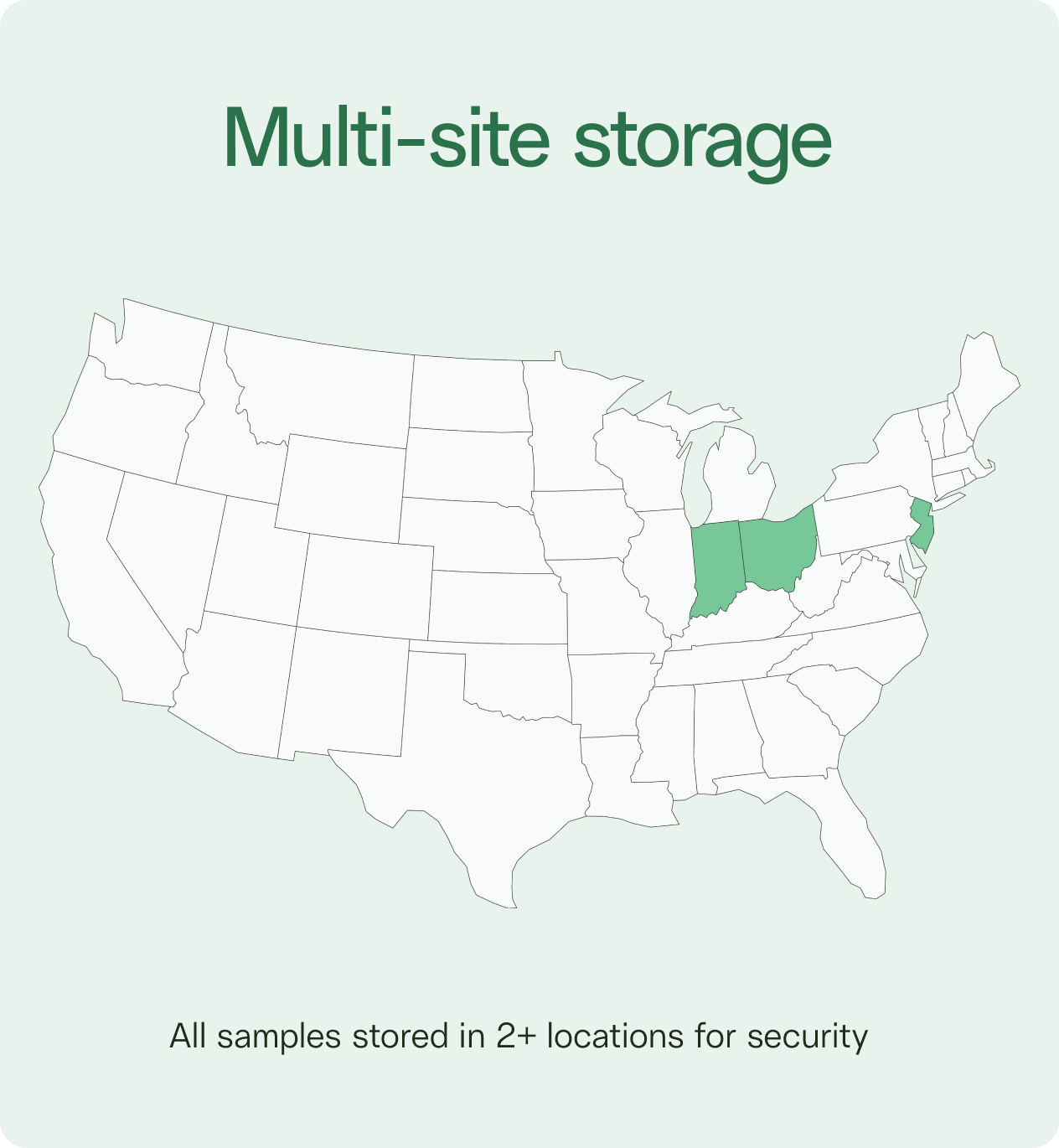
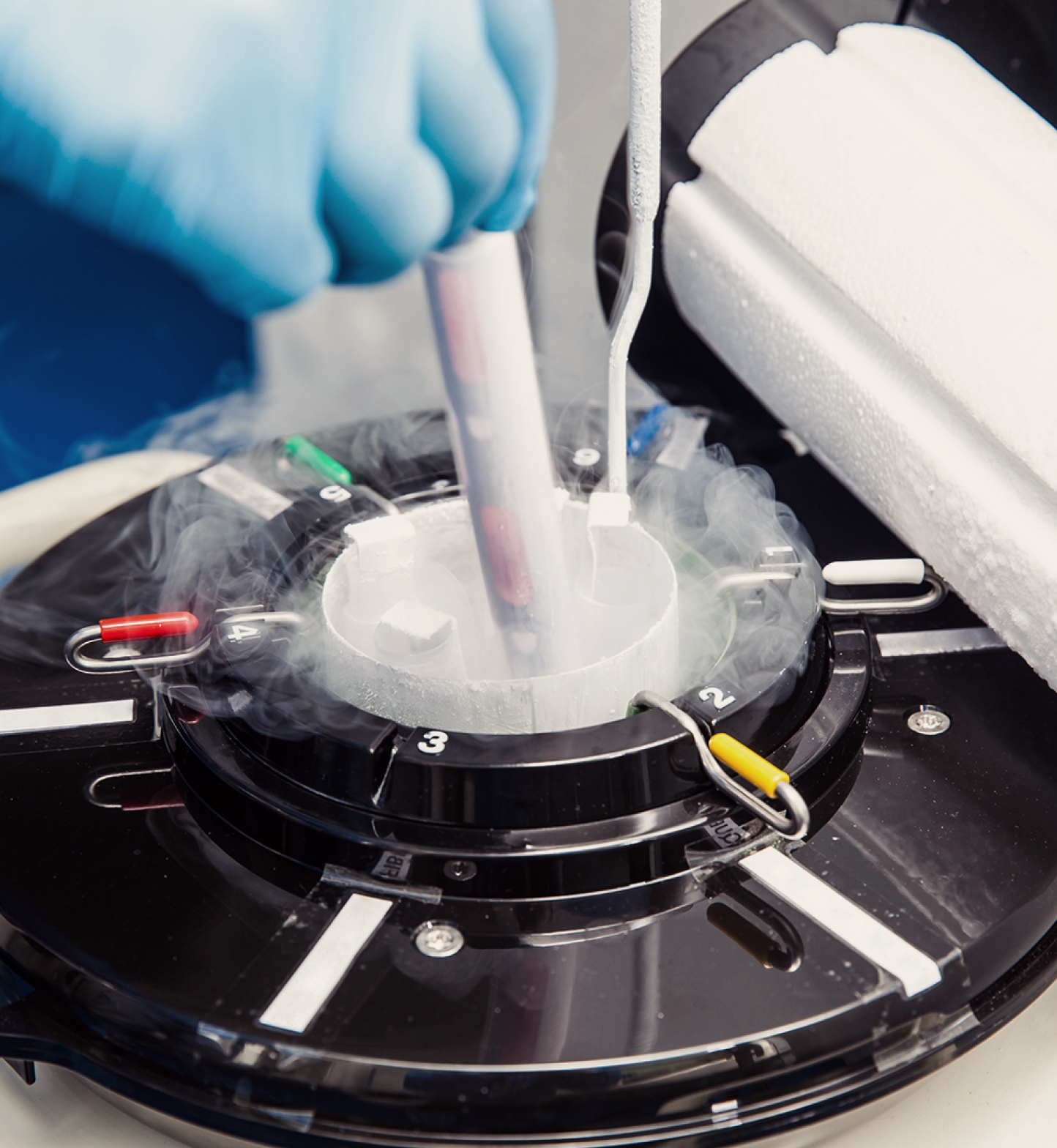
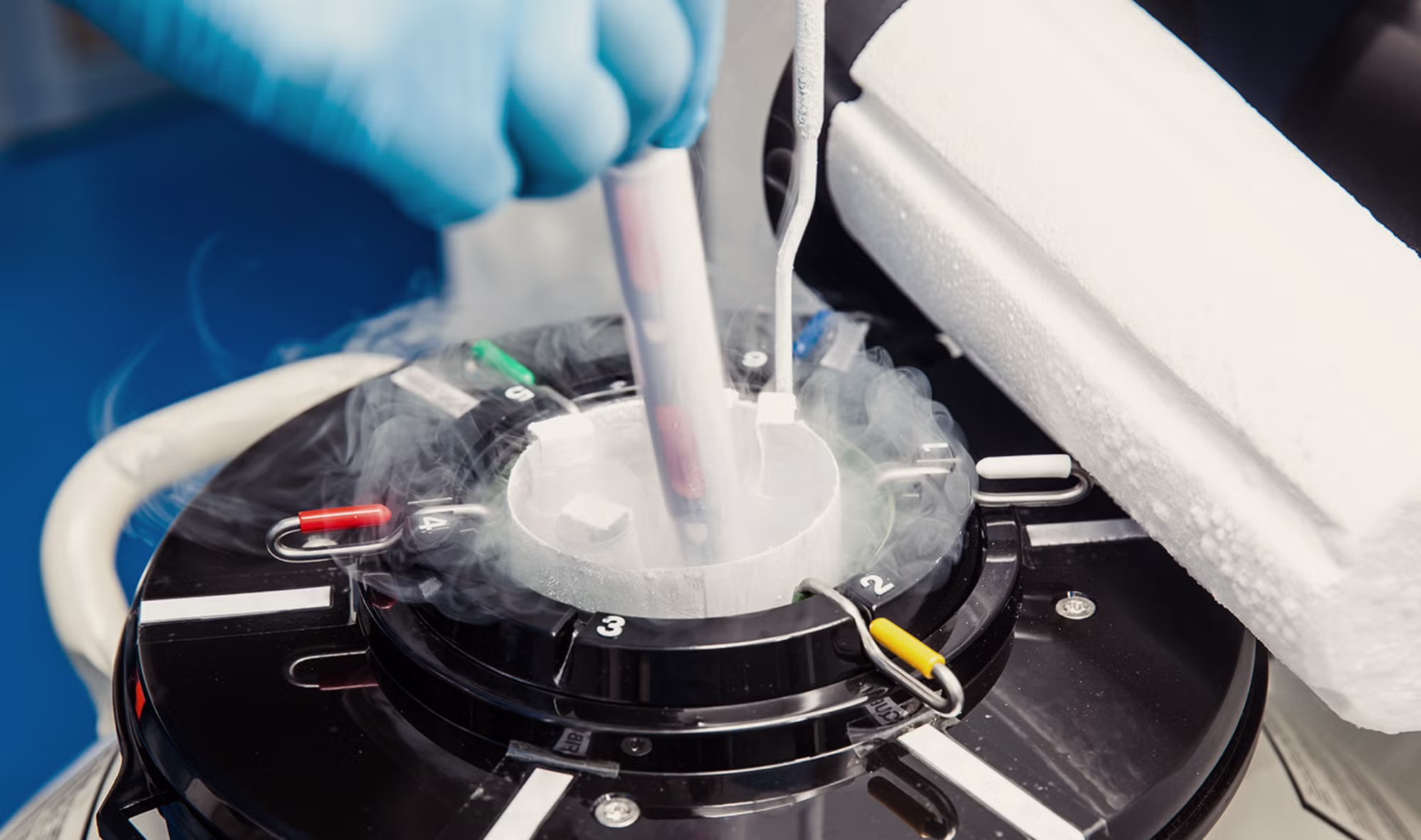
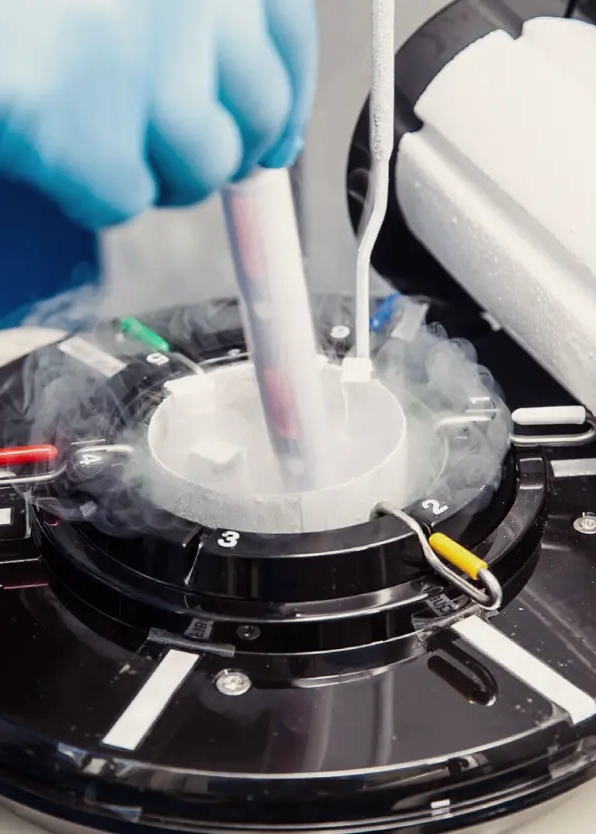
Once your sample arrives at the lab, it’s washed, analyzed, separated into multiple vials, and finally, mixed with cryoprotectant to protect the sperm during freezing. The sample is then cooled gradually and later stored in liquid nitrogen tanks at -196॰C in a sperm bank.
Sperm can stay frozen indefinitely when stored properly, and frozen sperm is just as effective as fresh sperm in achieving pregnancy. At Legacy, we also offer post-thaw analyses to determine your frozen sperm survival rate and ensure the viability of your sperm for long-term freezing.
Frequently asked questions
Does the DoD pay for sperm freezing? The $500 yearly stipend provided by the DoD’s Fertility Preservation Program is meant to cover initial sperm analysis, sperm freezing, and ongoing cryostorage.
How long does it take to freeze sperm with Legacy? Once you order your at-home sperm freezing kit, it will arrive in as little as two days. After producing your sample at home, it will be shipped overnight and analyzed and frozen the next day. It can take as little as three days from start to finish.
How can I use my frozen sperm? You can transfer your frozen sperm to a healthcare provider or clinic to use it for assisted reproductive methods such as IVF (in vitro fertilization) and IUI (intrauterine insemination).
How long can my sperm stay frozen? As long as your sperm is kept frozen in a high-quality cryogenic lab, it can be stored indefinitely with no significant impact on quality or the chances that it will result in a healthy pregnancy. You can keep your sperm frozen until you’re ready to start a family.
What are my chances of conceiving with frozen sperm? IUI and IVF pregnancy rates are the same for those using frozen sperm compared to those using fresh. The chances of conceiving with frozen sperm depend on several factors:
Your sperm quantity and quality
Your partner’s age, egg quantity/quality, and overall fertility health
Whether you use intrauterine insemination (IUI), in vitro fertilization (IVF), or intracytoplasmic sperm injection (ICSI)
With the old-school approach, you wait months for an appointment in the communal “collection room” (yikes).
Sperm testing does more than just highlight reproductivity. Numerous studies attest to sperm count as a biomarker for overall health.
I was in a time crunch because my husband was having surgery. They were so courteous. Assisted me through the whole process. So grateful for all the help, patience and understanding.
Angeline Davis
Verified client
It was super simple and my insurance covered it.
Austin
TRT Patient
This company has changed my life. I almost gave up on having a child... I got a rep the same day I reached out. He set everything up for me. HIGHLY RECOMMEND.
Quan
Verified client
Best Option for Sperm Testing & Freezing
Legacy is a game changer in the male fertility space.
4.9
130+ Google Business reviews
Mail-in kits can be a simple way to screen for any underlying sperm problem. This is a great option if you are not comfortable taking a specimen to the lab.
Stanton Honig, MD, Professor of Clinical Urology
Post Vasectomy Semen Analysis
A clinic-grade analysis measuring sperm count, motility, and morphology
I already had a vasectomy. Is it too late to freeze my sperm?
How effective is a vasectomy?
When should I test my semen after a vasectomy?
When should I freeze my sperm before a vasectomy?
Should I freeze my sperm prior to my vasectomy?
Should I test my sperm post vasectomy?
Fertility specialist
Lorem ipsum dolor sit amet, consectetur adipiscing elit. Lorem ipsum dolor sit amet, consectetur adipiscing elit. Lorem ipsum dolor sit amet, consectetur adipiscing elit. Lorem ipsum dolor sit amet, consectetur adipiscing elit.
Your sperm is your future
Affordably test and freeze your sperm from the comfort of home. Have the family you want, whenever you’re ready.
This company has changed my life. I almost gave up on having a child for multiple reasons. I got a representative the same day I reached out. He set everything up for me and provided me with his direct number where I could call or text him. HIGHLY RECOMMEND.
Quan
Verified client
I can’t say enough good things about this company. I am so glad I will be able to preserve my fertility for decades to come now. Thank you, team, from the bottom of my heart.
Fernando
Verified client
Superior customer service. Prior to making a purchase, I spoke with someone who answered every question thoroughly and easily. She helped build trust in the company, helped me make the right product choice for me, and made the purchase super-smooth.
Danny
Verified client
Learn from the experts
Age and male fertility
Men's fertility declines with age just like women's, despite stories of older fathers suggesting otherwise.
7
- minute read
Considering a vasectomy
Vasectomy reversal vs. IVF: Which option is right for you?
Vasectomy reversal is possible, but it’s not the only option.
- minute read
Vasectomy
How many men regret their vasectomy?
While vasectomy regret is rare, many men later confirm it was right, so consider carefully before proceeding.
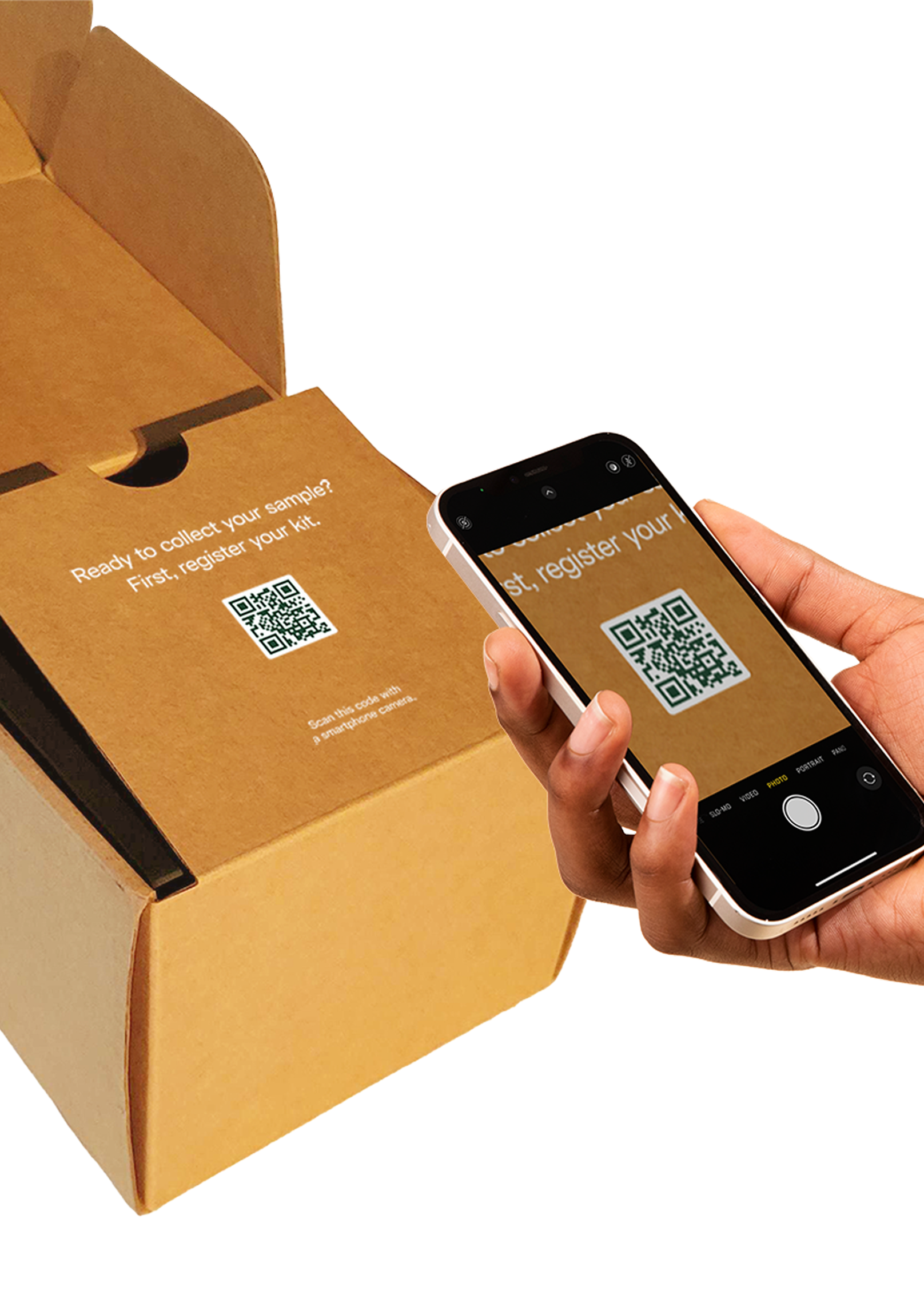
Produce your sample at home. Use the prepaid label to ship it overnight to our full-service andrology lab.
02
Your sample is analyzed
We assess your concentration (how many sperm), motility (how they’re swimming), and morphology (how many are the correct shape), plus sperm DNA fragmentation (optional).
03
Get your report in 24–48 hours
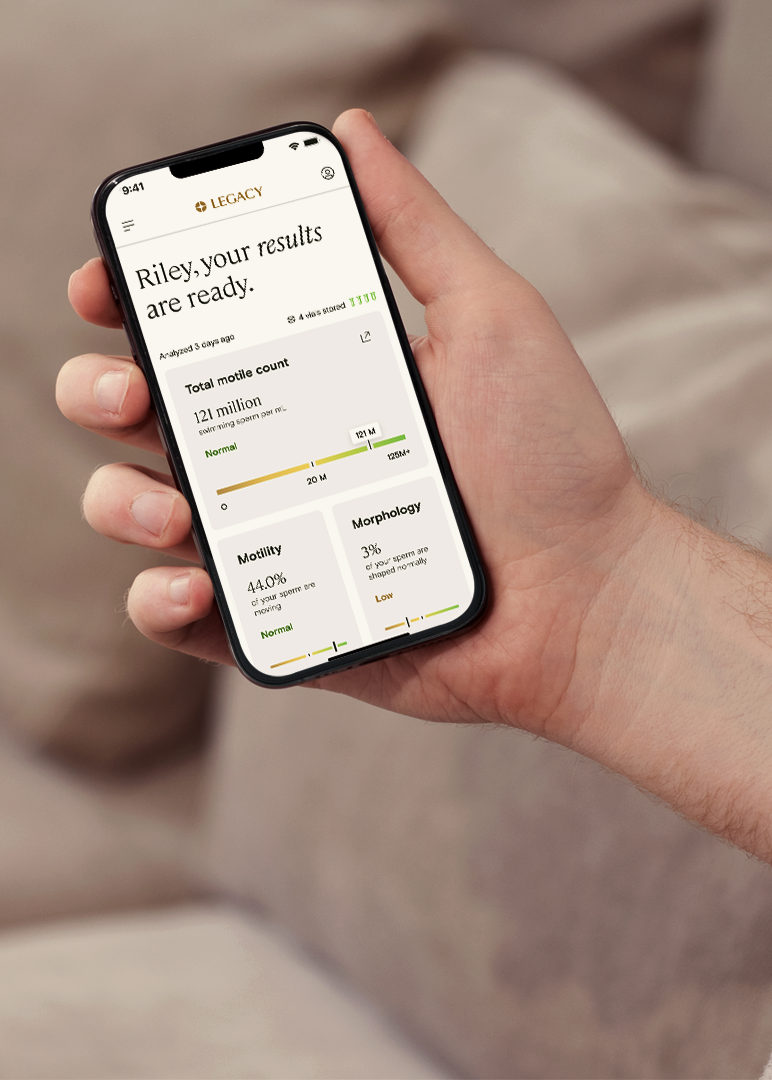
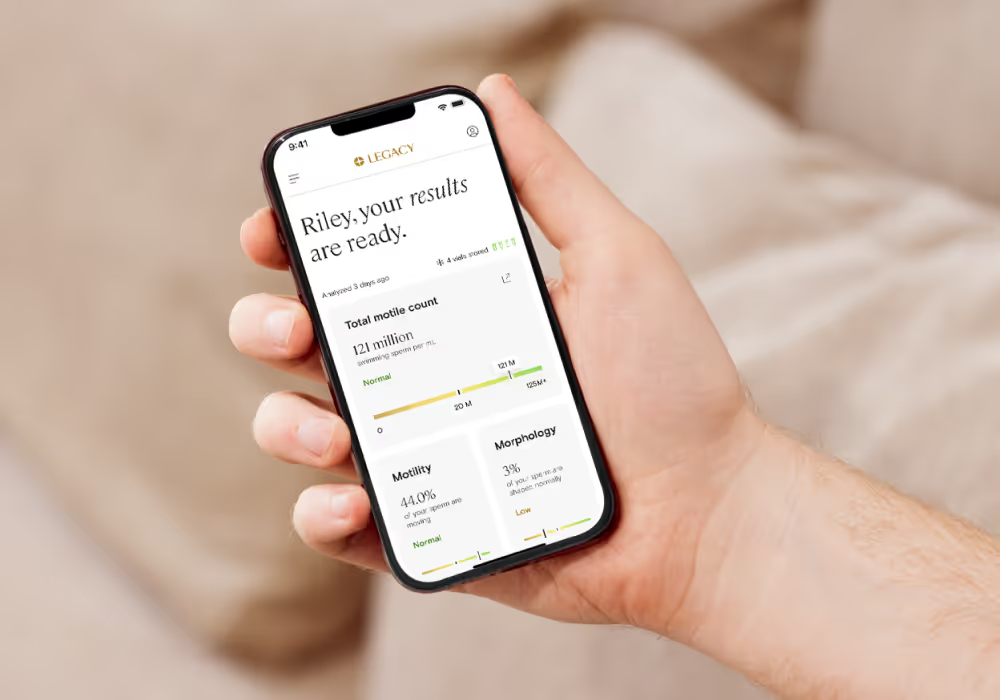
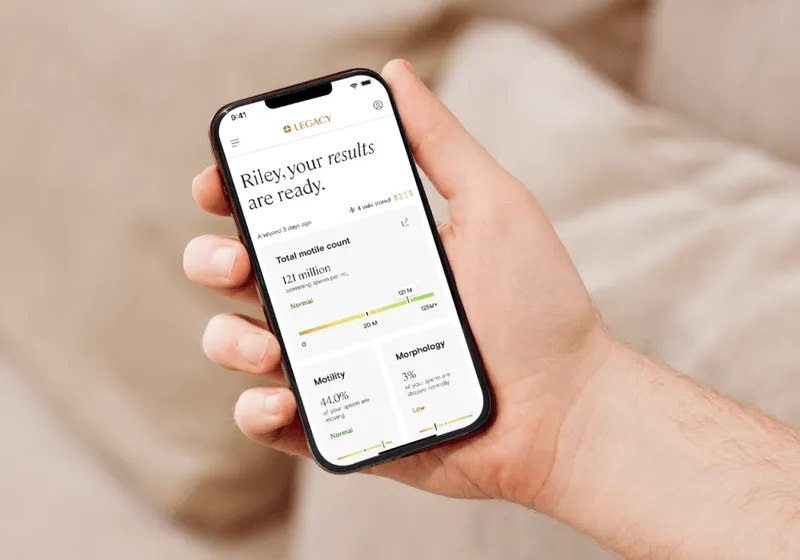
Your digital client dashboard includes more than just the numbers — it offers comprehensive info on what those numbers really mean, and how you can improve your chances of success.
04
Explore next steps with a specialist
We’re in this together. When you test with Legacy, you have access to a team of fertility specialists who can help you interpret your results and give you actionable next steps.
How it works
01
Order your collection kit online
Produce your sample at home. Use the prepaid label to ship it overnight to our full-service andrology lab.
02
Your sample is analyzed
We assess your concentration (how many sperm), motility (how they’re swimming), and morphology (how many are the correct shape).
03
Get your report in 24-48 hours
You will receive access to your digital dashboard and your results will be sent directly to your referring provider.
How it works
01
Order your collection kit online
Produce your sample and use the prepaid label to ship it overnight to our full-service andrology lab.
02
Your sample is analyzed
We assess your concentration (how many sperm), motility (how they’re swimming), and morphology (how many are the correct shape), plus sperm DNA fragmentation (optional).
03
Get your report in 24-48 hours
Your digital client dashboard includes more than just the numbers — it offers comprehensive info on what those numbers really mean, and how you can improve your chances of success.
04
Explore next steps with a specialist
We’re in this together. When you test with Legacy, you have access to a team of fertility specialists who can help you interpret your results and give you actionable next steps.
How it works
01
Order your collection kit online
Produce your sample at home. Use the prepaid label to ship it overnight to our full-service andrology lab.
02
Your sample is analyzed
For pre-vasectomy storage, we’ll do a full semen analysis to ensure your sample is viable for freezing. For post-vasectomy analysis, we measure your sperm concentration (how many sperm) — and we double check.
03
Your sample is frozen
If you’re freezing prior to a vasectomy, your sample will be frozen immediately so you can confidently continue on to your surgery.
04
Get your report
On your digital client dashboard, you’ll see the results of your post-vasectomy analysis, or, if applicable, the details of your storage plan.
05
Using your sperm in the future
You can use frozen sperm for IUI or IVF without a vasectomy reversal or testicular sperm extraction. You can keep your samples in storage for as long as you need without affecting their health or viability.