You don’t have to sacrifice your future family to your chemotherapy, radiation, or surgery. Freeze your sperm quickly and affordably, so you can get back to taking care of you.
Legacy has helped over 2,000 trans and gender non-conforming patients preserve their fertility.
Legacy is an inclusive option. We partner with leading transgender health clinics, our clinicians are WPATH members, and our team has been trained in transgender care.
We’re 10x faster than a traditional clinic. Freeze your sperm without delaying your gender-affirming care — no doctor’s order required.
You have a lot of other costs to worry about. Here, sperm freezing starts at $245 per year, and we’re in network with most major insurance plans and benefits.
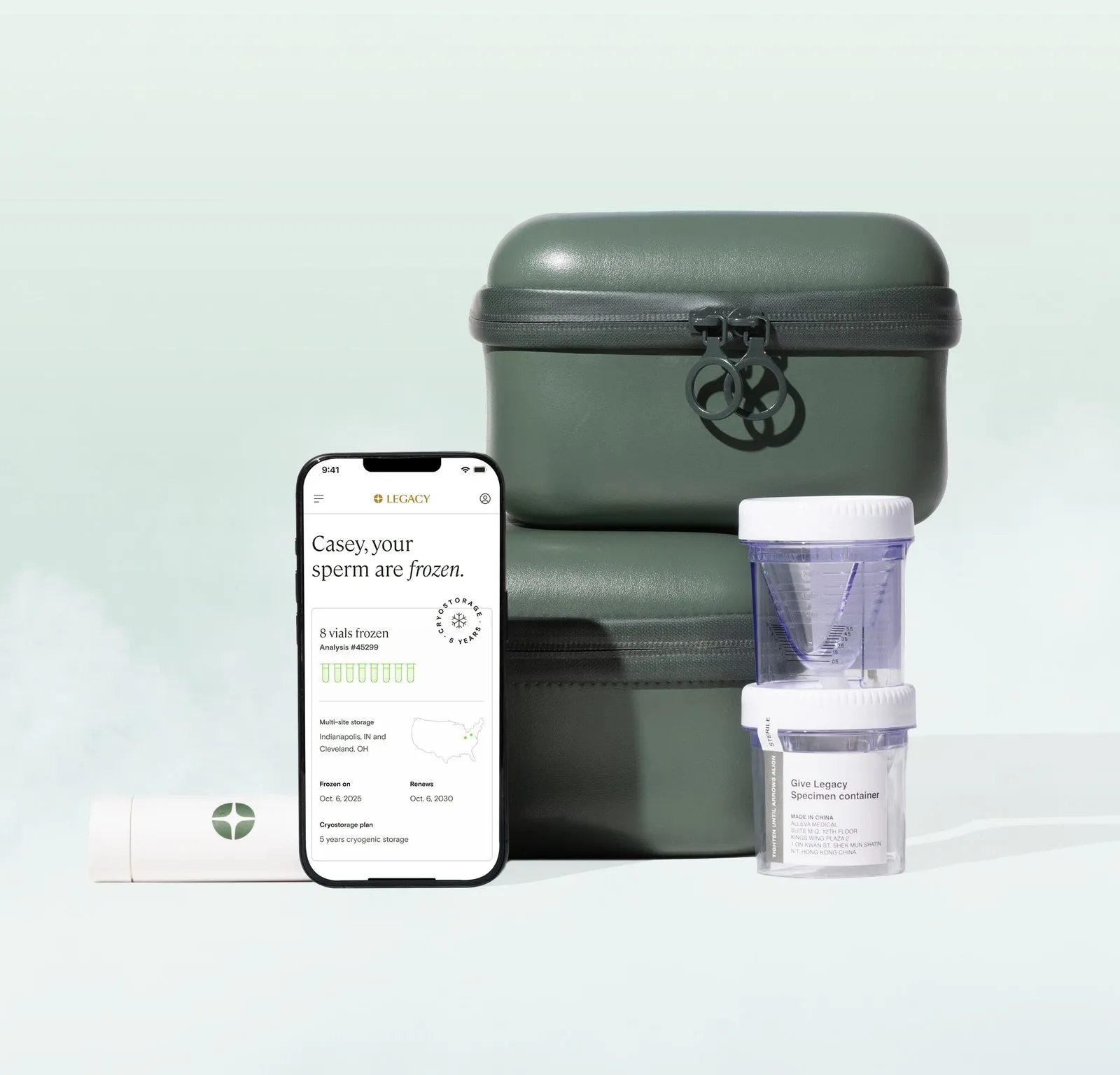
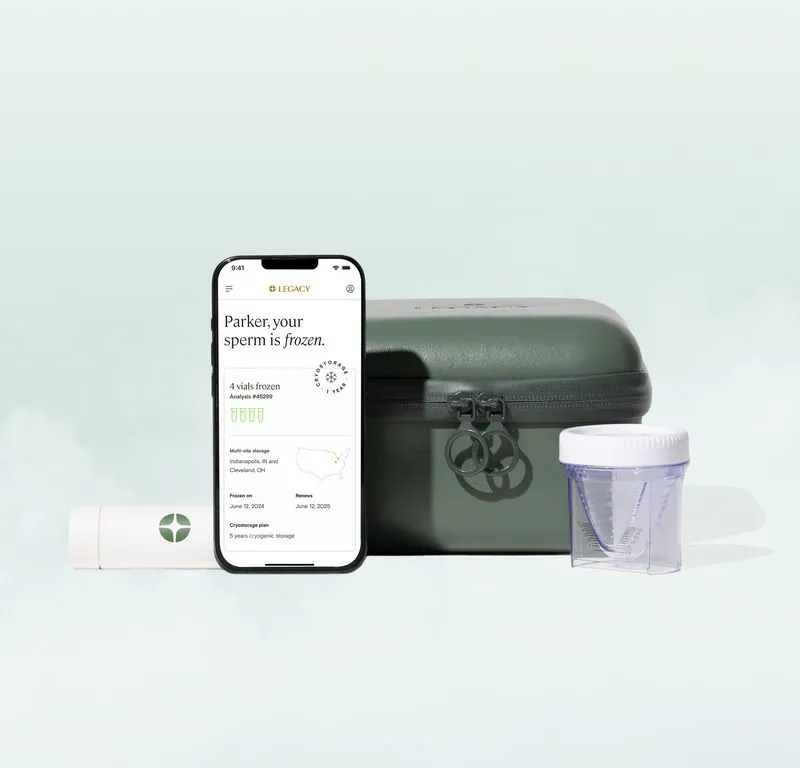
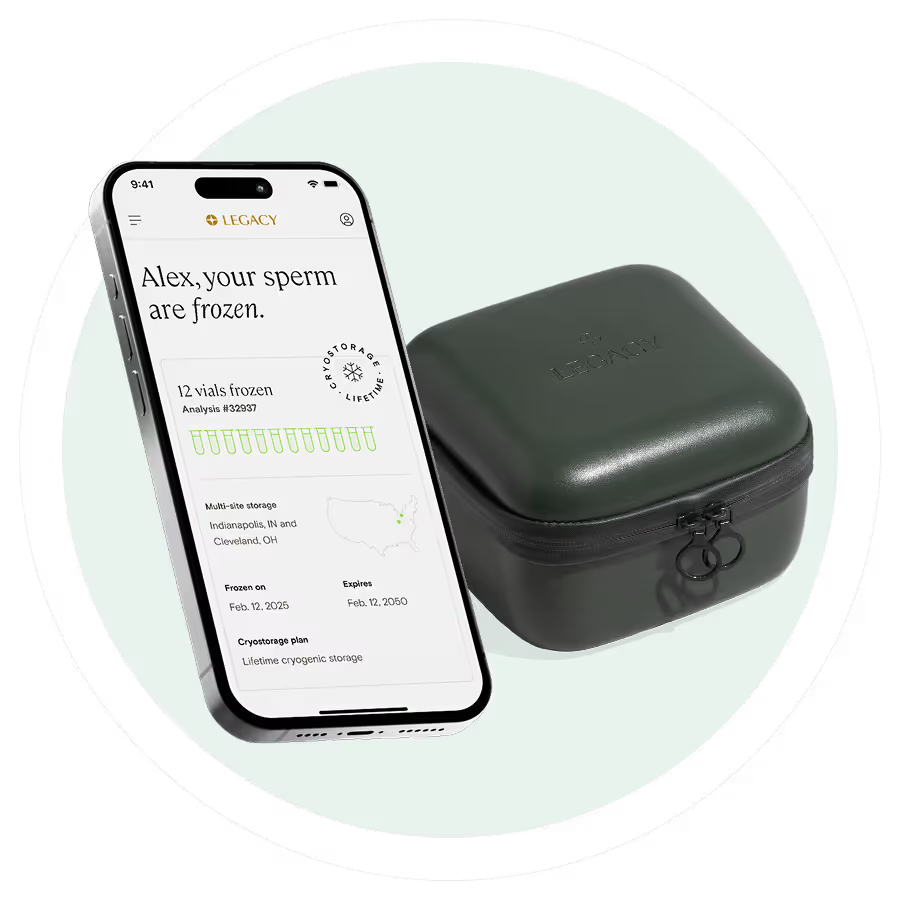
Your kit arrives in discreet packaging, your results are available on a private virtual dashboard, and your sample is stored in multiple locations.
FSA/HSA eligible
Freezing & testing for wherever you are in your journey
Semen volume
Sperm concentration & count
Motility
Morphology
Sperm DNA fragmentation
Semen volume
Sperm concentration & count
Motility
Morphology
Lifetime access to your Insights dashboard, including your Sperm Score
1 year of storage (renewable)
1 collection kit for 1 sample
Pre-freeze STI kit
Advanced Semen Analysis with DNA fragmentation testing

Chemotherapy kills cells that divide quickly. This targets cancer cells, but inadvertently affects sperm cells as well. Some chemo drugs may halt sperm production and cause azoospermia within 3 months, while others can reduce sperm motility. Chemo can also damage germ cells and affect sperm production in children. Finally, chemotherapy is likely to damage the DNA carried by sperm.
Depending on the drug you receive and the dose, sperm production may resume in 15 to 49 months. If chemo damages all the stem cells in the testicles that make new sperm, infertility may be permanent.
Radiation around your pelvic area can destroy sperm cells and lower sperm counts and testosterone levels, leading to infertility. It may also damage blood vessels or nerves in the area, which can cause erectile dysfunction or a dry orgasm if the prostate was damaged. Radiation therapy to your brain may also damage the pituitary gland, reducing testosterone and sperm production and affecting fertility.
Whether you regain your fertility following radiation therapy depends on the dose of radiation, the area that received it, and how well your reproductive organs were shielded from the radiation. Lower doses may not affect fertility, while higher doses can cause persistent or permanent azoospermia. Sperm production may restart 9 to 18 months after receiving lower doses of radiation, or over 5 years for higher doses.
Surgery to certain organs in the pelvis and abdomen may affect fertility, including the testes (orchiectomy), prostate (prostatectomy), seminal vesicles, bladder (radical cystectomy), lymph nodes, pituitary, or hypothalamus gland. How significantly fertility is impaired depends on the type of surgery.
Often, yes. In some states, large insurance plans are required by law to cover fertility preservation prior to cancer treatment. Alternatively, some companies will offer fertility benefits programs to fill the gap in fertility coverage offered by insurance.
Yes. We offer a 25% discount on all sperm freezing bundles for oncology patients. Contact us at clientservices@givelegacy.com to learn more.
The process of sperm freezing is very quick with Legacy:
In theory, it can take as little as 3 days from start to finish. So, you don’t need to postpone your hormone therapy in order to accomplish your fertility preservation goals.
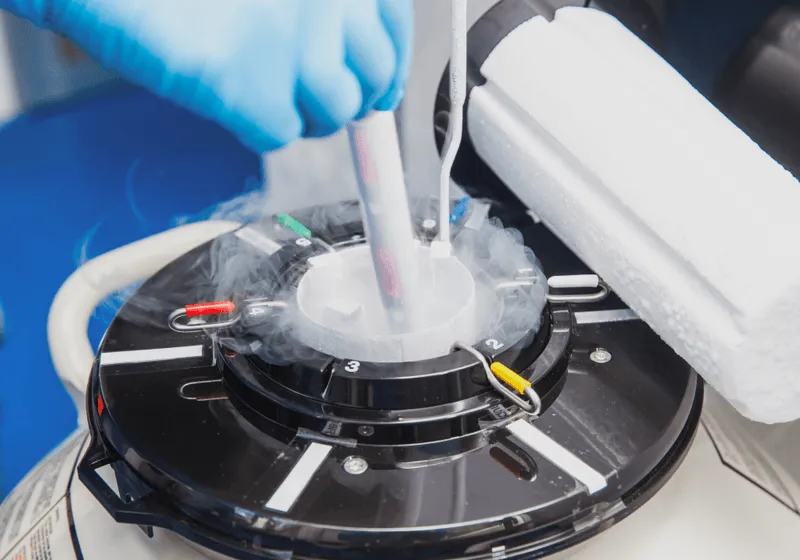
As long as sperm is kept frozen in a high quality cryogenic lab like Legacy’s, it can be stored indefinitely with no significant impact on its quality or the chances that it will result in a healthy pregnancy. That means you can keep your sperm frozen until you’re done with your cancer treatment and ready to think about family building.
Short answer: as many as you can afford. But the ideal number of samples to store also depends on your future plans. A few questions you might consider:
Do you have kids already? If you don’t, there may be a higher chance that you’ll want kids in the future, even if you’re sure you don’t want them right now. (Hence the vasectomy!)
How old are you? If you’re in your 20s or 30s, it’s more likely that your family plans may change in the future.
Generally speaking, one vial of sperm is used in each IUI or IVF procedure.
1 semen sample = 4 vials of frozen sperm
1 vial of frozen sperm = 1 IUI or IVF procedure
IUI pregnancy rates range from 10–25% per cycle; IVF success rates range from 5–50% per cycle. So, you may need multiple attempts to achieve pregnancy.
You can use your frozen sperm in an intrauterine insemination (IUI) or in vitro fertilization (IVF) procedure. Generally speaking, one vial of sperm is used in each IUI or IVF procedure.
1 semen sample = 4 vials of frozen sperm
1 vial of frozen sperm = 1 IUI or IVF procedure
The chances of conceiving with frozen sperm depend on several factors:
IUI pregnancy rates range from 10–25% per cycle; IVF success rates range from 5–50% per cycle. So, you may need multiple attempts to achieve pregnancy. The good news is that using frozen sperm doesn’t affect your chances of success. IUI and IVF pregnancy rates are the same for those using frozen sperm, compared to “fresh.”
Probably! We want to help expedite the process. Contact us at clientservices@givelegacy.com.