

Doctor-trusted semen analysis and storage. With Legacy, your most valuable assets are secured.
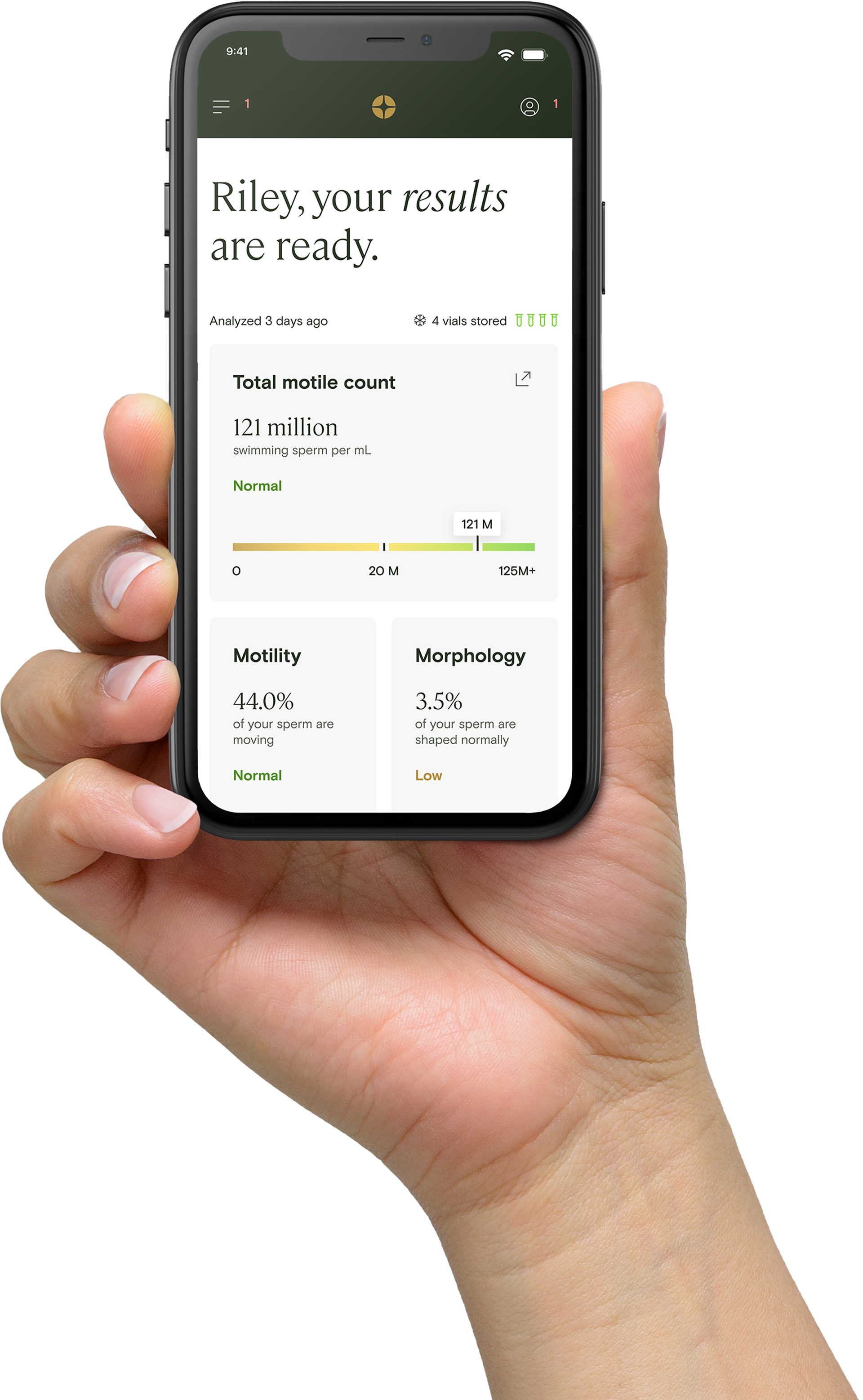
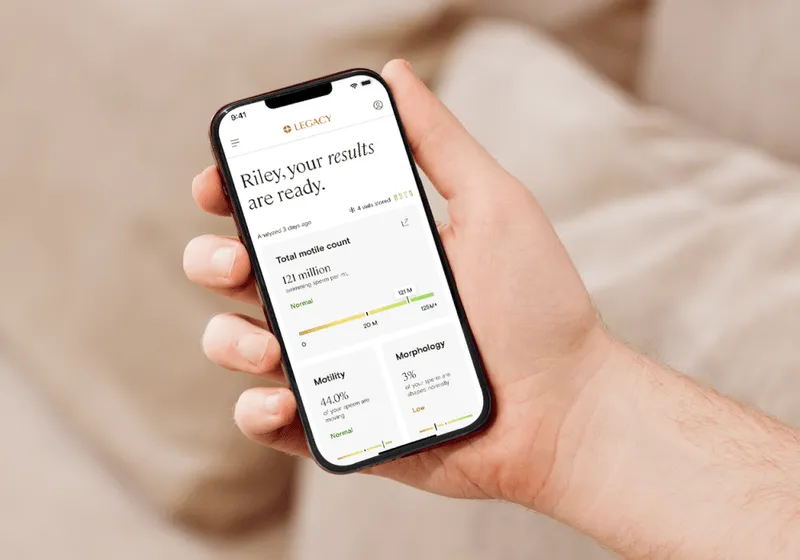
Comprehensive analysis measures all the key metrics of fertility. Includes lifetime access to your Insights dashboard, including your Sperm Score.
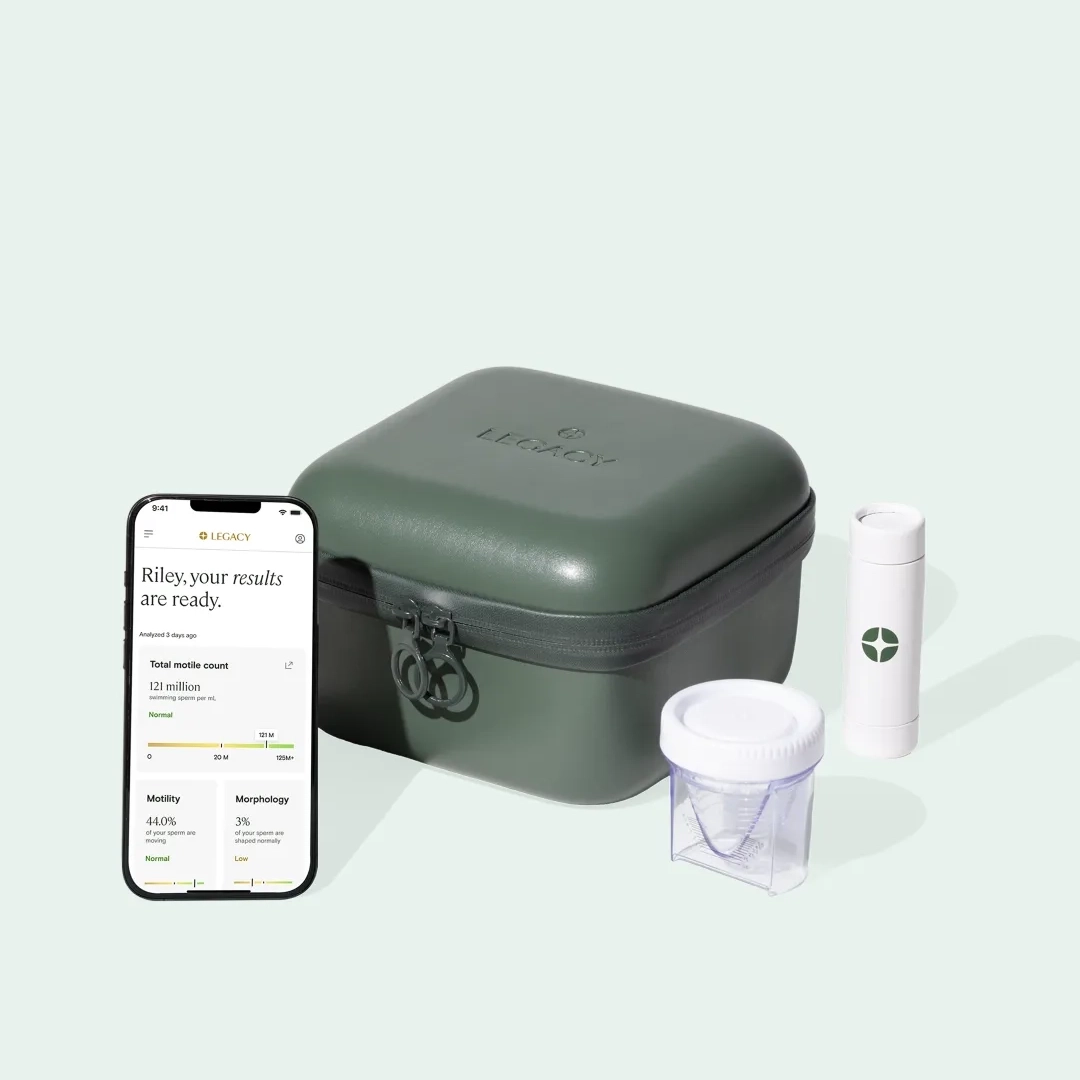
Semen volume
Sperm concentration & count
Motility
Morphology
Lifetime access to your Insights dashboard, including your Sperm Score
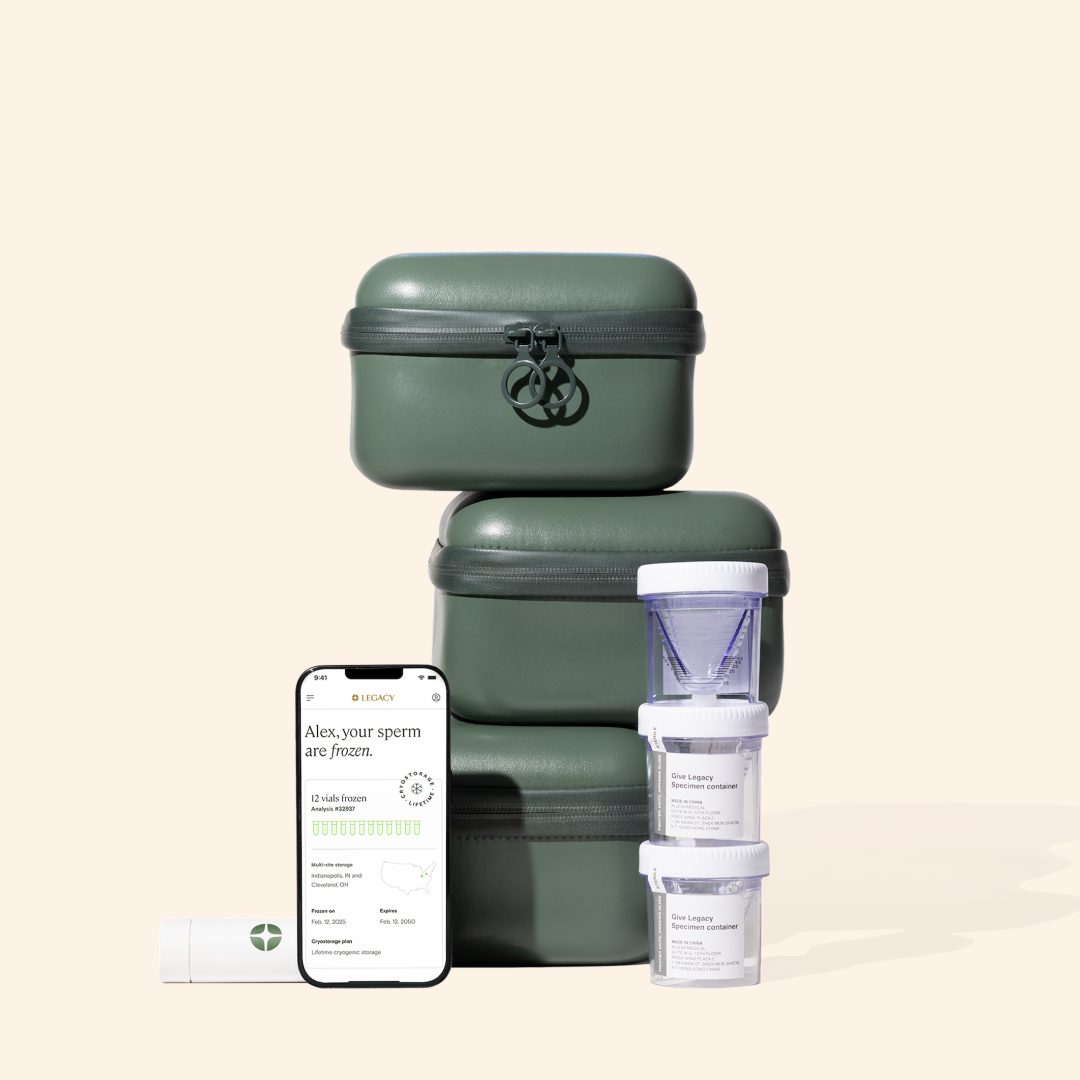
2 samples, 5 years of sperm freezing (renewable)

5 years of storage (renewable)
2 collection kits for 2 samples
Pre-freeze STI test
Advanced Semen Analysis with DNA fragmentation testing
3 samples, 25 years of sperm freezing

25 years of storage
3 collection kits for 3 samples
Pre-freeze STI test
Advanced Semen Analysis with DNA fragmentation testing
1 year of sperm freezing (renewable)

1 year of storage (renewable)
1 collection kit for 1 sample
Pre-freeze STI kit
Advanced Semen Analysis with DNA fragmentation testing
FAQ's
Many people believe that testosterone contributes to fertility, and that testosterone therapy may even improve fertility. However, taking external testosterone can throw off the balance of other reproductive hormones that actually drive sperm production.
As a result, TRT is likely to cause impaired fertility or complete infertility. One study found that 65% of men on TRT become temporarily sterile within 4 months of use.
Maybe. The “sperm cycle” — how long it takes to produce new sperm — is about 3 months, so you will likely have to pause hormone therapy for at least this long in order to recover fertility. One study found that within 6 months of stopping testosterone therapy, 67% of subjects regained a normal sperm count. That means about 1 of every 3 people on testosterone may be unable to recover their fertility.
Possibly. Without getting too technical, hCG mimics the effect of another reproductive hormone, luteinizing hormone (LH). LH is essential to the production of sperm, and LH levels drop significantly for men on TRT. Therefore, taking hCG can help maintain sperm production in those who are taking testosterone. One small study found that hCG helped maintain sperm production for at least a year of TRT.
However, it’s impossible to know how hormone therapy will impact you. Even if you’re taking hCG alongside testosterone, we highly recommend sperm freezing as a back-up plan, especially if you’re certain you want kids in the future.
Yes, you can use frozen sperm for intrauterine insemination (IUI), in vitro fertilization (IVF), or intracytoplasmic sperm injection (ICSI). If you’re doing a fertility treatment cycle, having a healthy frozen sperm sample on hand can be an important back-up plan.
TRICARE Prime policies typically require a referral from a physician for coverage, while TRICARE Select policies do not. See your personal explanation of benefits for details.
Legacy offers two shipping options: standard shipping (3–5 business days) and expedited shipping (1–2 business days) for an additional fee of $35.
For an order with multiple kits (such as a For Tomorrow or Forever bundle), expedited shipping applies only to the first kit.
As long as sperm is kept frozen in a high quality cryogenic lab like Legacy’s, it can be stored indefinitely with no significant impact on its quality or the chances that it will result in a healthy pregnancy. That means you can keep your sperm frozen until you’re ready to start a family.
Posterity requires that you have a STI panel within 6 weeks of producing a sample if you’re planning on freezing it.If you have completed an STI panel with Posterity or another provider within that 6-week period, you can purchase the yearly storage plan on its own. If, by the time you produce the sample, it will be more than 6 weeks since your STI panel, you should purchase yearly storage + STI test kit.
Fertility clinics require certain testing and documentation to be completed at the time of freezing in order to store and use your sample in the future. In most cases, clinics will require an STI panel in order to use a sperm sample, even if you’re using it with a sexually intimate partner.