Most popular
For Tomorrow bundle
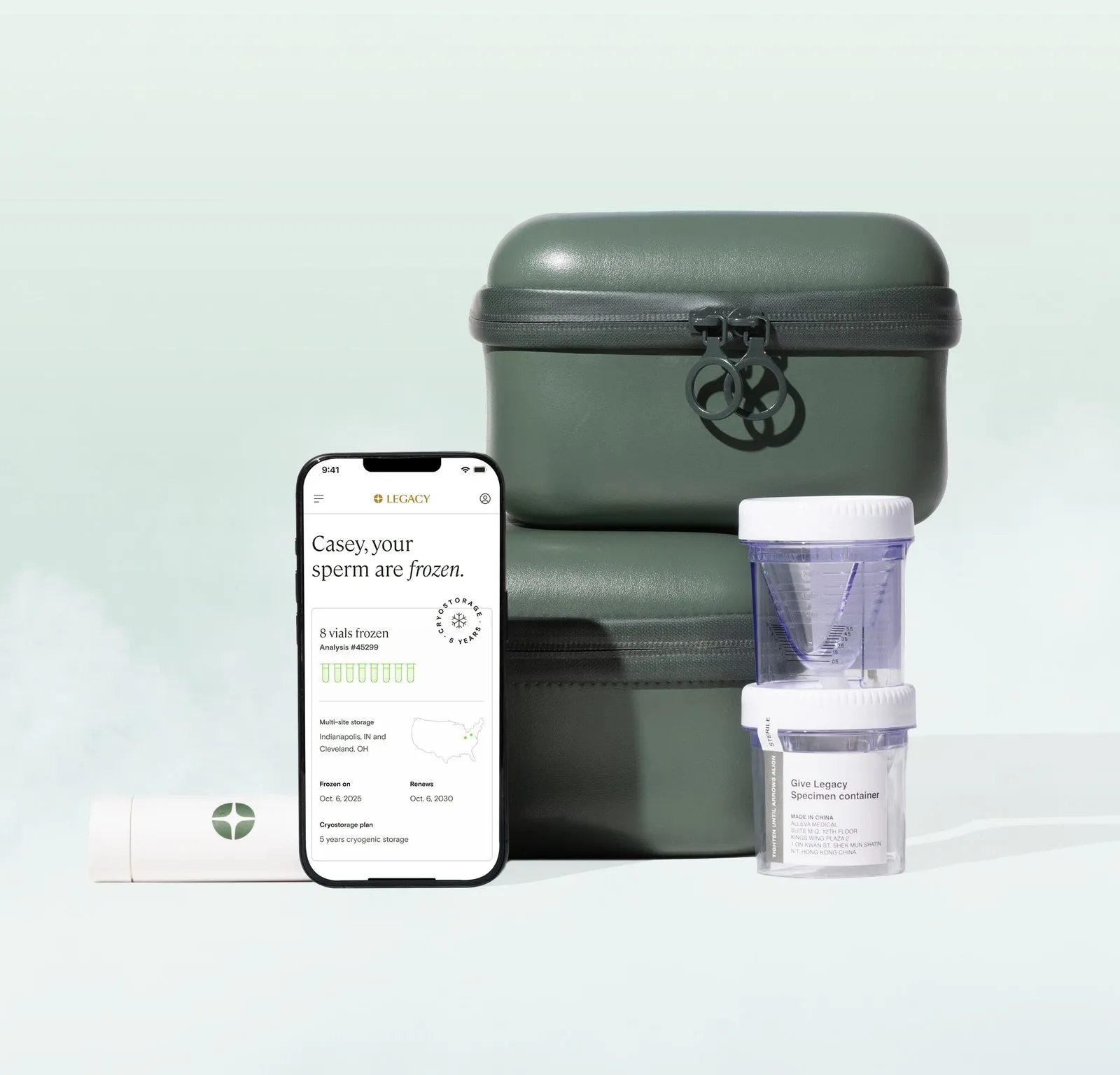
5 years of sperm freezing (renewable)
Best for:
  • Pre-vasectomy
  • Military deployment
  • Before testosterone therapy
$1,495
Sale price
save 10% with code BIGFREEZE
Includes:

5 years of storage for 2 samples (renewable)

2 collection kits

Pre-freeze STI test

Standard
For Today bundle
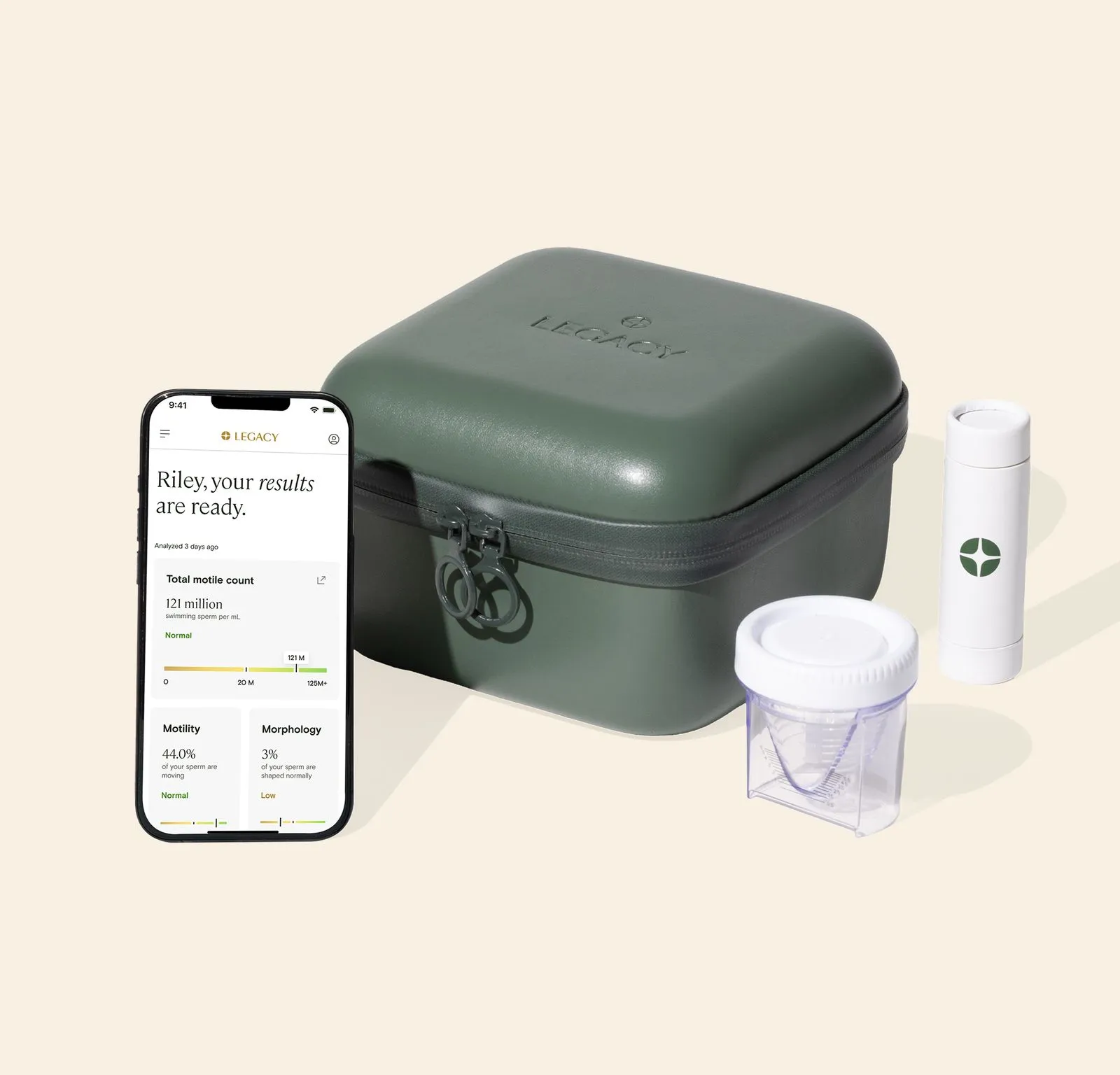
1 year of sperm freezing (renewable)
Best for:
  • Trying to conceive
  • Infertility treatment
  • Short-term planning
$540
Sale price
save 10% with code BIGFREEZE
Includes:

1 year of storage for 1 sample (renewable)

1 collection kit

Heading

Heading

Heading

Research has found semen quality to be 30% higher when the sample is collected in the comfort of home.
Legacy’s mail-in sperm testing and freezing makes fertility care easy and affordable for your patients.

Legacy proudly tests and freezes more sperm than any clinic in the country.

25,000+
analyses performed
18,000+
sperm samples frozen

High-quality labs and best-in-class cryostorage

All samples are split between multiple cryogenic lab locations for an added layer of security.
CLIA certified
FDA registered
HIPAA compliant

Affordability

Legacy is 10x more affordable than traditional sperm freezing options, with multiple ways to pay and save.

Insurance
Fertility benefits providers
THE SCIENCE

The science of at-home sperm collection

Our kits use an FDA-approved, clinically tested transport buffer media to minimize the decline of sperm quality, plus an insulated kit to regulate sample temperature.

Because the best samples are collected in the comfort of home, mail-in semen analysis is an effective, accessible option for most patients.

Semen quality has been found to be significantly higher when the sample is collected at home (vs. in a clinic or sperm bank collection room).

SAMPLE COLLECTED
AT HOME

SAMPLE COLLECTED
IN THE CLINIC

Sperm concentration

64

million/mL

Sperm concentration

52%


41

million/mL


52%

Studies on mail-in analysis kits suggest motility may decline just 0.39% per hour.
A HEPES-based transport media minimizes motility decline during transit.
Samplaski et al, 2020